
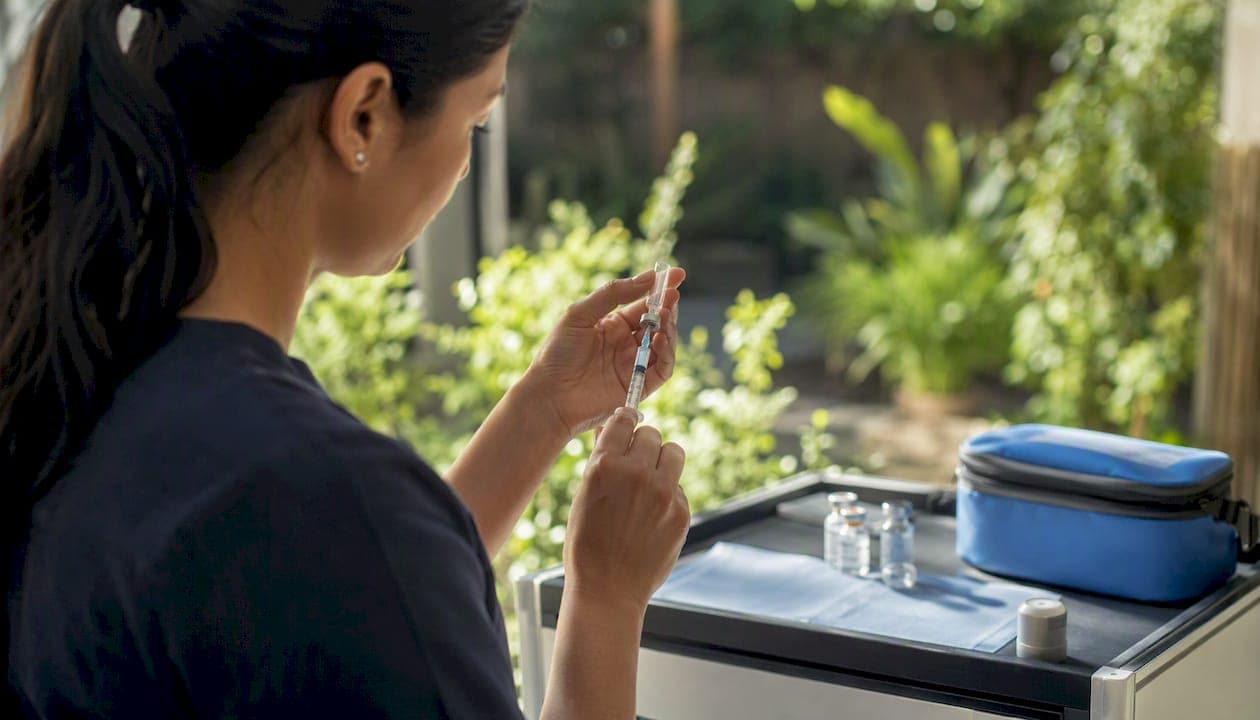
Whether a peptide is FDA-approved depends entirely on the molecule and what it's prescribed for, not on how it's marketed. Semaglutide, tirzepatide, and insulin carry FDA approval for specific conditions. Most peptides sold under wellness branding do not.
Approval means the drug passed clinical trials, carries a labeled indication, and comes from a facility meeting FDA manufacturing standards. It also means a prescription and physician oversight, not a supplement aisle purchase. The peptide classes relevant to weight and hormonal care include:
- GLP-1 receptor agonists: semaglutide (Ozempic, Wegovy), tirzepatide (Zepbound), liraglutide (Victoza, Saxenda)
- Insulin analogs (Humalog, Lantus, and similar) for metabolic control
- Setmelanotide (IMCIVREE) for specific genetic obesity conditions
- Navepegritide (YUVIWEL), approved for pediatric achondroplasia
Pro Tip: Check the drug label's "Indications and Usage" section on DailyMed before assuming any peptide applies to your situation. Approval for one condition doesn't mean approval for another.
Key Takeaways
FDA approval for a peptide requires clinical trials, a specific labeled indication, and manufacturing oversight, none of which apply to most wellness-marketed peptides.
| Point | Details |
|---|---|
| Confirm the exact indication | Check whether the peptide is approved for your specific condition, not just approved in general. |
| Verify the label | Look up prescribing information on DailyMed rather than trusting seller marketing claims. |
| Watch for compounding claims | Advisory panel recommendations on compounding don't equal FDA approval or standardized dosing. |
| Ask about manufacturing source | Confirm any prescribed peptide comes from a licensed U.S. manufacturer, not an unregulated supplier. |
| Consider physician-supervised access | Airmedfit provides consultations and lab monitoring for patients pursuing FDA-regulated GLP-1s and peptides. |
Table of Contents
- How Airmedfit Views FDA-Approved Peptides Versus Wellness Alternatives
- Getting Started With FDA-Regulated Peptide Therapy
- Where to Verify Peptide Approvals and Safety Information
- Sources
How Airmedfit Views FDA-Approved Peptides Versus Wellness Alternatives
Physician supervision changes the calculus on peptide therapy. Airmedfit's model runs on lab panels, follow-up visits, and prescriptions limited to FDA-regulated GLP-1s and peptides sourced from licensed U.S. manufacturers rather than compounded or gray-market alternatives.
That distinction isn't cosmetic. Licensed manufacturing means consistent dosing from vial to vial, something unregulated peptide sellers cannot guarantee. A patient on semaglutide through a monitored program gets bloodwork tracking kidney function and blood sugar, not just a shipment and instructions.
Getting Started With FDA-Regulated Peptide Therapy
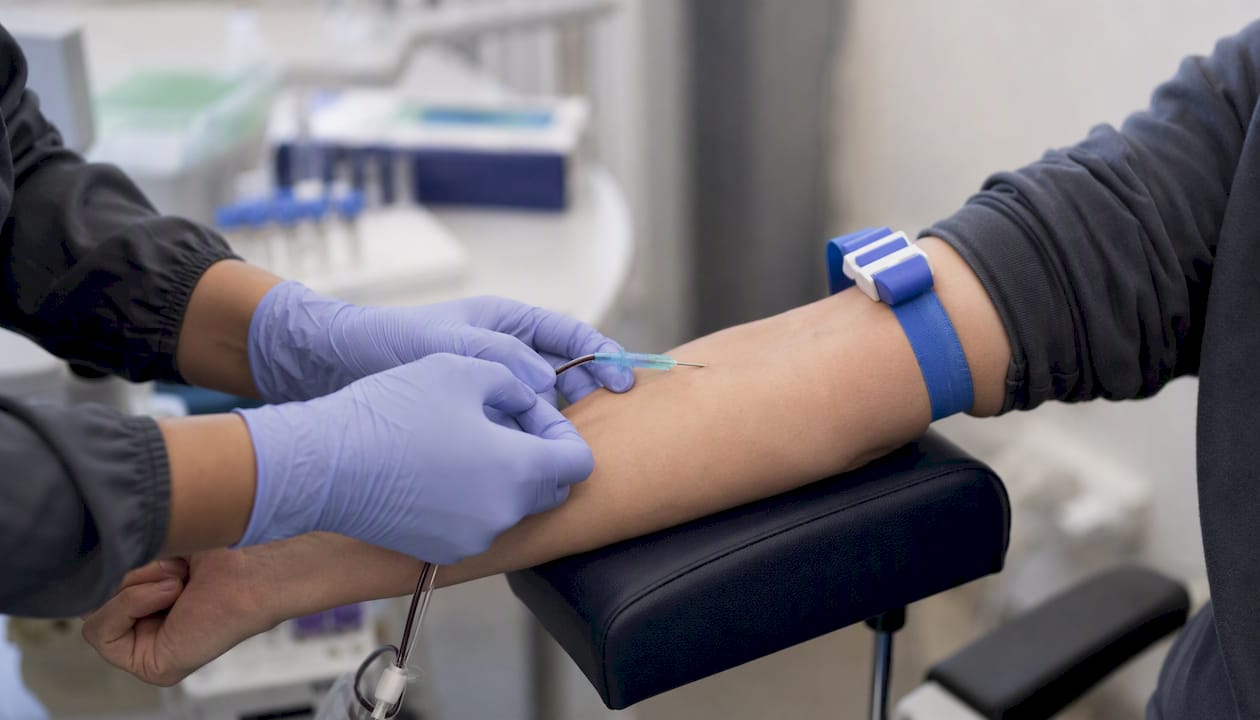
Airmedfit's process starts with a physician consultation, followed by lab panels that check the metabolic markers relevant to GLP-1 or insulin therapy. From there, prescriptions get filled through licensed U.S. pharmacies, and ongoing monitoring tracks how your body responds over time.
Not every peptide fits every patient. Someone with a personal or family history of medullary thyroid cancer, for instance, isn't a candidate for GLP-1 therapy, and that's exactly the kind of screening a physician catches before a prescription is written. If you're weighing hormonal or metabolic peptide options, Airmed Fit offers a consultation and lab-based path to determine what's appropriate for your case. This article provides general information and isn't a substitute for personalized medical advice.
Where to Verify Peptide Approvals and Safety Information
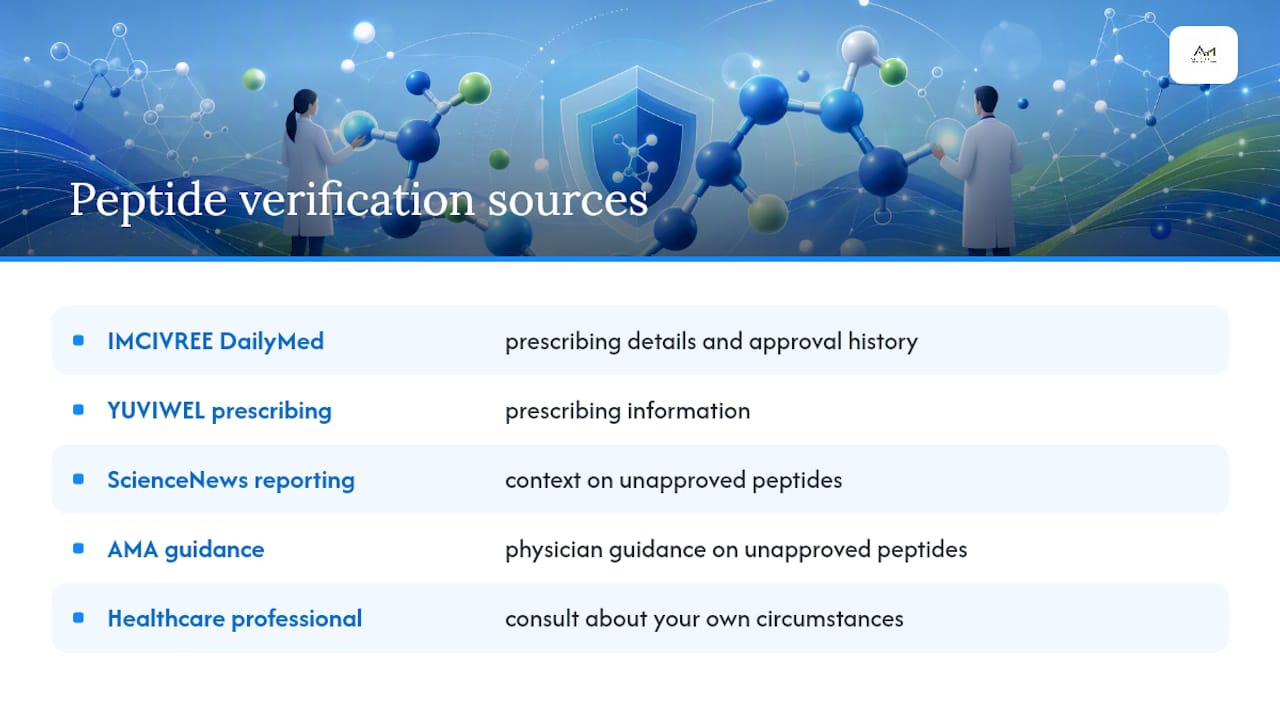
For prescribing details and approval history, check IMCIVREE's DailyMed listing and the YUVIWEL prescribing information. For context on unapproved peptides, see reporting from ScienceNews and physician guidance from the AMA.
This article is general information, not a substitute for advice from a qualified doctor. Consult a qualified healthcare professional about your own circumstances before acting on anything here.
Sources
- Exploring FDA-Approved Frontiers: Insights into Natural and Engineered Peptide Analogues in the GLP-1, GIP, GHRH, CCK, ACTH, and α-MSH Realms - PMC
- IMCIVREE prescribing information (setmelanotide) — DailyMed
- Peptides: unproven health claims and regulatory access — ScienceNews
- What doctors want patients to know about injectable peptides — AMA