

Hormone panel testing checks multiple blood markers, thyroid, reproductive, and adrenal hormones, so a clinician can pinpoint or track an imbalance. It matters if you're dealing with unexplained fatigue, cycle changes, fertility questions, or you're monitoring HRT or TRT. The right move is simple: order a clinician reviewed panel or use a reputable direct pay lab, then sit down with a provider to interpret what the numbers mean for your specific body.
TL;DR:
- Hormone panels should be tailored to individual symptoms, typically including reproductive, thyroid, adrenal, and metabolic markers, depending on your specific situation.
- Testing is most informative when timed around cycle days, fasting, or morning hours, especially for hormonal and metabolic markers.
- You can order tests through clinician-approved labs, direct-pay options, or at-home kits, but proper timing and disclosing supplements like biotin are crucial for accurate results.
- Abnormal lab results often require repeat testing, further panels, or specialist referrals, with clinical context being essential for interpretation.
- Insurance coverage depends on medical necessity; elective panels are usually out-of-pocket, and prior authorization may be needed for some tests.
Table of Contents
- What Does Hormone Panel Testing Actually Measure?
- Who Should Get Tested, and When?
- How Does Hormone Testing Actually Work?
- How Do You Interpret Hormone Panel Results?
- What Does Hormone Testing Cost, and Will Insurance Cover It?
- How Should You Prepare for a Hormone Test?
- Why Physician Oversight Changes the Outcome
- Get Physician-Supervised Hormone Testing With Airmed Fit
- Where to Learn More
- Sources
What Does Hormone Panel Testing Actually Measure?
A comprehensive hormone blood panel isn't one test. It's a cluster of markers grouped by which system they reveal.
- Estradiol (E2), progesterone, total and free testosterone, and SHBG show what's happening with reproductive hormones and how much of your testosterone is actually available to your tissues rather than bound up in circulation. Measuring estrogen helps flag reproductive and metabolic issues that wouldn't show up on a basic checkup.
- FSH, LH, prolactin, and AMH matter most for fertility evaluation. FSH specifically tells you about ovarian reserve and whether you're approaching menopause.
- TSH, free T4, free T3, and TPO antibodies cover thyroid function testing. The American Thyroid Association considers TSH paired with free T4 the standard combination for catching hypothyroidism early.
- Cortisol and DHEA-S assess the adrenal stress axis, useful when fatigue, weight gain, or sleep disruption don't have an obvious cause.
- Many providers pair the panel with glucose, insulin, or a lipid panel, since metabolic and hormonal systems influence each other constantly.
Not every patient needs all of these markers. A comprehensive hormone analysis for a 45 year old woman with irregular periods looks different from one built for a man tracking testosterone replacement therapy.
Who Should Get Tested, and When?
Certain symptoms are the usual trigger: irregular or absent cycles, persistent fatigue, unexplained weight changes, low libido, erectile changes, mood swings, or brain fog that doesn't lift with sleep. If any of those sound familiar, testing is a reasonable next step, not an overreaction.
- Fertility evaluation. Couples trying to conceive for six to twelve months without success often start with FSH, LH, AMH, and progesterone.
- Perimenopause and menopause. Hormone level assessment here usually centers on estradiol and FSH trends over time, not a single snapshot.
- TRT or HRT monitoring. If you're already on therapy, periodic panels confirm dosing is keeping levels in a healthy range rather than overcorrecting.
- Suspected endocrine disorders, including thyroid disease or PCOS, where irregular cycles or excess androgen symptoms point to a root cause worth confirming with labs.
Timing changes accuracy. Female hormone tests for cycle related markers are often drawn on day 3, cortisol and testosterone read best from a morning draw, and any metabolic markers usually require fasting. Clinician ordered testing is worth prioritizing over elective screening when symptoms are significant or fertility is time sensitive.
How Does Hormone Testing Actually Work?
Most hormone panels rely on a venous blood draw, drawn at a lab or clinic, since it captures the widest range of markers with reliable accuracy. Some hormone testing kits use finger-prick capillary samples for a narrower set of hormones, and saliva testing exists mostly for cortisol, though it's less standardized across labs.
- Clinician-ordered lab draws route through your doctor's preferred lab, often with insurance processing built in.
- On-demand or direct-pay labs let you order specific panels without an office visit first, useful if you want to test before committing to an appointment.
- At-home kits ship a collection device to your door and mail it to a lab, trading some precision for convenience.
Cycle-specific days and morning collection windows still apply no matter which route you choose. Turnaround typically runs two to five business days, delivered through a secure online portal or a written clinician report. Sharply abnormal results, particularly with thyroid or cortisol, usually trigger a direct phone call rather than waiting for you to check the portal.
How Do You Interpret Hormone Panel Results?
A number outside the reference range doesn't automatically mean something's wrong, and a number inside the range doesn't guarantee everything's fine either. Reference ranges are built from population averages, not from your baseline, so a level that's technically "normal" can still be too low or too high for how you feel and function.
Pro Tip: Ask for your actual historical values, not just a pass/fail flag. A downward trend inside the normal range often tells a clinician more than a single number ever will.
Once results come back, a few paths typically open up:
- Repeat testing to rule out a one-off lab error or a timing mismatch.
- Expanded panels if the first round narrows the picture but doesn't answer it.
- Dynamic testing, like a glucose tolerance test, when a static snapshot isn't enough.
- Specialist referral to an endocrinologist or reproductive specialist for complex cases.
Providers reviewing hormonal imbalances generally stress that lab values need clinical context. The report itself, ideally with physician notes and a documented next step, is what separates a useful test from a confusing number on a screen.
What Does Hormone Testing Cost, and Will Insurance Cover It?
Price depends on how many markers you're testing, which lab processes the sample, and whether a clinician orders it or you pay out of pocket. A basic thyroid panel costs far less than a comprehensive hormone analysis covering reproductive, adrenal, and thyroid markers together.
- Insurance tends to cover testing when there's documented medical necessity, meaning symptoms, a diagnosis code, or an existing condition justify it.
- Elective or wellness style panels, ordered without a specific medical complaint, are usually paid direct-pay, whether through an on-demand lab or an at-home kit.
- Going through your clinician gives you the best shot at coverage; direct-pay labs and at-home kits are almost always out-of-pocket but skip the wait for an appointment.
- Check HSA or FSA eligibility before you pay, and ask your clinician's office about prior authorization if a specific test tends to get denied.
How Should You Prepare for a Hormone Test?
Small mistakes here cause real problems. Biotin supplements are a well documented source of lab interference, and skewed thyroid or hormone results are one of the more common consequences when patients don't disclose supplement use before a draw.
- Stop biotin containing supplements at least 72 hours before your blood draw.
- Tell your clinician about every medication and supplement you're taking, since some require a temporary hold.
- Stick to the scheduled cycle day or time of day. A draw taken on the wrong day can make a normal result look abnormal.
- If your results look inconsistent with your symptoms, ask whether biotin or timing could be the culprit before assuming something's medically wrong.
Why Physician Oversight Changes the Outcome
Numbers on a lab report don't diagnose anything by themselves. What turns a hormone blood panel into actual care is a clinician who connects your history, your symptoms, and your trend lines into a decision worth acting on. Physician supervised interpretation is what keeps dosing adjustments and follow-up testing grounded in your actual physiology instead of a generic chart. That oversight is also what catches interference, timing errors, and edge cases a self-read result would miss entirely.
— Organic
Get Physician-Supervised Hormone Testing With Airmed Fit
Airmed Fit is built for people who want a lab order and a clinician's interpretation in the same place, instead of piecing together a direct-pay panel and guessing at what the numbers mean.
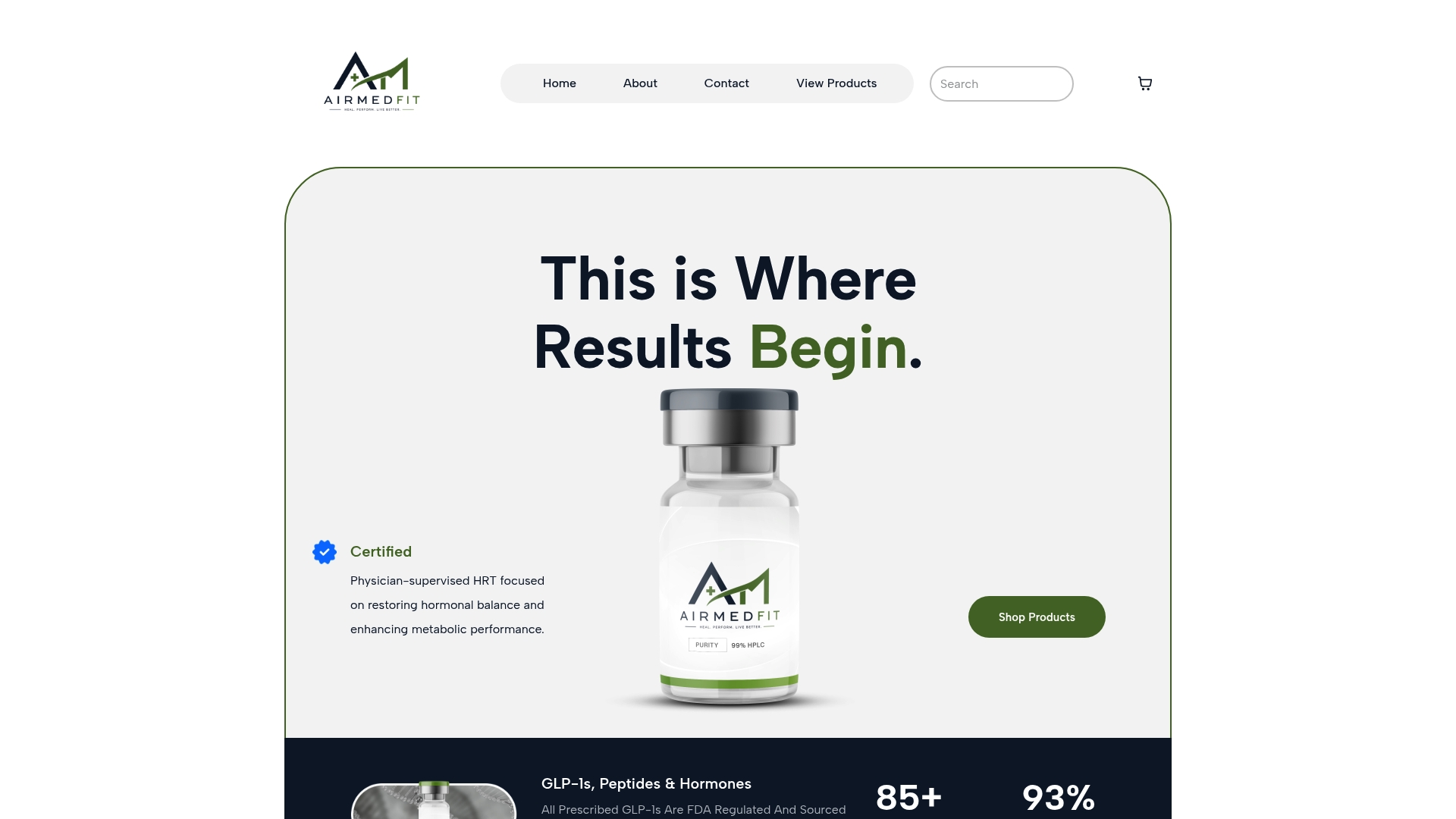
New clients start with a lab order and a physician consultation, so your comprehensive hormone panel gets read by someone who also designs your follow-up plan, whether that's a testosterone replacement therapy protocol, a broader HRT approach, or a metabolic program using GLP-1 medications. Every peptide and GLP-1 Airmed Fit dispenses is FDA-regulated and sourced from licensed U.S. manufacturers, and ongoing membership options keep monitoring consistent rather than one-and-done. If you're also weighing elective, in-office wellness services alongside lab work, Highness Med Spa's services outline what that kind of care can look like. To get your own panel ordered and reviewed by a physician, start with Airmed Fit.
Where to Learn More
For condition-specific detail beyond this guide, the WHO's PCOS fact sheet covers prevalence and diagnostic approach, and the American Thyroid Association's page on thyroid function tests explains TSH and free T4/T3 in more depth.
This article is general information, not a substitute for advice from a qualified doctor. Consult a qualified healthcare professional about your own circumstances before acting on anything here.