
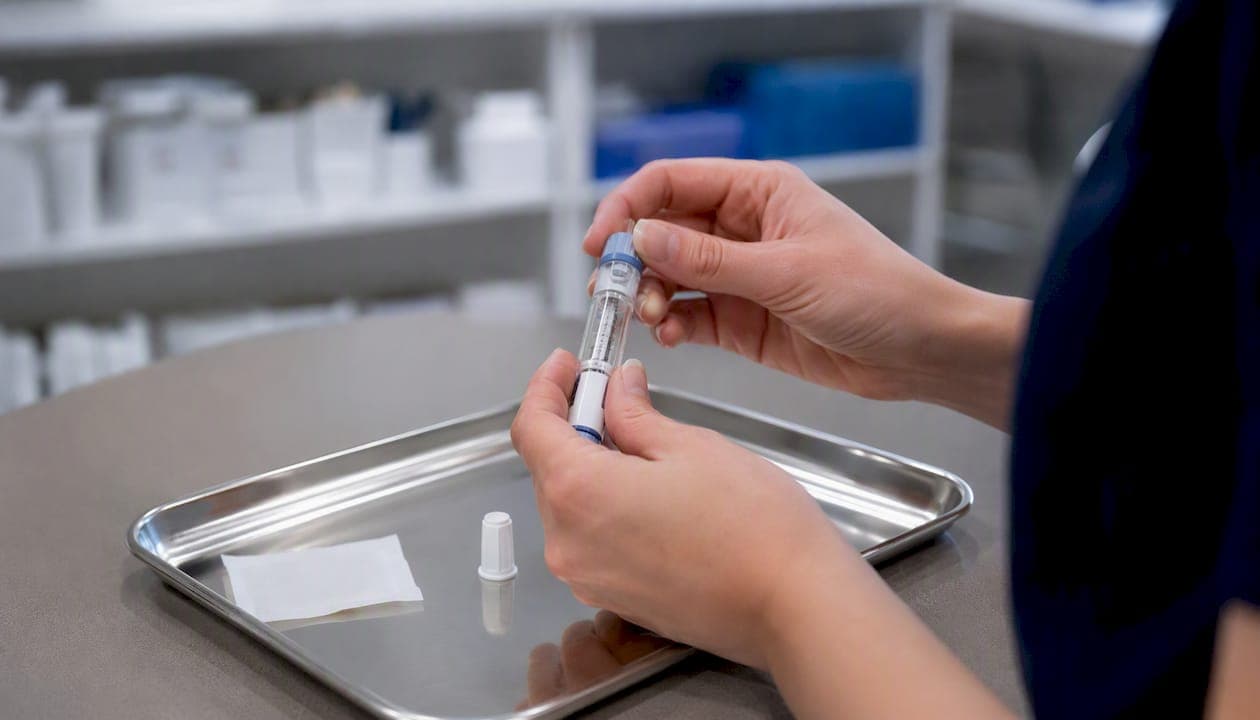
Tirzepatide is an FDA-approved, clinically proven option for chronic weight management in eligible adults, producing mean weight losses of up to 20.9% at 72 weeks in the landmark SURMOUNT-1 phase 3 trial published in the New England Journal of Medicine. That number is not a ceiling for everyone, and it is not a floor either. But it is the kind of result that has reshaped how clinicians think about pharmacologic weight management.
- FDA approval: Zepbound (tirzepatide) received FDA approval on November 8, 2023, for chronic weight management in adults with obesity or overweight with at least one weight-related comorbidity, used as an adjunct to a reduced-calorie diet and increased physical activity.
- Trial headline: SURMOUNT-1 reported mean percent weight losses at 72 weeks of approximately 15.0% (5 mg), 19.5% (10 mg), and 20.9% (15 mg) versus 3.1% for placebo.
- Safety profile: GI events (nausea, diarrhea, vomiting) are the most common side effects and are dose-related; serious adverse events were uncommon in trials.
- Practical reality: Tirzepatide requires physician supervision, a structured titration plan, and adjunct lifestyle support to be used safely and effectively.
Key figure: At the 15 mg dose in SURMOUNT-1, roughly 1 in 3 participants lost 20% or more of their body weight over 72 weeks. That puts tirzepatide in a different category from most prior anti-obesity medications.
Key Takeaways
Tirzepatide is an FDA-approved, clinically validated option for chronic weight management that produces substantially larger average weight losses than placebo and most prior anti-obesity medications, but requires ongoing physician supervision and long-term commitment to maintain results.
| Point | Details |
|---|---|
| FDA approval and indication | Zepbound (tirzepatide) is FDA-approved for adults with obesity (BMI 30+) or overweight (BMI 27+) with a qualifying comorbidity. |
| Magnitude of benefit | SURMOUNT-1 reported mean weight losses of 15.0%, 19.5%, and 20.9% at 72 weeks for 5 mg, 10 mg, and 15 mg doses versus 3.1% for placebo. |
| Main safety caveat | GI events (nausea, diarrhea, vomiting) are common and dose-related; serious adverse events are uncommon but require active monitoring. |
| Weight regain risk | SURMOUNT-MAINTAIN showed that stopping tirzepatide leads to substantial weight regain; long-term maintenance therapy is typically needed. |
| Airmedfit supervised pathway | Airmedfit offers physician-supervised tirzepatide programs with baseline labs, individualized titration, and licensed U.S. manufacturer sourcing. |
Table of Contents
- How does tirzepatide produce weight loss?
- What do the clinical trials actually show?
- Who qualifies for tirzepatide (Zepbound) under FDA labeling?
- How is tirzepatide dosed and administered?
- What side effects and safety risks should you know about?
- What results can you realistically expect, and when?
- How does tirzepatide compare with single-action GLP-1 drugs?
- What does tirzepatide cost, and how do you navigate coverage?
- What should a physician-supervised tirzepatide program include?
- A clinical perspective on long-term weight management
- Physician-supervised tirzepatide care through Airmedfit
- Sources
How does tirzepatide produce weight loss?
Tirzepatide works differently from earlier GLP-1 drugs because it activates two receptors simultaneously: the glucose-dependent insulinotropic polypeptide (GIP) receptor and the glucagon-like peptide-1 (GLP-1) receptor. That dual action is the core reason trial data show larger average weight losses than those seen with GLP-1 monoagonists.
Here is what that biology actually does in practice. GLP-1 receptor activation slows gastric emptying, reduces appetite, and improves glycemic regulation. GIP receptor activation appears to complement those effects by acting on fat tissue and the central nervous system in ways that amplify satiety signaling and alter energy homeostasis. Together, the two pathways produce additive reductions in caloric intake that neither receptor alone achieves as consistently.
The downstream result: patients feel full sooner, stay full longer, and experience less drive to eat. Glycemic control improves in parallel, which matters for patients with prediabetes or type 2 diabetes. Preclinical evidence suggests GIP agonism may also reduce the nausea burden that limits tolerability with GLP-1 alone, though this is still being studied in humans.
A simple way to picture it: GLP-1 agonism puts a brake on appetite; GIP agonism appears to press that brake harder while also shifting how the body handles stored energy. The combination is what makes tirzepatide's efficacy profile distinct.

What do the clinical trials actually show?
The evidence base for tirzepatide weight management is anchored by SURMOUNT-1, a randomized, double-blind, placebo-controlled phase 3 trial enrolling adults with obesity or overweight plus at least one comorbidity (excluding type 2 diabetes). The primary endpoint was mean percent change in body weight at 72 weeks.
All three active doses significantly outperformed placebo on responder thresholds too.
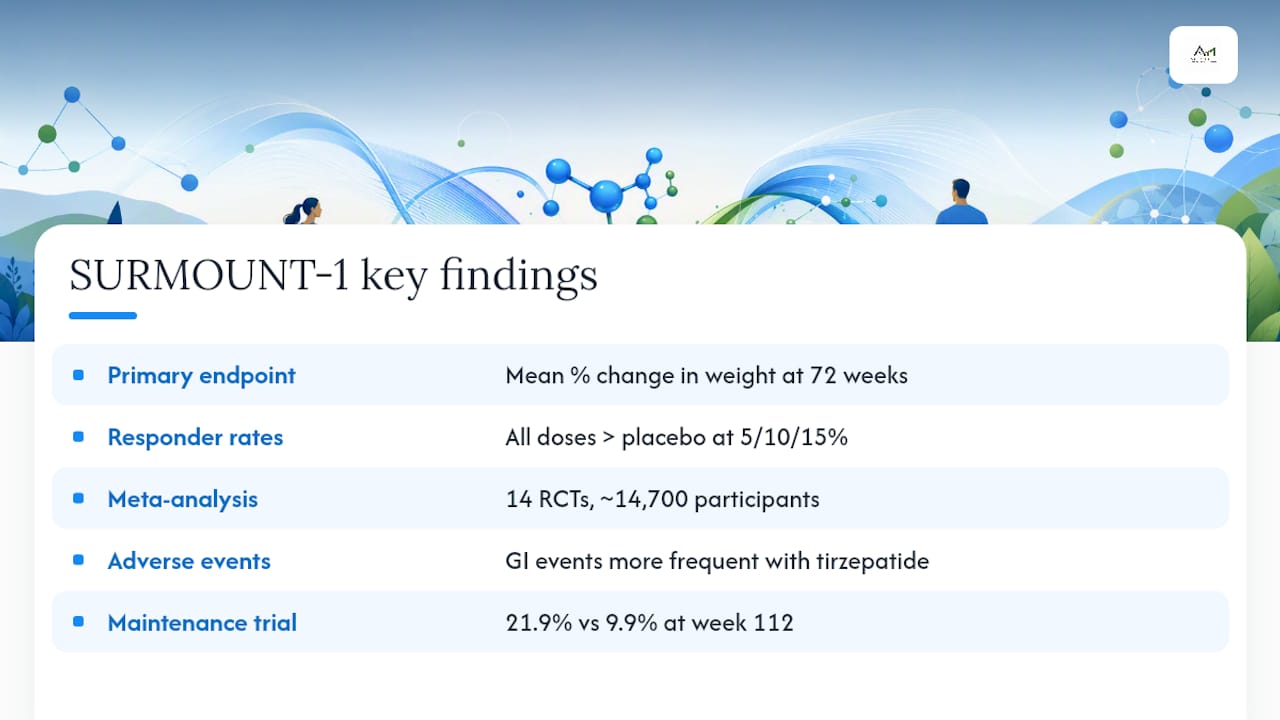
A 2024 systematic review and meta-analysis pooling 14 randomized controlled trials (approximately 14,700 participants) confirmed these findings at the population level: tirzepatide significantly increased the share of patients achieving 5%, 10%, and 15% weight-loss thresholds versus placebo, with comparable or better outcomes versus GLP-1 receptor agonists. GI adverse events were significantly more frequent with tirzepatide, a finding consistent across trials.
A narrative review and phase 3 synthesis noted that average weight reductions approaching 20% with higher tirzepatide doses are unusually large for an anti-obesity medication, placing tirzepatide above the historical range for this drug class.
Methodological note: SURMOUNT-1 reported both a treatment-regimen estimand (what happens in the real-world treatment course, including discontinuations) and an efficacy estimand (outcomes among those who stayed on drug). The numbers above reflect the treatment-regimen estimand, which is the more conservative and clinically meaningful figure. Trial duration was 72 weeks; long-term real-world data beyond that window remain limited. The Clinicaltrials contains full protocol and endpoint details for readers who want them.
Maintenance matters. The SURMOUNT-MAINTAIN trial (The Lancet) found that continuing tirzepatide at the maximum tolerated dose maintained a model-based weight reduction of 21.9% through week 112, compared with 9.9% among participants who switched to placebo. Stopping the drug leads to substantial weight regain. This is not a short-term fix.
Who qualifies for tirzepatide (Zepbound) under FDA labeling?
The FDA labeled Zepbound for adults with a BMI of 30 kg/m² or greater (obesity), or a BMI of 27 kg/m² or greater (overweight) with at least one weight-related comorbidity. The FDA prescribing information via DailyMed is the authoritative source for label-specific language.
Common weight-related comorbidities that satisfy the labeled indication include:
- Hypertension
- Dyslipidemia
- Type 2 diabetes or prediabetes
- Obstructive sleep apnea (OSA)
- Cardiovascular disease
Contraindications and key precautions:
- Personal or family history of medullary thyroid carcinoma (MTC)
- Multiple Endocrine Neoplasia syndrome type 2 (MEN 2)
- Known hypersensitivity to tirzepatide or any excipient in the formulation
- Pregnancy (weight-loss therapy is not recommended during pregnancy)
Mounjaro vs. Zepbound: Both contain tirzepatide, but they carry different FDA-approved indications. Mounjaro is labeled for glycemic control in adults with type 2 diabetes. Zepbound is labeled for chronic weight management. The active molecule is identical; the regulatory approval, labeling, and often the insurance coverage pathway differ. Prescribers and patients need to be clear on which indication applies to their situation.
Different health systems apply additional criteria. NICE guidance (TA1026) in the UK, for example, sets specific BMI thresholds and comorbidity requirements and recommends reassessing treatment response at six months on the highest tolerated dose. Eligibility rules outside the U.S. may be stricter or structured differently.
How is tirzepatide dosed and administered?
Tirzepatide is a once-weekly subcutaneous injection. The standard starting dose is 2.5 mg once weekly for the first four weeks, after which a physician guides up-titration in 2.5 mg increments every four weeks as tolerated, up to a maximum of 15 mg once weekly. Mayo Clinic's drug information summarizes this titration pattern and the approved dose range.
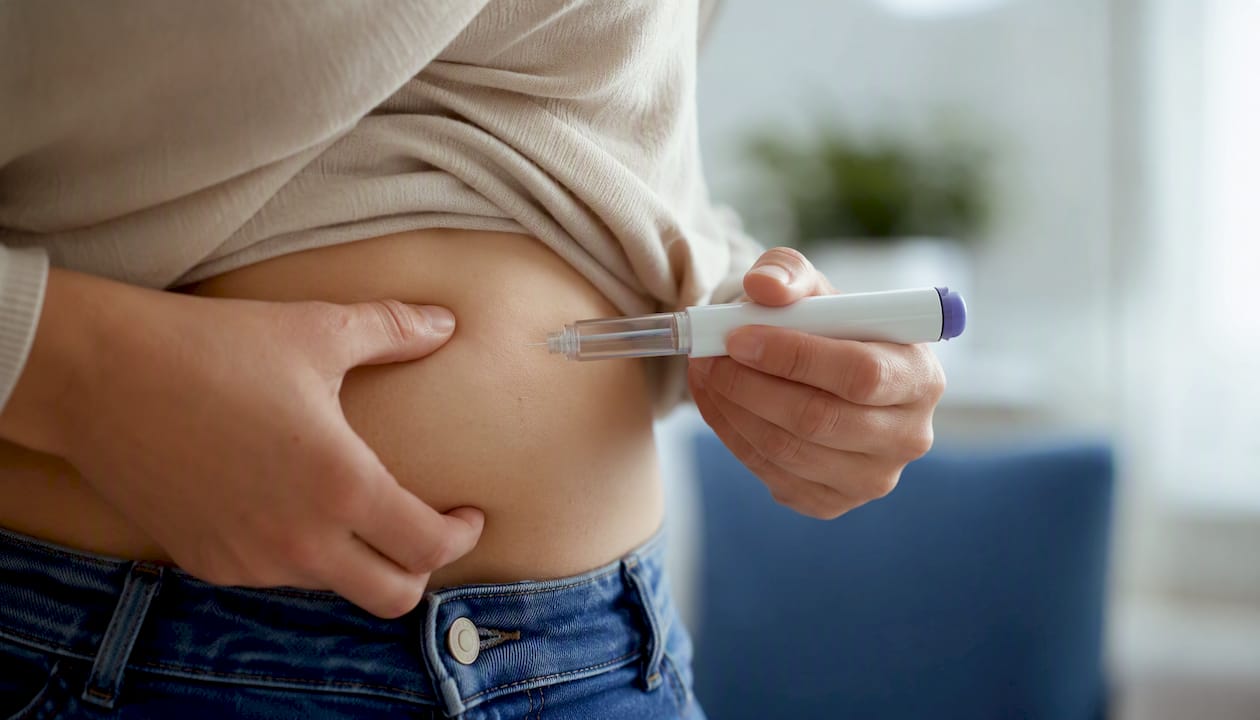
The slow escalation is not arbitrary. Most GI side effects occur during the titration phase, and moving up too quickly is the most common reason patients discontinue. Staying at a lower dose for an extra four weeks when GI symptoms are significant is a legitimate clinical strategy, not a failure.
Practical administration notes:
- Inject subcutaneously into the abdomen, thigh, or upper arm; rotate sites weekly.
- Store in the refrigerator (36°F to 46°F / 2°C to 8°C); may be kept at room temperature (up to 86°F / 30°C) for up to 21 days.
- If a dose is missed and the next scheduled dose is more than four days away, take it as soon as possible. If fewer than four days remain, skip the missed dose and resume the regular schedule.
- Contact your clinician if you experience persistent vomiting, severe abdominal pain, or signs of dehydration.
Monitoring during treatment: Clinicians typically track weight at each visit, assess GI tolerability, monitor blood glucose (especially in patients with diabetes or prediabetes), and review any new symptoms. Baseline labs before starting usually include a metabolic panel, lipid panel, HbA1c, and thyroid function.
Pro Tip: If GI side effects are limiting your ability to tolerate a dose increase, ask your clinician about extending the current dose for an additional four weeks before stepping up. Slower titration significantly improves long-term adherence without meaningfully delaying the overall weight-loss trajectory.
What side effects and safety risks should you know about?
GI events are the most common adverse effects with tirzepatide, and they are dose-related. The 2024 meta-analysis confirmed that GI adverse events occur significantly more often with tirzepatide than with placebo across trials, while serious adverse events remain uncommon. Importantly, trial and meta-analysis data show these effects are most frequent during the initial approximately 20-week titration period and tend to subside with continued therapy.
Common side effects (frequency language from trials):
- Nausea: most frequent, especially during dose escalation; typically mild to moderate
- Diarrhea: common, often transient
- Vomiting: less frequent than nausea but reported across all active dose groups
- Constipation: reported in a meaningful proportion of participants
- Decreased appetite: expected and mechanistically related to the drug's action
- Injection-site reactions: generally mild (redness, swelling, itching)
Serious risks and warnings:
- Thyroid C-cell tumors: Tirzepatide caused dose-dependent thyroid C-cell tumors in rodent studies. The relevance to humans is unknown, but the drug carries a boxed warning. Patients with a personal or family history of MTC or MEN 2 should not use it.
- Pancreatitis: Cases of acute pancreatitis have been reported. Discontinue tirzepatide and do not restart if pancreatitis is confirmed.
- Gallbladder events: Cholelithiasis and cholecystitis have been reported; clinicians should evaluate patients who develop biliary symptoms.
- Hypoglycemia: Risk increases when tirzepatide is combined with insulin or sulfonylureas. Dose reduction of the concomitant agent may be needed.
- Hypersensitivity reactions: Serious reactions including anaphylaxis have been reported; discontinue immediately if they occur.
Clinical perspective: "GI side effects with tirzepatide are predictable and manageable for most patients when titration is done correctly. The serious adverse events documented in trials are uncommon, but they are real signals that require informed consent and active monitoring. Patients who understand what to expect are far more likely to stay on therapy long enough to see meaningful results."
When to seek urgent care: Severe or persistent abdominal pain (possible pancreatitis), signs of a serious allergic reaction, or significant dehydration from vomiting or diarrhea warrant immediate medical attention.
What results can you realistically expect, and when?
Most of the weight loss seen in SURMOUNT-1 accumulated across the dose-escalation and early maintenance phases, with continued losses through the 72-week endpoint at higher doses. Here is how that typically maps onto a treatment timeline:
- Weeks 0 to 12: Early phase. Most patients are still in the lower dose range (2.5 mg to 5 mg). Modest weight loss begins, often 3% to 5% of body weight, alongside appetite reduction. GI side effects are most prominent here.
- Weeks 12 to 24: Mid-titration. Dose increases toward 10 mg. Weight loss accelerates for most patients. GI symptoms often begin to ease. Patients who tolerate this phase well tend to achieve the best long-term outcomes.
- Weeks 24 to 72: Maintenance and higher-dose phase. At 15 mg, mean weight loss in SURMOUNT-1 reached 20.9% by week 72. Individual results vary considerably based on dose tolerance, adherence, and lifestyle factors.
Real-world results tend to be somewhat lower than trial averages. Trial participants receive structured support, frequent monitoring, and consistent adherence reinforcement. In clinical practice, adherence gaps, dose adjustments for tolerability, and variable lifestyle engagement all affect outcomes.
The weight-regain question is not a footnote. SURMOUNT-MAINTAIN showed that participants who switched from tirzepatide to placebo after initial weight loss regained substantial weight, ending at a model-based 9.9% reduction from baseline by week 112, compared with 21.9% among those who continued at the maximum tolerated dose. Tirzepatide treats obesity as a chronic condition. Stopping it without a maintenance plan typically means losing most of the benefit.
How does tirzepatide compare with single-action GLP-1 drugs?
Available trial and meta-analysis evidence indicates tirzepatide produces larger average weight losses than single-action GLP-1 receptor agonists within the trial window. The 2024 meta-analysis found tirzepatide delivered comparable or better outcomes versus GLP-1 receptor agonists on weight-loss thresholds, while GI adverse events were more frequent with tirzepatide.
| Dose range / administration | 2.5 mg to 15 mg once weekly, subcutaneous | — | | Common adverse effects | Nausea, diarrhea, vomiting, constipation | Nausea, diarrhea, vomiting, constipation | | GI event frequency | Higher frequency vs. GLP-1 monoagonists in meta-analysis | Lower frequency vs. tirzepatide in comparative data | | Typical treatment duration | Ongoing; maintenance data through 112 weeks | Ongoing; maintenance data available | | Cost and coverage | Variable; prior authorization common | Variable; prior authorization common |
Key trade-offs to understand:
- Tirzepatide's larger average weight loss comes with a somewhat higher GI side-effect burden, particularly at the 10 mg and 15 mg doses.
- Long-term, direct head-to-head outcome data between tirzepatide and semaglutide beyond trial windows remain limited. Most comparisons are indirect.
- Neither drug class has demonstrated superiority on cardiovascular outcomes in a weight-management-specific trial yet, though cardiovascular outcome trials are ongoing.
The right choice depends on individual goals, tolerability, comorbidities, prior medication history, and cost. That decision belongs with a clinician who knows the full picture, not a comparison table.
What does tirzepatide cost, and how do you navigate coverage?
Coverage and out-of-pocket cost for tirzepatide vary widely. When prescribed under the labeled weight-management indication (Zepbound), coverage may be available through commercial insurance, but it almost always requires prior authorization and documentation of medical necessity. Many plans still exclude anti-obesity medications entirely, which is a known gap in U.S. coverage policy.
Coverage and cost considerations:
- Prior authorization: Most insurers require documentation of BMI, qualifying comorbidities, and often evidence of a prior structured weight-management program.
- Medicare Part D: As of current policy, Medicare Part D covers Zepbound for weight management when prescribed for an FDA-labeled indication; coverage details vary by plan.
- Medicaid: Coverage varies by state; many state Medicaid programs do not cover anti-obesity medications.
- Manufacturer savings programs: Eli Lilly offers a savings card for eligible commercially insured patients that can significantly reduce monthly out-of-pocket costs. Patients without insurance coverage may qualify for separate patient assistance programs.
- List price: The list price for Zepbound is substantial (publicly reported figures exceed $1,000 per month at list), though most patients with coverage pay far less.
Practical steps before your first prescription:
- Ask your clinician to document BMI, qualifying comorbidities, and any prior weight-management attempts in the prior authorization request.
- Check whether your insurer requires a specific period of documented lifestyle intervention before approving a GLP-1 medication.
- Visit Eli Lilly's official patient support resources to determine savings card eligibility before your first fill.
- If coverage is denied, ask your clinician about an appeal. Many initial denials are overturned with additional documentation.
A physician-supervised program can be valuable here not just for clinical oversight but for navigating the paperwork. Clinicians experienced with GLP-1 prescribing know what documentation insurers typically require and can structure the prior authorization to reduce back-and-forth.
What should a physician-supervised tirzepatide program include?
Safe tirzepatide treatment requires physician evaluation, baseline labs, a supervised titration plan, and ongoing follow-up. A program that hands you a prescription without those components is not providing adequate care.
Core components of a well-structured program:
- Comprehensive intake evaluation: Medical history, current medications, contraindication screening, weight history, and metabolic assessment.
- Baseline labs: Metabolic panel, lipid panel, HbA1c, thyroid function, and any additional panels indicated by individual history.
- Individualized titration plan: Starting dose, escalation schedule, and clear criteria for pausing or adjusting based on tolerability.
- Scheduled follow-ups: Regular check-ins (typically every four to eight weeks during titration, then quarterly) to assess weight, side effects, and labs.
- Adverse-event management: A clear protocol for what to do if serious symptoms arise, including direct clinician access.
- Behavioral and lifestyle support: Nutritional guidance, physical activity recommendations, and behavioral strategies integrated into the program, not treated as optional add-ons.
- Verified medication sourcing: Prescription fulfillment from licensed U.S. manufacturers or licensed pharmacies, with clear documentation of product authenticity.
Airmedfit's physician-supervised metabolic programs are built around these components: physician oversight, lab panels, individualized titration, and prescription fulfillment sourced from licensed U.S. manufacturers. The structure is designed to support both safety and long-term adherence.
Pro Tip: Before committing to any clinic or online program, ask three questions: (1) Which licensed physician will supervise my care and what are their credentials? (2) What is the lab schedule, and who reviews my results? (3) Where is the medication sourced, and can you provide documentation of the manufacturer's licensing? A program that cannot answer all three clearly is not the right program.
A clinical perspective on long-term weight management
Tirzepatide is one of the most effective pharmacologic tools available for weight management, and the trial data make that case clearly. But the patients who benefit most are those who enter treatment understanding that this is chronic metabolic care, not a course of antibiotics with a defined end date.
The weight-regain data from SURMOUNT-MAINTAIN are the most important thing many patients do not hear before starting. Stopping tirzepatide without a maintenance plan typically means losing most of the weight reduction achieved. That is not a flaw in the drug; it reflects the biology of obesity as a chronic condition. The implication is that the decision to start tirzepatide should come with a parallel conversation about what long-term management looks like, including what happens if insurance coverage changes, if side effects require dose reduction, or if the patient wants to eventually taper off.
Shared decision-making matters here more than with most medications. The right dose, the right timeline, and the right adjunct support are not the same for every patient. Any program worth its cost builds those elements in from the start.
Physician-supervised tirzepatide care through Airmedfit

Airmedfit provides physician-supervised metabolic care that can include prescription tirzepatide (Zepbound) where clinically appropriate. The program is structured around the components that evidence-based care requires: a physician evaluation, baseline lab panels, an individualized titration plan, and prescription fulfillment sourced from licensed U.S. manufacturers.
What that means in practice: you work with a licensed physician who reviews your history, orders the right baseline labs, and builds a titration schedule around your tolerance and goals. Follow-up is built in, not optional. Medication is sourced and fulfilled through verified channels.
This is not a subscription box with a prescription attached. It is a supervised clinical pathway for adults who want to pursue tirzepatide for weight management with the oversight the drug requires.
This article provides general health information and does not constitute medical advice. Consult a qualified clinician before starting any prescription medication.
Schedule a physician consultation at Airmedfit to find out whether a supervised tirzepatide program is appropriate for your situation.
Sources
The sources below are the primary literature and regulatory documents behind the claims in this article. If you want full trial details, prescribing information, or regulatory text, these are the right places to start.
- Tirzepatide Once Weekly for the Treatment of Obesity | New England Journal of Medicine
- FDA approves new medication for chronic weight management
- The Efficacy and Safety of Tirzepatide in Patients with Diabetes and/or Obesity: Systematic Review and Meta-Analysis of Randomized Clinical Trials - PMC
- Tirzepatide for maintenance of bodyweight reduction in people with obesity in the USA (SURMOUNT-MAINTAIN) - The Lancet
- Tirzepatide (subcutaneous route) - Side effects & dosage
- Dailymed
This article is general information, not a substitute for advice from a qualified doctor. Consult a qualified healthcare professional about your own circumstances before acting on anything here.