
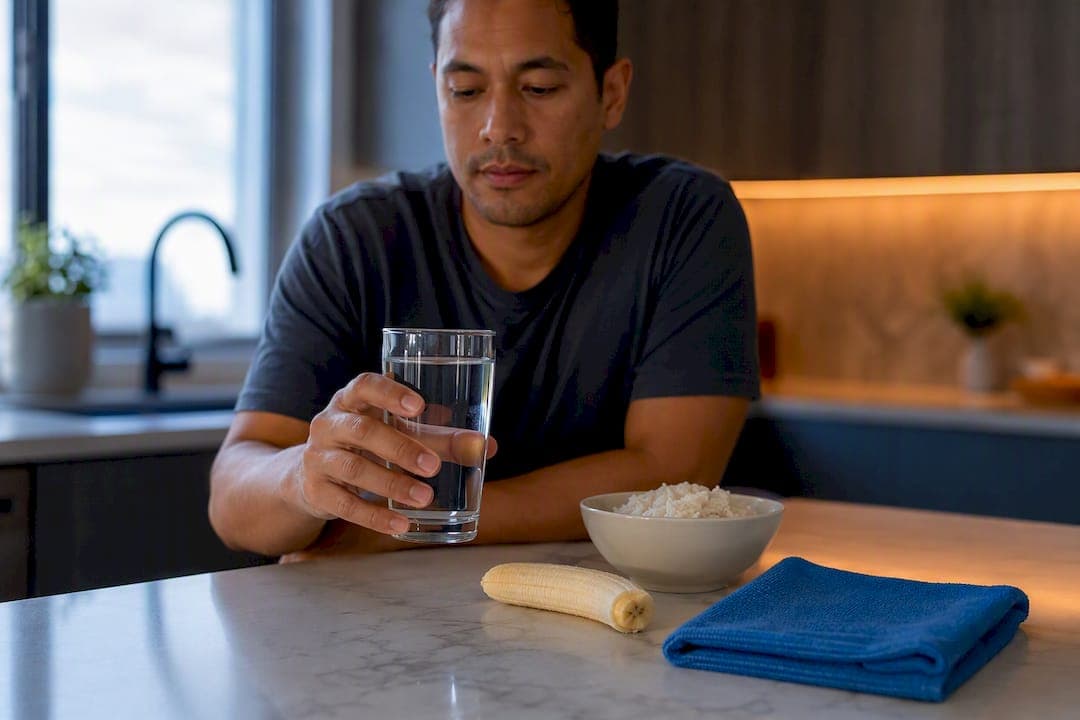
Yes, GLP-1 receptor agonists commonly cause diarrhea, especially when you start the medication or move up a dose. If it happens to you, sip an electrolyte drink, cut back on dairy and sugar alcohols for a few days, and call your prescriber if you can't keep fluids down or symptoms feel severe.
TL;DR:
- Diarrhea related to GLP-1 medications most often occurs during dose escalation and usually resolves within days to weeks as the body adjusts.
- Higher doses of drugs like semaglutide and tirzepatide increase the likelihood of gastrointestinal side effects, especially during early treatment phases.
- Managing early diarrhea involves hydration, bland diets, avoiding irritants, and possibly delaying dose increases to support gut adaptation.
- Persistent or severe diarrhea warrants prompt medical attention, especially for older adults, those with kidney disease, or if symptoms last beyond a few weeks.
- Adjusting concomitant medications like metformin or PPI can help reduce GI issues without stopping the GLP-1 therapy altogether.
Table of Contents
- Why GLP-1 Medications Cause Diarrhea
- How Common Is GLP-1 Diarrhea, and How Long Does It Last?
- Managing GLP-1 Diarrhea at Home: What Actually Helps
- When GLP-1 Diarrhea Becomes a Medical Concern
- What Your Prescriber Can Do If Diarrhea Persists
- What the Research Actually Shows
- Staying on Track While Your Body Adjusts
- Getting Supervised Support for GLP-1 Side Effects
- Sources
- FAQ
Why GLP-1 Medications Cause Diarrhea
GLP-1 receptor agonists work by mimicking a hormone your gut already makes after you eat. That hormone slows gastric emptying, tells your brain you're full, and changes how food moves through your intestines. It's a useful mechanism for weight loss and blood sugar control. It's also exactly why your digestive system reacts.
Slowing gastric emptying doesn't affect every part of the gut evenly. Food can sit longer in the stomach while intestinal transit further down speeds up or becomes irregular, and that mismatch is a common trigger for loose stools. In some people, the medication seems to overstimulate the stool reflex itself, the nerve signaling that tells your colon to move things along. The result is diarrhea that shows up not because something is wrong, but because your gut is adjusting to a new set of chemical instructions.
Several factors make this more or less likely for a given patient:
- Timing in your treatment. Symptoms cluster heavily around the start of therapy and around each dose increase, according to clinical consensus guidance on managing GLP-1 gastrointestinal side effects.
- Which drug and dose you're on. Tirzepatide and higher doses of semaglutide show higher rates of GI adverse events in trial data than lower starting doses.
- Other medications you take. Metformin is well known for causing loose stools on its own, and combining it with a GLP-1 can compound the effect. Proton pump inhibitors (PPIs) can also shift gut bacteria and motility in ways that add to the problem.
- Preexisting GI conditions. Irritable bowel syndrome, prior bowel surgery, or inflammatory bowel disease can make your gut more reactive to any motility-altering drug.
None of this means the medication is malfunctioning or that something has gone wrong with your prescription. It means your digestive tract is responding to a real physiological change, and that response tends to be strongest exactly when the dose is newest or highest. Semaglutide, sold as Ozempic and Wegovy, and tirzepatide, sold as Zepbound, both work through this same general pathway, though tirzepatide adds a second hormone receptor (GIP) to the mix, which may explain some of its distinct side-effect profile. You can find drug-specific detail in Airmedfit's semaglutide side-effect guide and its tirzepatide side-effect guide.
If you're on metformin or a PPI alongside your GLP-1, mention that explicitly at your next appointment. Reviewing those medications is one of the first things a prescriber will do if diarrhea becomes disruptive, because sometimes the fix isn't the GLP-1 at all.
How Common Is GLP-1 Diarrhea, and How Long Does It Last?
Diarrhea shows up often enough in GLP-1 trials that it's listed among the most frequently reported side effects for every drug in the class, but the exact rate depends heavily on which agent and dose you're looking at. Post hoc analyses of the SURMOUNT tirzepatide trials found gastrointestinal adverse events, including diarrhea, occurring more frequently in tirzepatide arms than in placebo groups, with rates in some higher-dose arms climbing toward the higher range as a percentage of participants. Separate systematic reviews comparing GLP-1 agents against tirzepatide confirm the same pattern: higher doses correlate with higher GI event rates, and the effect is dose-dependent rather than random.
Quick summary: GI adverse events, including diarrhea, in the SURMOUNT trials were most concentrated during dose escalation phases rather than spread evenly across treatment. Most cases were described as mild to moderate and tended to decline as treatment continued.
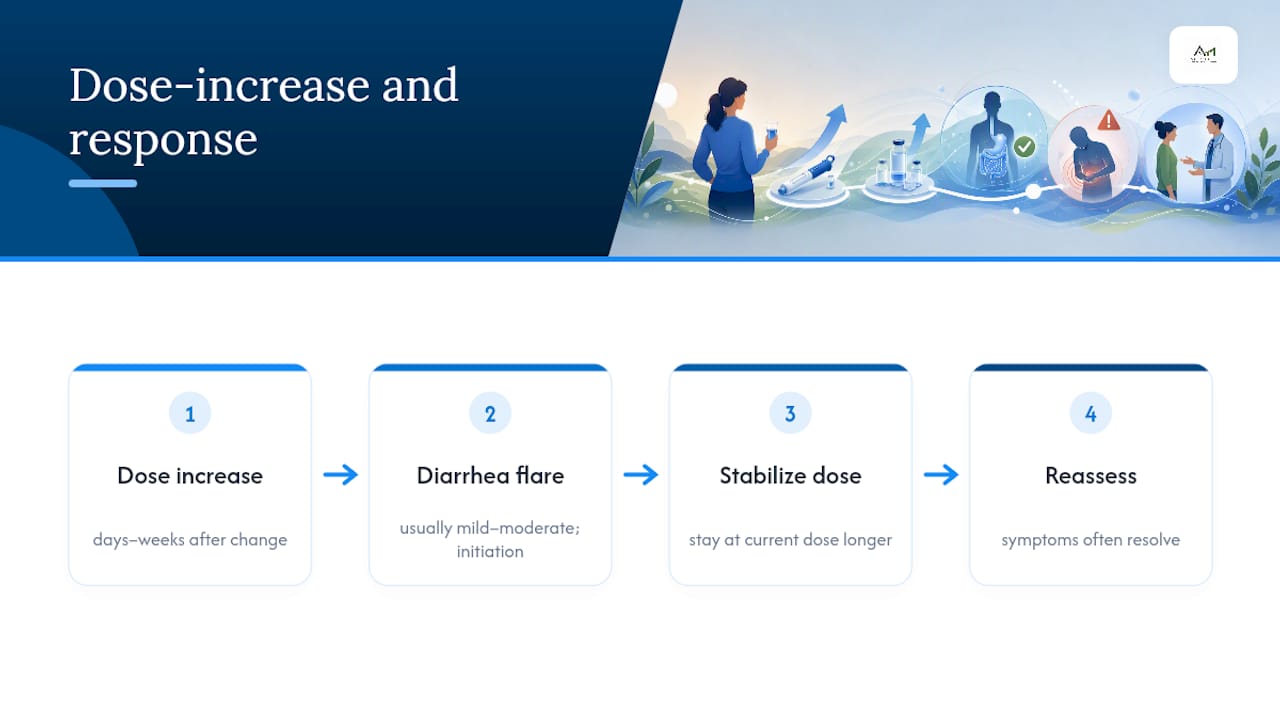
The timing pattern matters more than the raw percentage. Diarrhea on GLP-1 medications is overwhelmingly an initiation-and-titration phenomenon. You're most likely to notice it in the days to weeks right after starting the drug or right after your dose goes up, not months into stable maintenance therapy. Manufacturer guidance for tirzepatide echoes this, noting that GI side effects tend to diminish over time as the body adjusts to a given dose.
For most people, symptoms resolve within days to a few weeks without any drug changes at all, particularly if you make basic diet and hydration adjustments while your body settles in. Patient-facing summaries of Ozempic-related GI complaints report the same general timeline: a bout of loose stools that fades as the dose stabilizes. Persistent or severe diarrhea that drags on for weeks is far less common, but it does happen, and it's a signal worth taking seriously rather than waiting out indefinitely.
One practical implication follows directly from this pattern: if diarrhea flares every time your dose increases, staying at your current dose a little longer before the next step up is a reasonable, commonly used strategy. It's not giving up on progress. It's giving your gut time to catch up with the medication.
Managing GLP-1 Diarrhea at Home: What Actually Helps
Most cases of GLP-1 diarrhea respond well to a handful of practical changes, and you don't need anything exotic to make them. Here's a sequence that reflects both patient guidance from major health systems and consensus recommendations from GI specialists managing these medications.
-
Start with hydration, not food. Diarrhea pulls water and electrolytes out of your body faster than plain water alone can replace them. An oral rehydration solution, or even a diluted electrolyte drink with lower sugar content, does a better job restoring sodium and potassium than water by itself. Cleveland Clinic's guidance on managing GLP-1 side effects specifically recommends electrolyte replacement as a first-line response, and for good reason: dehydration from diarrhea can paradoxically make other GI symptoms, including constipation, worse once the acute episode passes. Watch for dizziness when standing, a dry mouth that doesn't improve with sips of water, or noticeably darker, less frequent urination. Any of those suggests you're behind on fluids and need to be more deliberate about replacing them.
-
Shift toward bland, low-residue foods for a few days. This is the classic BRAT approach (bananas, rice, applesauce, toast), and it still holds up. Plain chicken broth, well-cooked rice, boiled or mashed potatoes, and cooked carrots are easy on a gut that's already irritated. This isn't a diet you need to stay on for weeks. It's a short bridge while your digestive system settles.
-
Pull back on known irritants temporarily. Dairy is a common trigger, partly because transient lactose intolerance can flare during any GI upset. High-fiber raw vegetables, nuts, and seeds move quickly through an already-fast gut and can make loose stools worse rather than better. Sugar alcohols such as sorbitol and mannitol, found in a lot of "sugar-free" gum, protein bars, and diet candy, are notorious for causing diarrhea even in people without a GLP-1 prescription, so they're worth cutting out entirely during a flare. Caffeine and alcohol both stimulate gut motility and can intensify symptoms, so easing off both for a few days is a reasonable, low-cost experiment.
-
Consider a short course of an OTC antidiarrheal, with real caveats. Loperamide is commonly effective at slowing transit and giving your gut a break, and bismuth subsalicylate can help with both diarrhea and any associated stomach discomfort. Both are reasonable short-term options for otherwise healthy adults with mild-to-moderate symptoms. The caveat matters: these drugs treat the symptom, not the cause, and using them for more than a couple of days without checking in with a clinician risks masking a more serious problem, like an infection or a medication interaction that needs a different fix. If you have a fever, blood in your stool, or severe pain, skip the OTC route and call your prescriber instead.
-
Adjust how and when you eat. Smaller, more frequent meals put less pressure on a gut that's already processing food unpredictably. Staying upright for 20 to 30 minutes after eating, rather than lying down, can also ease the discomfort that sometimes accompanies GLP-1-related GI symptoms.
-
Keep a simple symptom and food log. Write down what you ate, what dose you're on, and when symptoms hit. Patterns show up fast this way, and a clear log makes any conversation with your prescriber far more productive than "it's been bad lately."
-
Reintroduce fiber and dairy slowly once things settle. Going back to your normal diet all at once after a flare can trigger a second round of symptoms. Add foods back gradually over several days rather than resuming your full diet the moment you feel better.
Pro Tip: If dairy seems to be a trigger, don't assume you've developed a permanent intolerance. A lot of people find dairy sensitivity during a GLP-1 flare fades once their gut adjusts to a stable dose, so it's worth cautiously reintroducing it a few weeks later rather than cutting it out long-term.
These steps work for the majority of mild-to-moderate cases, and they're consistent with what a comprehensive look at GLP-1 mechanisms and dietary strategy recommends for people navigating the early weeks of treatment. If you're still struggling after a genuine week of consistent effort on hydration and diet, that's a sign to loop your prescriber in rather than keep troubleshooting alone.
When GLP-1 Diarrhea Becomes a Medical Concern
Most diarrhea on GLP-1 medications is uncomfortable, not dangerous. But there's a real line between "annoying side effect" and "call your doctor now," and it's worth knowing exactly where that line sits before you're the one standing on it at 2 a.m.
Contact your prescriber or seek urgent care if you notice any of the following:
- Diarrhea that continues for more than a few days despite hydration and dietary changes.
- Blood or dark, tarry material in your stool.
- Severe, continuous abdominal pain, especially pain that's different from typical cramping.
- Signs of dehydration: dizziness on standing, a racing heart, very little or no urination, or extreme thirst that doesn't improve with fluids.
- Fever alongside GI symptoms, which can point to an infection rather than a medication side effect.
- Vomiting that prevents you from keeping any fluids down at all.
The FDA's prescribing information for GLP-1 medications specifically flags dehydration from GI adverse events as a pathway to kidney injury, which is why persistent fluid loss deserves prompt attention rather than a wait-and-see approach. A prescriber evaluating severe or ongoing diarrhea will often order basic labs, checking electrolytes and creatinine, to see whether dehydration has started affecting kidney function. In some cases, that assessment leads to a temporary pause in the medication until things stabilize.
Certain patients carry higher risk and should have a lower threshold for reaching out. Older adults lose fluid reserve faster and tolerate dehydration less well. People with chronic kidney disease are already working with reduced kidney function, so added fluid loss hits harder. And anyone taking a diuretic is compounding fluid loss from two directions at once, which raises the stakes of even a moderate diarrhea episode. If any of that describes you, don't wait out symptoms the way a healthy 30-year-old reasonably might.
What Your Prescriber Can Do If Diarrhea Persists
If home management isn't cutting it after a reasonable trial, your prescriber has several tools beyond "stop the medication," and it's worth understanding them before that conversation happens.
- Slower uptitration. Rather than moving to the next dose on the standard schedule, your prescriber can stretch out the time between increases, giving your gut more time to adapt at each step. This is one of the most commonly recommended interventions in expert consensus guidance on managing GLP-1 GI side effects, precisely because most adverse events cluster around dose changes.
- A temporary dose hold or reduction. If you're mid-flare, stepping back to a previous, better-tolerated dose for a few weeks before trying again is a legitimate strategy, not a failure of treatment.
- Switching agents. Not everyone tolerates every GLP-1 the same way. Someone struggling on tirzepatide might do better on semaglutide, or vice versa, since the two drugs differ in receptor targets and dosing structure. This isn't guaranteed, but it's a real option when one agent clearly isn't working for your gut.
- Reviewing interacting medications. If you're on metformin, your prescriber may adjust its dose or timing, since metformin-related GI upset can overlap with and worsen GLP-1 symptoms. The same goes for PPIs, which can be reassessed if they're contributing to the picture.
- Short, supervised courses of adjunct medication. In some cases, a clinician will recommend a brief, monitored course of an antidiarrheal or other supportive medication as part of a broader plan, distinct from the unsupervised, indefinite OTC use that risks masking a bigger problem.
One insight from the trial data is worth holding onto here: GI side effects aren't a requirement for the medication to work. Analyses of the SURMOUNT trials found that weight-loss efficacy didn't depend on patients experiencing GI adverse events, so tolerating diarrhea isn't the price of admission for results. If your gut is struggling, adjusting the plan doesn't mean giving up on the outcome you're after. Ongoing access to your prescription also matters here. If a switch in agent or dose is on the table, it's worth confirming ahead of time how your insurance handles GLP-1 coverage so a treatment change doesn't get delayed by a coverage gap.
What the Research Actually Shows
The strongest evidence on GLP-1 diarrhea comes from three places: randomized trial data, regulatory labeling, and multidisciplinary clinical consensus. Together they paint a consistent picture rather than a contradictory one.
| Evidence source | Key finding |
|---|---|
| SURMOUNT trial post hoc analyses | GI adverse events, including diarrhea, occurred more often with tirzepatide than placebo, concentrated during dose escalation |
| Multidisciplinary expert consensus | Recommends hydration, bland diet, slower titration, and medication review as core management strategies |
| FDA prescribing information | Lists diarrhea as a common adverse reaction and warns dehydration from GI events can progress to kidney injury |
| Manufacturer patient guidance (tirzepatide) | Notes GI effects are more frequent during dose increases and often ease with continued treatment |
The multidisciplinary consensus paper on managing GLP-1 GI adverse events is particularly useful because it wasn't written by one manufacturer defending one drug. It's a synthesis of GI specialists, endocrinologists, and pharmacists agreeing on a shared approach: hydrate early, adjust diet temporarily, slow the titration schedule when needed, and review any interacting medications before assuming the GLP-1 itself is the sole problem.
That consistency across a randomized trial program, a federal regulatory label, and an independent clinical consensus is about as strong a signal as you get in medicine that says the same thing three different ways: diarrhea is common, it's usually tied to dose changes, and it's manageable with a fairly standard set of tools.
Staying on Track While Your Body Adjusts
The temptation, when diarrhea hits in week two of a new prescription, is to assume the medication isn't right for you. Often that's not the real story. The GI symptoms and the metabolic benefits, weight loss, better blood sugar control, run on somewhat separate tracks, and plenty of patients get through the rough initiation period with a few adjustments and go on to tolerate the medication well long-term.
What tends to separate a smooth adjustment from a rough one isn't luck. It's paying attention early: logging symptoms, flagging patterns to your prescriber before things escalate, and treating dose changes as a deliberate process rather than something to push through on willpower alone. Persistent or severe symptoms deserve a real conversation, not quiet endurance.
For people who want closer monitoring during that adjustment period, working with a clinician who can review labs and adjust dosing in real time is a legitimate path, not an overreaction to a manageable side effect.
— Organic
Getting Supervised Support for GLP-1 Side Effects
Working through GLP-1 side effects without a clinician checking in is like adjusting a recipe by taste alone when you could just call the chef. Airmedfit's physician-supervised model gives you an actual person reviewing your dose, your symptoms, and your labs, instead of leaving you to guess whether your diarrhea is normal adjustment or a sign to change course.
An initial consult typically covers a full medication review, a plan for managing whatever side effects you're dealing with, and lab orders if your prescriber wants to check electrolytes or kidney function before adjusting anything. Airmedfit sources its GLP-1s and peptides exclusively from licensed US manufacturers, and every dose change happens under physician oversight rather than trial and error on your own. Lab monitoring through Men's and Women's Essential panels gives your prescriber real data to work with instead of guesswork.
Supervised care isn't a requirement for managing GLP-1 diarrhea. It's an option for anyone who'd rather have a physician adjusting the plan alongside them. If that sounds like the support you want, you can book a doctor's consultation to start with a full review of your current medication and symptoms.
Sources
- Clinical Recommendations to Manage Gastrointestinal Adverse Events in Patients Treated with Glp-1 Receptor Agonists: A Multidisciplinary Expert Consensus
- Managing possible side effects | Zepbound® (tirzepatide)
This article is general information, not a substitute for advice from a qualified doctor. Consult a qualified healthcare professional about your own circumstances before acting on anything here.
FAQ
Will diarrhea from GLP-1 medications go away on its own?
For most people, yes. Diarrhea tied to starting a GLP-1 or increasing the dose typically eases within days to a few weeks as the body adjusts, according to manufacturer and clinical guidance. Persistent symptoms beyond that window are less common and worth discussing with your prescriber.
Do GLP-1 medications cause dumping syndrome?
GLP-1 receptor agonists aren't typically associated with dumping syndrome, which is more commonly linked to stomach surgery. The diarrhea they cause comes from altered gastric emptying and intestinal transit rather than the rapid food dumping seen after bariatric procedures.
How can I prevent diarrhea when starting or increasing a GLP-1 dose?
Sticking closely to the recommended titration schedule, staying well hydrated, and avoiding known trigger foods like sugar alcohols and high-fat meals around dose changes lowers your risk. If flares keep happening at each dose increase, ask your prescriber about a slower titration schedule.
What can I eat to stop GLP-1 diarrhea?
Bland, low-residue foods like plain rice, bananas, boiled potatoes, and chicken broth are easiest on an irritated gut, while dairy, raw high-fiber vegetables, caffeine, and sugar alcohols are worth avoiding temporarily. Rehydrating with an electrolyte solution alongside these dietary changes speeds recovery more than diet alone.
Does Airmedfit help patients manage GLP-1 side effects like diarrhea?
Professional consultations can include medication reviews and personalized plans for managing side effects, along with lab panels to check electrolytes or kidney function if needed. Pricing for consultations and lab services is listed on the Airmedfit products page.