

Yes, semaglutide commonly causes constipation. It happens because the drug slows digestion, and it shows up in roughly a quarter of people taking it. Start with water, gentle fiber, movement, and a short course of an over-the-counter laxative if needed. Call your prescriber right away if you have severe belly pain, vomiting, or can't pass gas.
TL;DR:
- About 24% of semaglutide users experience constipation, mainly around dose increases, due to slowed gastric emptying caused by the medication.
- Effective self-care includes hydrating deliberately, gradually increasing soluble fiber, and engaging in post-meal movement to stimulate the colon.
- Most constipation resolves within one to two weeks as the body adapts, but persistent or worsening symptoms require medical evaluation.
- Severe symptoms such as inability to pass gas, severe pain, vomiting, or fever indicate urgent medical attention and should not be managed at home.
- Regular monitoring of bowel movements and stool consistency helps guide timely adjustments and ensures safe use of semaglutide.
Table of Contents
- Semaglutide Constipation Relief: What to Try First
- Preventing Constipation While Staying on Semaglutide
- Why Semaglutide Causes Constipation in the First Place
- How Long Semaglutide Constipation Usually Lasts
- When Constipation Needs Medical Attention, Not Home Remedies
- How Physician-Supervised Care Handles This Differently
- Get Clinician Support for Semaglutide Side Effects
- Sources
- FAQ
Semaglutide Constipation Relief: What to Try First
You don't need to wait it out silently, and you shouldn't overcorrect with harsh laxatives either. The steps below go in order of what to try first, from gentlest to most aggressive.
-
Hydrate deliberately, not just more. Aim for water spread through the day rather than one big gulp before bed. If you're nauseated and drinking less overall, that dehydration alone can stall your gut. Skip heavy caffeine and alcohol on rough days since both pull fluid out of your system when you need it staying in.
-
Add soluble fiber slowly. Psyllium husk (the active ingredient in Metamucil) is a reasonable starting point, but jumping straight to a full dose can bloat you badly if your gut is already sluggish. Start with half the labeled serving mixed into water, and increase every few days. Oats, chia seeds, and cooked fruit work the same way with less trial and error.
-
Move after meals. A 10 to 15-minute walk after eating stimulates the colon more reliably than almost anything else on this list, and it costs nothing. Pair it with a consistent bathroom time each day, ideally 20 to 30 minutes after a meal, when your gut's natural reflex is strongest. Elevating your feet on a low stool while sitting on the toilet also helps straighten the rectal angle and makes passing stool easier.
-
Try an osmotic laxative before a stimulant one. Polyethylene glycol (MiraLAX) draws water into the colon and tends to be gentler than stimulant options. Docusate (Colace), a stool softener, can help if straining is the main issue rather than complete lack of urge. Save stimulant laxatives like bisacodyl or senna for short-term rescue use only. They work fast, but relying on them regularly can make your gut lazier over time.
-
Stop self-treating and call your clinician if things get worse instead of better. Persistent symptoms after a few days of trying the above, or new severe pain, is your signal to stop guessing and get medical input.
Pro Tip: Track your bowel movements for a week using your phone's notes app, logging frequency and how hard the stool was to pass. That record turns "I've been constipated" into specific, useful information your prescriber can act on quickly.
Preventing Constipation While Staying on Semaglutide
The goal isn't to fix constipation once. It's to stop it from becoming a monthly fight every time your dose goes up. A few consistent habits do more than any single remedy.
- Build toward 25 to 30 grams of fiber daily, but increase gradually over one to two weeks. Jumping there overnight often causes more bloating and gas than it solves.
- Swap in high-fiber staples you'll actually eat: berries instead of juice, oats instead of white toast, and beans stirred into soups a few times a week.
- Check your urine color as a rough hydration gauge. Pale yellow generally means you're drinking enough; dark yellow is a signal to drink more before you feel thirsty.
- Review other medications with your prescriber. Iron supplements, calcium or aluminum based antacids, and opioid pain relievers are common, often overlooked contributors to constipation.
- Keep a light daily walking habit rather than relying on occasional intense exercise, since gut motility responds better to regular, moderate movement.
- During the first week after any dose increase, lean into fiber and fluids a little harder than usual since that window is when symptoms are most likely to flare.
None of this requires a strict diet overhaul. It's mostly about sequencing: fiber up slowly, water in consistently, movement daily.
Why Semaglutide Causes Constipation in the First Place
Semaglutide belongs to the GLP-1 receptor agonist class, and one of its core jobs is slowing gastric emptying. That's part of why it works for appetite control. Food sits in your stomach longer, you feel full sooner, and you eat less. The same mechanism that curbs appetite also slows movement further down the digestive tract, which is the most plausible driver behind semaglutide-related constipation.
Symptoms tend to show up right around dose increases, not randomly throughout treatment. That's not a coincidence. Each step up in dose intensifies the gastric slowdown, and your gut needs time to adjust before the next increase arrives.
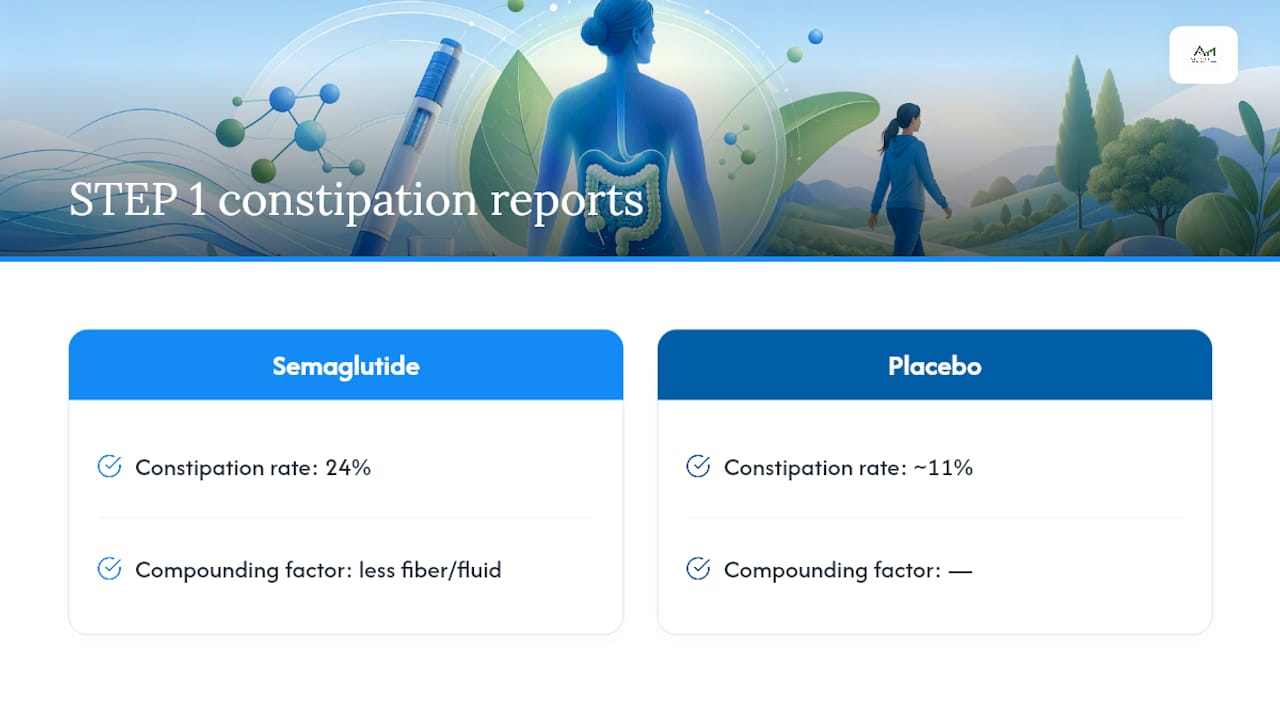
The scale of this isn't small. In the STEP 1 Wegovy trial, about 24% of semaglutide-treated participants reported constipation, compared to roughly 11% on placebo. Eating less also means taking in less fiber and fluid without necessarily meaning to, which quietly compounds the slowdown from the medication itself.
How Long Semaglutide Constipation Usually Lasts
Most people notice constipation near the start of treatment or right after a dose increase, and it often eases within one to two weeks as the body adjusts. Some people carry mild symptoms longer, especially through each new titration step.
Constipation that hasn't improved after several weeks, or that's getting steadily worse rather than better, counts as persistent and deserves a conversation with your prescriber rather than more waiting. Track three things to bring to that conversation: how many bowel movements you're having per week, what they look like using the Bristol Stool Chart as a rough reference, and whether you're having pain, vomiting, or trouble passing gas at all.
When Constipation Needs Medical Attention, Not Home Remedies
Most semaglutide constipation resolves with the steps above. But a small set of symptoms means you stop self-treating immediately and get evaluated the same day.
Call your doctor or seek urgent care if you experience any of the following:
- Complete inability to pass gas
- Severe or worsening abdominal pain
- Persistent vomiting
- Fever alongside constipation
- Rectal bleeding
These are the red-flag symptoms the NIDDK specifically identifies as requiring prompt medical evaluation, because they can indicate something beyond ordinary drug-related slowdown. The prescribing information for Wegovy carries warnings about rare but serious GI events, including ileus and intestinal obstruction, particularly during dose escalation.
Trial data shows constipation at roughly 24% among semaglutide users versus about 11% on placebo, a gap wide enough that clinicians expect it as a routine side effect rather than a rare fluke. That expected-versus-serious distinction is exactly why vigilance matters even for a "common" symptom.
If self-care isn't cutting it, your prescriber has more options than what's sitting on a pharmacy shelf. The NIDDK notes that clinicians may recommend short-term laxative regimens and should be involved in any longer-term use, rather than patients managing chronic laxative use on their own. For some patients, prescription agents like linaclotide or plecanatide come into play when over-the-counter options aren't enough. A clinician visit for persistent symptoms typically includes a review of every medication you're taking, a look at whether your titration pace needs adjusting, and imaging or referral if there's any concern about a blockage. MedlinePlus specifically advises telling your doctor if constipation becomes severe or doesn't let up, rather than pushing through it indefinitely.
How Physician-Supervised Care Handles This Differently
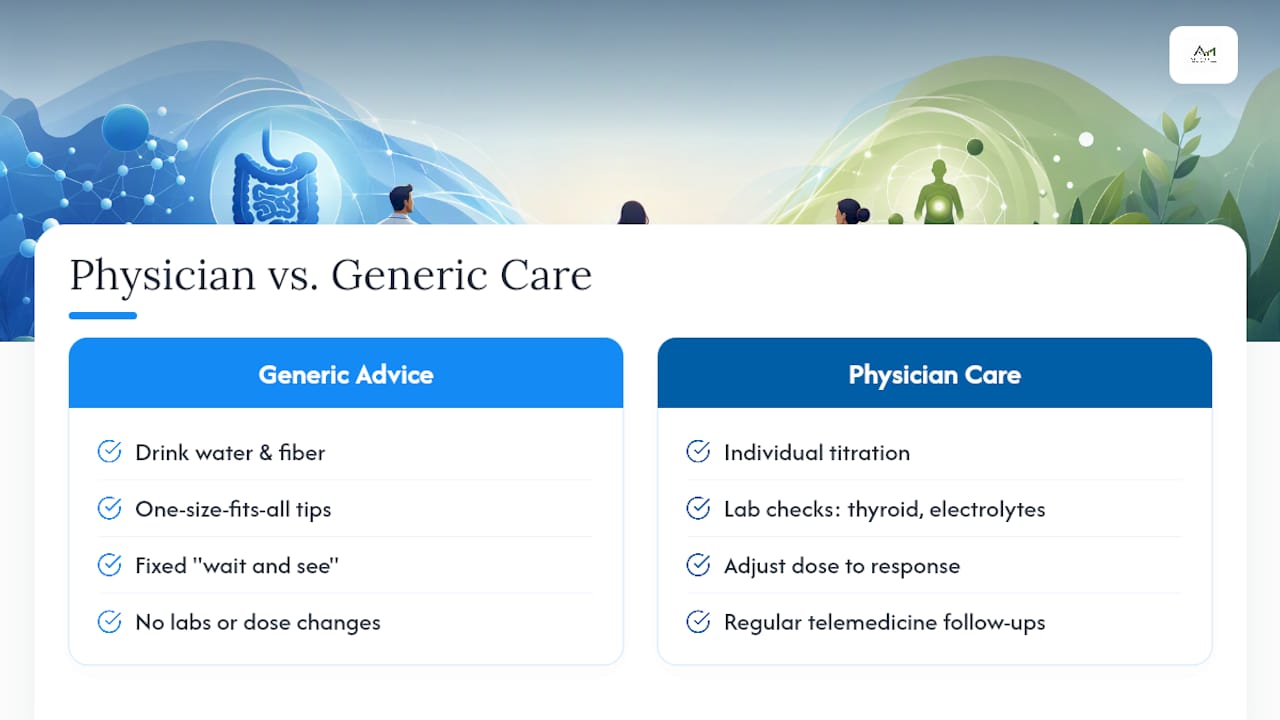
Most constipation advice online treats it as a one-size-fits-all problem: drink water, eat fiber, wait it out. That works for plenty of people, but it ignores something clinicians see constantly: constipation on semaglutide can mask or overlap with other causes, from iron supplements to low-fiber eating patterns that predate the medication entirely.
Physician-supervised titration means dose increases get adjusted based on how your body is actually responding, not a fixed calendar. Lab panels can flag issues like thyroid dysfunction or electrolyte imbalances that mimic or worsen GI slowdown, catching problems a generic symptom checklist would miss. Regular telemedicine follow-ups turn "wait and see" into an ongoing conversation instead of a guessing game you're running alone.
— Organic
Get Clinician Support for Semaglutide Side Effects
Self-care handles most cases of semaglutide constipation, but not every case, and figuring out which one you're dealing with is exactly where guesswork gets risky. You can connect with physician-supervised care built around exactly this kind of medication management, rather than managing trial statistics and red-flag lists on your own.
A Doctor's Consultation gives you a direct line to review your symptoms and adjust your titration pace if needed, with Async Doctor's Consult options at $49 one time and Sync Doctor's Consult visits at $120 one time. If your prescriber wants a fuller picture, the Men's Essential and Women's Essential lab panels, priced at $129 and $139 respectively, screen for the kinds of issues that can worsen GI slowdown. Book a telemedicine consult to get your semaglutide plan reviewed by a clinician who can actually adjust it, not just tell you to drink more water.
Sources
For deeper reading, consult the NIDDK's constipation symptom and red-flag guidance, the Wegovy prescribing information on DailyMed, MedlinePlus's semaglutide drug entry, and the STEP 1 trial safety data. For broader program guidance, see this partner overview of semaglutide support options.
This article is general information, not a substitute for advice from a qualified doctor. Consult a qualified healthcare professional about your own circumstances before acting on anything here.
- PMCID: PMC9293236 — semaglutide clinical-trial safety data
- NIDDK — Symptoms & causes of constipation
- MedlinePlus — Semaglutide drug information
- DailyMed — WEGOVY (semaglutide) prescribing information
FAQ
How do you avoid getting constipated on semaglutide?
Increase fiber gradually rather than all at once, drink water consistently through the day, and walk after meals to keep your gut moving. Starting these habits before or right at dose increases, when constipation risk rises most, works better than waiting until symptoms appear.
What's the best laxative for semaglutide constipation?
Osmotic laxatives like polyethylene glycol (MiraLAX) tend to be gentler starting points than stimulant laxatives, and stool softeners like docusate help when straining is the main problem. The NIDDK recommends coordinating with a clinician for anything beyond occasional short-term use.
Can semaglutide cause a bowel obstruction?
It's rare, but the prescribing information for Wegovy warns of serious GI events including ileus and intestinal obstruction, particularly around dose escalation. Inability to pass gas, severe abdominal pain, or persistent vomiting are signs to seek care immediately rather than waiting it out.
How often should you have a bowel movement on semaglutide?
There's no single universal number, but a noticeable drop from your normal pattern, especially fewer than three bowel movements a week, is worth tracking and mentioning to your prescriber. Logging frequency and stool form gives your clinician something concrete to work from rather than a vague description.
When should I contact my prescriber about semaglutide constipation?
Reach out if home remedies haven't helped after several days, or immediately if you develop severe pain, vomiting, fever, or can't pass gas. A telemedicine consult makes that conversation fast, especially if you've already been tracking your symptoms.