

The most effective GLP-1 nausea remedies are small, slow meals paired with frequent small sips of fluid, low-fat food choices, and staying upright after eating. The single most important clinical move is telling your prescriber so they can slow or pause your dose escalation. Skip the urge to self-treat with over-the-counter or prescription antiemetics before that conversation happens.
TL;DR:
- Flexible titration schedules significantly reduce nausea incidence and duration, with roughly one-third fewer patients experiencing symptoms when doses are increased gradually.
- Consuming five or six small, low-fat meals daily, avoiding heavy or fried foods, and staying upright after eating can help manage delayed gastric emptying and nausea.
- Maintaining detailed symptom and intake logs allows prescribers to adjust dose escalation safely and identify when medical intervention is necessary.
- Natural remedies like ginger and OTC antacids are low-risk options to alleviate mild nausea, but prescription antiemetics should only be used under medical guidance due to potential side effects.
- Promptly seeking medical advice is crucial for persistent vomiting, signs of dehydration, or severe discomfort, especially in cases of ongoing fluid loss or worsening symptoms.
Table of Contents
- What Causes GLP-1 Nausea and How Do You Manage It?
- How Do You Ask Your Prescriber to Slow Down Titration?
- Are Ginger and OTC Antiemetics Safe for GLP-1 Nausea?
- How Do You Stay Hydrated and Manage Constipation on GLP-1?
- What Should You Track and When Is Nausea an Emergency?
- Why Does Physician-Supervised Titration Improve Safety?
- Living With GLP-1 Side Effects Without Giving Up on Treatment
- Get Help Managing GLP-1 Side Effects With Supervised Titration
- Sources
- FAQ
What Causes GLP-1 Nausea and How Do You Manage It?
GLP-1 medications like semaglutide and tirzepatide slow gastric emptying on purpose. Food sits in your stomach longer, which helps you feel full, but it also means a normal-sized meal can suddenly feel like too much. These drugs also act on nausea centers in the brainstem directly, so the queasiness isn't only about what's in your stomach. It's a two-front problem: mechanical slowdown below the neck, and a chemical signal in your brain telling you something is off, even when nothing is technically wrong.
That combination is why portion size matters more on GLP-1 therapy than it did before you started. A turkey sandwich that never bothered you last year can trigger real nausea now, simply because it's sitting in a stomach that empties at half speed.
A few rules make a measurable difference:
- Eat five or six small meals instead of three large ones, and stop the moment you feel satisfied, not full.
- Choose low-fat, soft-texture foods: toast, crackers, plain yogurt, bananas, rice, and skinless chicken or fish.
- Avoid fried food, heavy cream sauces, and large-volume plates. Fat digests slowly and compounds the delayed-emptying problem.
- Eat slowly. Wolfing down food gives your stomach no time to signal fullness before you're already overfull.
- Sip fluids between meals rather than gulping a large glass with food, which stretches an already-slow stomach.
- Stay upright for 30 to 60 minutes after eating, and skip vigorous exercise right after a meal.
For mornings when nausea hits before you've eaten anything, a "starter plate" of dry toast, a few saltine crackers, or a small handful of pretzels settles the stomach better than jumping straight into a full breakfast. Keep portable snacks like applesauce cups, low-fat granola bars, or plain rice cakes in your bag for injection days, when nausea tends to peak. On a rough day, a simple recovery plan of clear broth, plain toast, and diluted juice or an electrolyte drink works better than forcing a normal meal.
One overlooked mistake is "catch-up" eating: skipping meals because you feel fine, then sitting down to a large dinner once you're finally hungry. With delayed gastric emptying, that single large meal is often exactly what triggers nausea a few hours later, according to a dietary review on GLP-1 gastrointestinal symptoms. Smaller, steadier caloric intake across the day tends to work better than three big sittings.
Pro Tip: Keep a small container of dry crackers on your nightstand. Eating a few before you even get out of bed can blunt morning nausea before it starts, especially the day after an injection.
How Do You Ask Your Prescriber to Slow Down Titration?
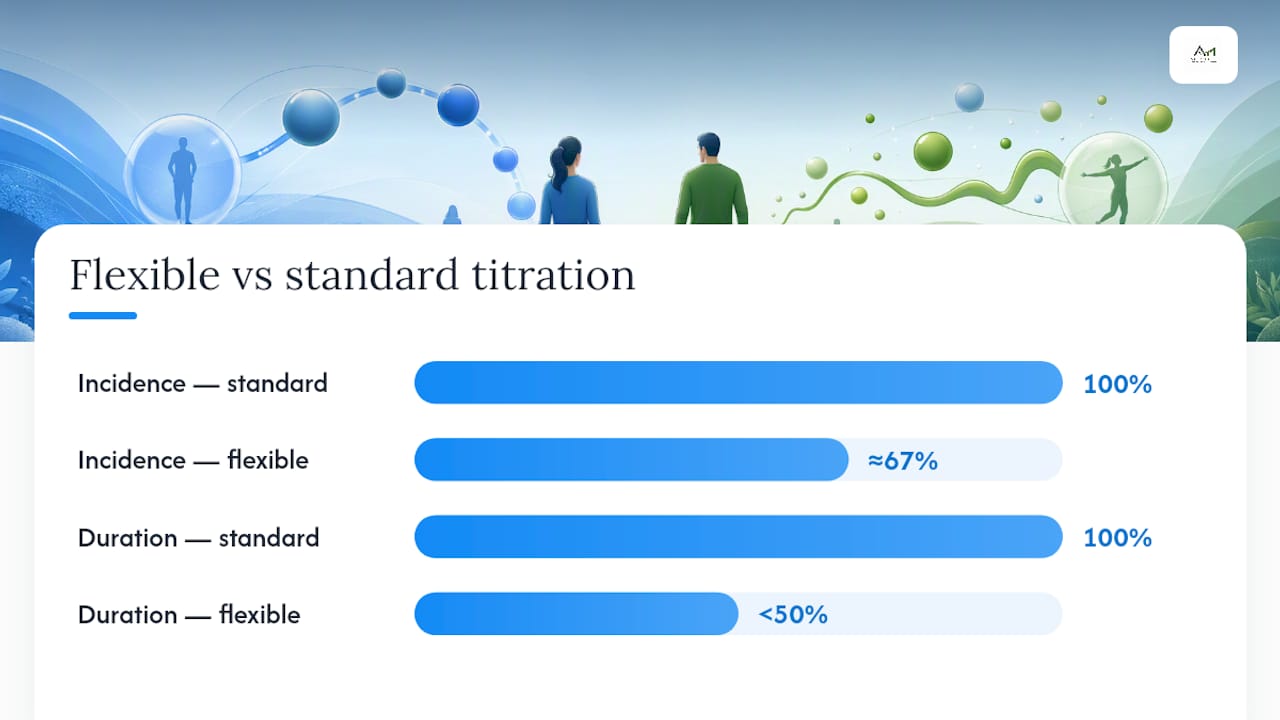
Titration speed is the biggest lever you have, and it's one most patients never think to push back on. A randomized study on flexible dose escalation found nausea occurred significantly less often on a flexible schedule compared to a standard schedule, with symptom duration notably shorter as well, according to a 2026 clinical review on managing GLP-1 nausea and vomiting. That's not a marginal difference. It's roughly a third fewer people getting nauseous, and less than half the misery when it does happen.
Dose escalation should be treated like a marathon, not a sprint. Staying longer at a tolerated dose, or stepping back down to the last dose you handled well, usually beats pushing forward and masking the fallout with medication, according to patient guidance from Diatribe's tips on navigating GLP-1 nausea.
When you call or message your prescriber, specifics get you a better response than "I feel sick." Try covering:
- When nausea starts relative to your injection (same day, 24 hours later, tied to certain meals).
- How severe it is on a simple scale, and whether it's constant or comes in waves.
- Whether you're keeping fluids down and roughly how much you're drinking.
- Which foods you can tolerate right now versus what you used to eat comfortably.
Armed with that, most prescribers have a handful of standard responses: extending the interval between dose increases, holding at your current dose for another cycle, stepping down to the last dose you tolerated well, or simply accepting a lower maintenance dose as your long-term target instead of chasing the highest labeled dose. None of that is a failure. It's the same flexible-titration logic that produced the numbers above.
What you should never do is adjust the dose yourself, skip injections randomly, or stop the medication outright without telling your prescriber. Abrupt changes can produce their own rebound symptoms and make it harder for your clinician to figure out what's actually driving your nausea.
Are Ginger and OTC Antiemetics Safe for GLP-1 Nausea?
Ginger is the most commonly recommended natural remedy for GLP-1 nausea, and it's reasonable as an adjunct, though GLP-1–specific evidence for it is limited. Ginger tea, ginger chews, or small amounts of fresh ginger with meals are low-risk options most people can try without clinician sign-off, per the same Diatribe guidance on GLP-1 nausea.
Antacids can help when reflux or indigestion is layered on top of GLP-1 nausea, which happens often given how much slower digestion runs. A standard over-the-counter antacid or an H2 blocker taken under your clinician's guidance may ease the burning-with-nausea combination, though it won't fix delayed gastric emptying on its own.
One study found nausea incidence dropped from 64.2% to 45.1% simply by switching from standard to flexible dose titration.
Prescription antiemetics are a different category entirely, and they need real caution:
- Ondansetron is commonly used short-term, but it slows gut motility and can worsen constipation, an issue GLP-1 patients already deal with frequently.
- Metoclopramide speeds gastric emptying in some cases but carries movement-disorder risks with extended use.
- Promethazine can help with acute nausea but causes significant sedation and shouldn't be combined casually with other medications.
Short-term antiemetic use is common in practice, but prescribers weigh a drug's effect on motility and constipation risk against the benefit of symptom control, according to a review on GLP-1 gastrointestinal side effects. The practical rule: antiemetics belong in short courses after your clinician reviews your case, never as a workaround to force a dose increase your body isn't ready for.
How Do You Stay Hydrated and Manage Constipation on GLP-1?
Small, frequent sips beat large glasses of water, especially during and right after meals when your stomach is already stretched from food. Spacing fluids between meals rather than alongside them reduces the bloated, queasy feeling many people describe as their worst trigger.
If vomiting or diarrhea sets in, oral rehydration solutions replace lost electrolytes more effectively than plain water alone. Watch for these common digestive side effects and their basic home responses:
- Constipation: increase fiber gradually, add a gentle over-the-counter laxative if needed, and stay ahead of it rather than waiting until it's severe.
- Diarrhea: loperamide can help short-term, but persistent or bloody diarrhea needs clinician review, not self-treatment.
- Reflux: skip carbonated and acidic drinks, stay upright after meals, and try an antacid only after checking with your prescriber.
Dehydration from vomiting is a genuine medical concern, not just discomfort. It can strain kidney function, and a clinical review on GLP-1 nausea and vomiting management recommends clinician assessment whenever vomiting or diarrhea makes it hard to keep fluids down. Watch your urine output, and pay attention to lightheadedness when you stand up. Both are early signs that home measures aren't enough anymore.
What Should You Track and When Is Nausea an Emergency?
A simple daily log gives your prescriber real data instead of a vague "I've been nauseous." Record these each day:
- Injection date, time, and dose.
- Meals eaten, portion size, and how soon nausea started afterward.
- Nausea severity and how long it lasted.
- Any vomiting episodes and their frequency.
- Bowel movements, including any constipation or diarrhea.
- Fluid intake and any signs of reduced urination.
- Other medications taken that day.
Tracking symptoms against injection timing and dose changes helps your prescriber separate a normal, temporary escalation reaction from something else entirely, according to the same 2026 clinical review.
Certain symptoms cross the line from "manage at home" to "call now." Contact your prescriber promptly for persistent vomiting, an inability to keep any fluids down, signs of dehydration, or worsening pain despite the steps above. Go to urgent or emergency care immediately for severe abdominal pain, fainting, chest symptoms, or vomiting that continues for more than 24 hours. Routine follow-up is appropriate for milder, predictable nausea that responds to diet changes, while anything involving fluid loss deserves a same-day call rather than waiting for your next scheduled visit. For a fuller rundown of expected timelines and warning signs, semaglutide's common side-effect pattern is worth reviewing alongside your log.
Why Does Physician-Supervised Titration Improve Safety?
Home strategies handle a lot, but they don't replace a clinician's ability to check interactions, order labs, and make a real titration decision. A physician reviewing your case can confirm whether antiemetics are safe given your other medications, order labs if dehydration or electrolyte shifts are suspected, and decide whether to slow, hold, or step down your dose based on your actual response, not a generic schedule.
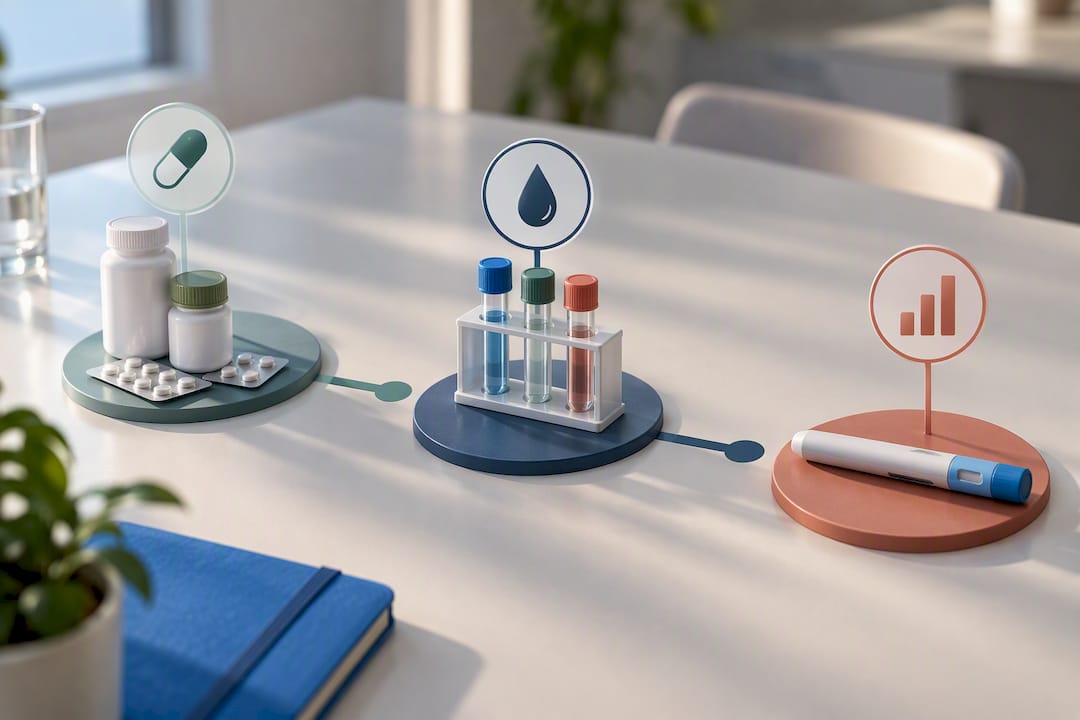
That supervision matters most in specific situations: recurrent dehydration episodes, a medication list complicated by multiple prescriptions, or nausea that stays at a moderate to severe level despite following the diet and hydration steps above. In those cases, a consult, lab panel, or ongoing monitoring program isn't overkill. It's the difference between guessing and actually knowing what's driving the symptom.
Living With GLP-1 Side Effects Without Giving Up on Treatment
Nausea derails a lot of people early in GLP-1 treatment, and that's a shame, because it's usually solvable. The data on flexible titration backs up what most patients discover the hard way: pushing through nausea to hit a target dose faster rarely pays off, and slowing down almost always feels better without costing you the long-term result.
The goal isn't heroics. It's finding the combination of small meals, careful hydration, and a titration pace your body actually tolerates. That takes a little patience and a clinician willing to adjust the plan instead of sticking to a rigid schedule. If your nausea isn't budging after trying the diet and hydration changes above, that's a sign to loop in your prescriber, not a sign you're doing something wrong.
— Organic
Get Help Managing GLP-1 Side Effects With Supervised Titration
Some GLP-1 programs build around physician oversight rather than fixed dosing schedules that do not adjust for individual tolerance. A doctor's consultation gives you a real review of your medication timeline, symptom pattern, and options for slowing or adjusting your titration, plus a safety check before any antiemetic gets added to the mix.
If your nausea keeps returning or you're dealing with signs of dehydration, an async consult starts at $49, and a live sync consult runs $120, both built to get your titration plan reviewed without waiting weeks for an appointment. For anyone with a complicated medication list or recurring dehydration, lab panels through Airmedfit's medical services can check for the metabolic shifts that make nausea worse. Book a consult today and get a plan built around what your body can actually tolerate.
Sources
This article draws on a 2026 clinical review of GLP-1 nausea management, a 2024 dietary review on GLP-1 gastrointestinal symptoms, Diatribe's clinician-informed nausea guidance, and FDA prescribing information.
This article is general information, not a substitute for advice from a qualified doctor. Consult a qualified healthcare professional about your own circumstances before acting on anything here.
- Dietary Recommendations for the Management of Gastrointestinal Symptoms in Patients Treated with GLP-1 Receptor Agonist
FAQ
Why Is My GLP-1 Making Me So Nauseous?
GLP-1 medications slow gastric emptying so food stays in your stomach longer, and they also act directly on nausea centers in your brainstem. Meals with too much fat or too large a portion tend to trigger it fastest, especially early in treatment or right after a dose increase.
How Long Will I Be Nauseous on GLP-1?
Nausea is usually worst in the first few days after starting or increasing a dose, then eases as your body adjusts. With flexible dose titration, symptom duration averaged 2.9 days compared to 6.3 days on a standard schedule, according to a 2026 clinical review.
What Is the Best OTC Nausea Medicine for GLP-1?
There isn't one universal answer, because over-the-counter options should be reviewed with your prescriber before you rely on them. Ginger tea or ginger chews are a reasonable low-risk first step, while antacids can help when reflux is contributing, but prescription antiemetics like ondansetron need clinician approval given their effect on gut motility.
What Relieves Nausea Immediately?
Small sips of water or an electrolyte drink, plain crackers or toast, and sitting upright rather than lying down tend to bring the fastest relief. If nausea is severe, persistent, or paired with vomiting you can't control, that calls for contacting your prescriber rather than waiting it out at home.
Does Airmedfit Help With GLP-1 Side Effects Like Nausea?
Yes. Airmedfit's doctor's consultation services review your medication timeline and symptom pattern to adjust titration speed, and its lab panels can check for dehydration or metabolic issues driving persistent nausea.