
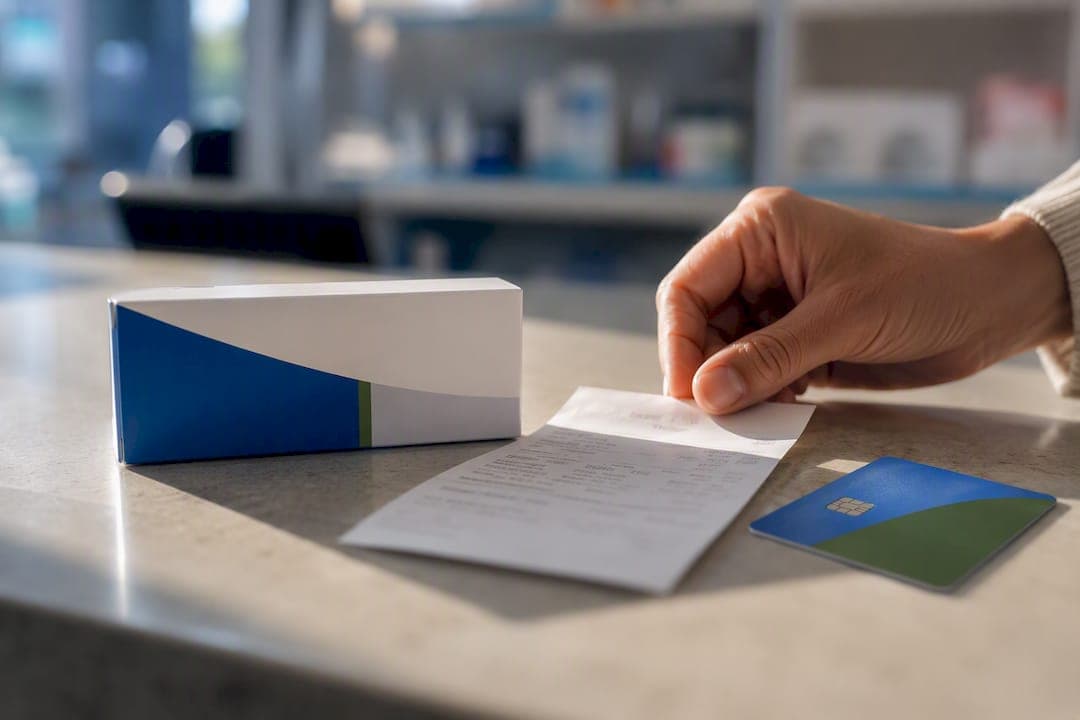
Yes. When semaglutide is prescribed for a diagnosed medical condition, such as type 2 diabetes or chronic weight management, you can pay for it with HSA or FSA funds. The catch is that your plan administrator has the final say, so confirm your account's specific rules before you assume anything is automatic. The steps below cover exactly what to document, how to pay or file a claim, and where compounded or telehealth purchases get complicated.
TL;DR:
- Most HSA and FSA plans require detailed documentation, including diagnosis, prescription, and itemized receipts, to qualify semaglutide for reimbursement.
- Buying with an HSA debit card is straightforward if using a qualifying pharmacy or telehealth, but FSA cards may get declined for merchant recognition issues.
- For weight management, plans often demand additional proof such as BMI thresholds, documented participation in lifestyle programs, and specific diagnosis codes.
- Compounded semaglutide prescriptions face stricter scrutiny and benefit from detailed invoices, clear drug identifiers, and original prescriptions referencing compounded formulations.
- Building comprehensive documentation through telemedicine visits, including a physician letter of medical necessity, helps prevent claim denials and streamlines reimbursement.
Table of Contents
- When Semaglutide Counts as an Eligible Medical Expense
- HSA vs. FSA: How the Payment Mechanics Differ
- What Records to Collect and How to Document Medical Necessity
- How to Pay: Direct Checkout or Reimbursement Claim
- Compounded Drugs, Telehealth Merchants, and Formulation Questions
- Why Claims Get Denied and How to Push Back
- How Airmed Fit Supports Your HSA or FSA Documentation
- What Most Guides Get Wrong About HSA-Eligible Semaglutide
- Get Documentation Built In From the Start
- Sources
When Semaglutide Counts as an Eligible Medical Expense
The legal foundation is short and clear. IRS Publication 502 defines a qualifying medical expense as anything paid for the diagnosis, cure, mitigation, treatment, or prevention of disease, and that includes prescription drugs. Semaglutide, sold under brand names for diabetes or weight management, is FDA-regulated and prescribed to treat a diagnosed condition, which puts it squarely within that definition when your doctor's chart backs it up.
The gap between "technically eligible" and "actually approved" comes down to documentation. A cross-sectional study on semaglutide eligibility found that a meaningful share of U.S. adults meet clinical criteria for the drug across its approved indications, but meeting the clinical bar and having a paper trail that proves it are two different things.
Payer and clinical criteria typically layer on top of the IRS rule, especially for weight management. Common requirements include:
- A BMI at or above a threshold determined by clinical guidelines and comorbidities
- Documented participation in a diet or lifestyle modification program
- Diagnosed conditions like hypertension, sleep apnea, or type 2 diabetes alongside the weight criteria
The VA's clinical criteria for semaglutide illustrates how detailed these standards can get, requiring specific BMI cutoffs and documented history before approval. Commercial HSA and FSA administrators rarely publish criteria this granular, but they borrow the same logic. Your practical move: get the diagnosis written into your chart, keep the prescription, and save the pharmacy receipt before you need any of it.
HSA vs. FSA: How the Payment Mechanics Differ
Both accounts can cover semaglutide, but they don't behave the same way at checkout. Knowing which one you have changes how you should plan the purchase.
- HSA funds require a high-deductible health plan. Your balance rolls over year to year with no expiration, and most HSA debit cards work directly at pharmacies and qualifying telehealth checkouts.
- FSA funds are employer-run and often use-it-or-lose-it. Some employers allow a small rollover or grace period, but the account resets on a plan-year schedule your HR department sets, not you.
- Card acceptance varies by merchant, not by account type. An HSA or FSA card gets declined at the same merchant for the same reason: the payment processor doesn't recognize it as a medical expense.
Before you buy, ask your plan administrator three questions: does my card work directly at this merchant, does my FSA carry over unused funds, and what documentation does the plan require if a purchase gets flagged for review? The answers determine whether you're paying at checkout or filing paperwork afterward.
What Records to Collect and How to Document Medical Necessity
An itemized receipt beats a summary receipt every time. Your pharmacy receipt should show the drug name, the NDC (National Drug Code) or product identifier, the date of purchase, the prescriber's name, and the amount paid. A generic "pharmacy purchase" line item on a card statement will not satisfy most administrators if your claim gets reviewed.
For weight management prescriptions especially, a Letter of Medical Necessity (LMN) strengthens your file. Ask your prescriber to include the diagnosis, why semaglutide is medically necessary for your case, and the expected duration of treatment. Keep these on hand:
- The original prescription with dosage and refill information
- Itemized pharmacy or clinic receipts, not just card statements
- Chart notes referencing your diagnosis code
- The LMN, if your plan requested one or if you're using semaglutide for weight management rather than diabetes
Hold onto everything for at least three years, since that's the general window the IRS can look back for an audit.
Pro Tip: Scan every receipt and store it in a dedicated folder the day you get it. Pharmacy portals sometimes purge itemized records after a few months, and reconstructing them later means calling three different offices.

How to Pay: Direct Checkout or Reimbursement Claim
You have two paths, and picking the right one up front saves a lot of back-and-forth.
Option A: Pay directly with your HSA or FSA card.
- Confirm the pharmacy or telehealth vendor is coded as a medical merchant before you check out.
- Swipe the card as you would any purchase.
- Save the itemized receipt anyway, even if the transaction goes through cleanly, in case your administrator requests substantiation later.
Option B: Pay out-of-pocket, then submit for reimbursement.
- Pay with a personal card or cash.
- Log into your HSA or FSA portal and fill out the reimbursement claim form.
- Attach the prescription, itemized receipt, and LMN if you have one.
If your card is declined at checkout, don't assume the purchase is ineligible. It often means the merchant's billing code isn't recognized as medical. Get the itemized receipt, pay another way, and file for reimbursement instead. A claim file that works every time includes the prescription, the itemized receipt, and a clinic note or LMN.
Compounded Drugs, Telehealth Merchants, and Formulation Questions
Compounded semaglutide sits in a gray area that brand-name Wegovy, Ozempic, or Rybelsus doesn't. Because compounded versions aren't FDA-approved in the same way, some administrators scrutinize these claims more closely, or reject them outright without extra proof.
A few things reduce friction on these specific cases:
- Get an invoice directly from the compounding pharmacy, not just a general receipt
- Keep the original prescription referencing the compounded formulation by name
- Ask your telehealth provider for an itemized invoice if your card gets declined, since many online platforms use merchant codes that payment processors don't flag as medical
- Request the NDC or a clear drug identifier on every receipt, since its absence is one of the most common reasons claims get kicked back for more information
Brand-name prescriptions with a clear FDA-approved indication tend to move through review faster than off-label or compounded claims, simply because there's less for a reviewer to question.
Why Claims Get Denied and How to Push Back
Most denials trace back to one of three things: a formulary exclusion, a missing prior authorization, or insufficient documentation of medical necessity. Commercial payer policies, like the clinical criteria some insurers publish for semaglutide, often spell out exact BMI thresholds and required comorbidities before they'll approve coverage.
Before you buy, do three things:
- Call your plan administrator or check the online formulary to confirm semaglutide is listed and note any prior-authorization requirement
- Ask specifically whether weight management indications are treated differently than diabetes indications on your plan
- If you're denied, request the specific reason in writing and ask your prescriber to submit a clinical attestation addressing that exact reason
A denial isn't always final. Getting your prescriber or a clinical pharmacist involved in an appeal, especially with a well-documented chart note, reverses more decisions than most patients expect.
How Airmed Fit Supports Your HSA or FSA Documentation
Airmed Fit provides the two things every HSA or FSA claim actually needs: a documented diagnosis and a paper trail. Through physician-led telemedicine consultations, patients receive a formal evaluation, a prescription for FDA-regulated GLP-1 medications when clinically appropriate, and visit documentation that supports reimbursement.
What this looks like in practice:
- A telemedicine visit with chart notes tied to your specific diagnosis
- A prescription for semaglutide or related GLP-1 therapy sourced from licensed U.S. manufacturers
- Itemized documentation you can attach directly to an HSA or FSA claim
- Physician oversight with available lab panels for ongoing monitoring, not a one-time script and no follow-up
Pro Tip: When you book your consult, ask your provider directly for a letter that states your diagnosis and the medical reason for treatment. Having that language ready before your first pharmacy purchase saves a reimbursement headache later.
What Most Guides Get Wrong About HSA-Eligible Semaglutide
Most advice on this topic treats IRS eligibility as the whole story. It isn't. The IRS rule is generous. It says a prescribed drug treating a diagnosed condition qualifies, full stop. But that rule doesn't control what happens at your specific plan's checkout counter or claims desk, and conflating the two is where most people run into trouble.
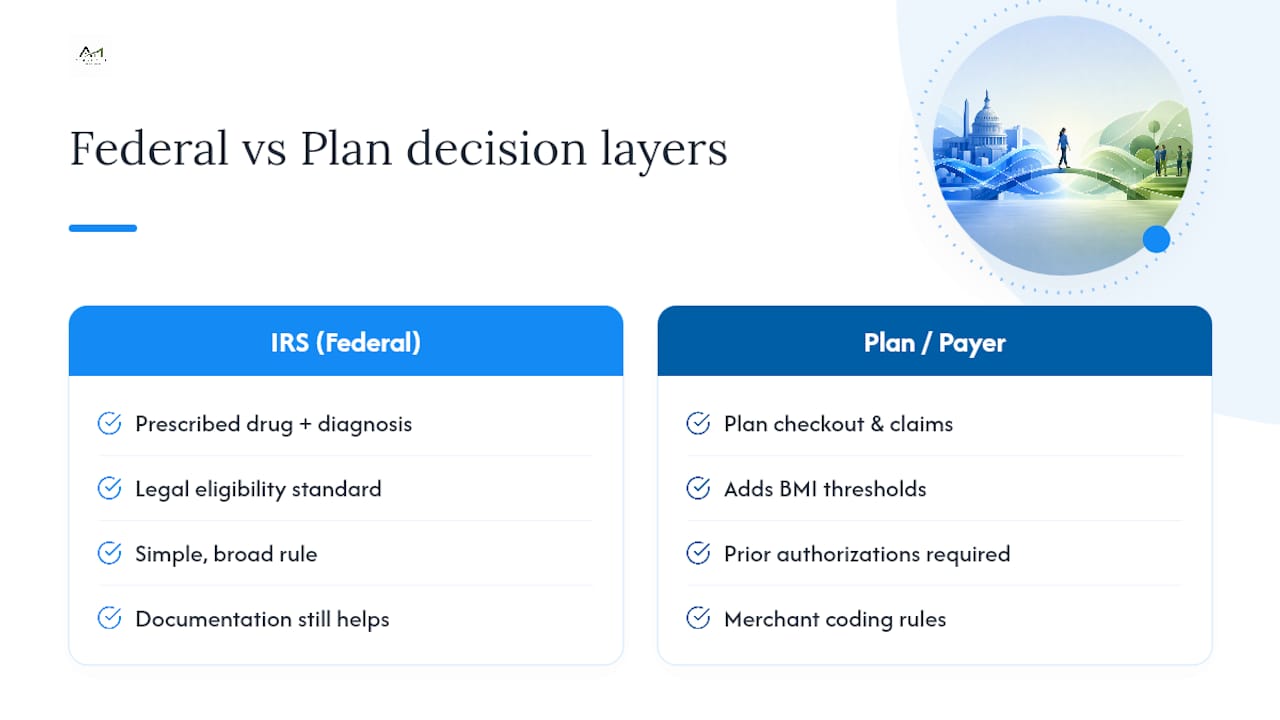
The real bottleneck sits with plan administrators and payer clinical policies, which layer BMI thresholds, prior authorizations, and merchant coding rules on top of a federal standard that's actually quite simple. That's a mismatch worth understanding before you buy, not after a claim bounces back.
My honest read: the patients who avoid denials aren't the ones who read the IRS code closest. They're the ones who treat documentation as part of the treatment plan from day one, get a clear diagnosis on paper, save every itemized receipt, and ask their prescriber for an LMN before they need one rather than scrambling for it during an appeal. That single habit does more to protect your HSA or FSA dollars than any amount of research into tax code language.
— Organic
Get Documentation Built In From the Start
A telemedicine consultation can help build documentation into the visit itself, including a physician evaluation, a prescription for FDA-regulated GLP-1 medication when clinically appropriate, and records suitable for HSA and FSA substantiation from day one.
This fits anyone who's tired of chasing down receipts or waiting weeks for a clinic to email back a letter. Ongoing membership models may include lab monitoring and physician follow-up as part of patient care, rather than just a single prescription. If you're ready to start, book a telemedicine consultation and ask directly for documentation that supports your HSA or FSA claim before your first prescription is filled.
This article is general information, not a substitute for advice from a qualified doctor. Consult a qualified healthcare professional about your own circumstances before acting on anything here.
Sources
- Publication 502 (Taxable and Nontaxable Income) — IRS
- Are GLP-1s FSA/HSA eligible? — Forbes Health
- Semaglutide (WEGOVY) Subcutaneous Injection and Oral Tablet for Weight Management Criteria for Use — VA
- Cross-sectional study on semaglutide eligibility — PMC11574724