
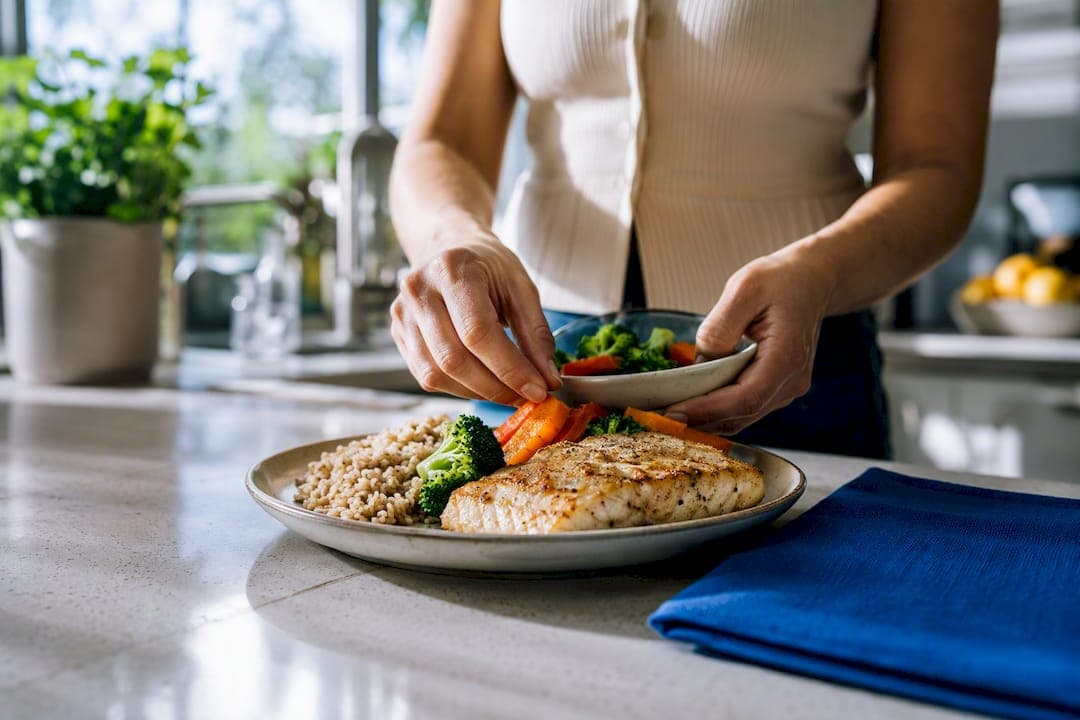
Prioritize protein at nearly every meal, eat smaller portions more often, and keep fat modest so nausea doesn't derail you. Build meals around a moderate amount of protein per meal, sip water and other fluids steadily throughout the day, and add fiber gradually rather than all at once. If side effects turn severe or you can't keep food or liquids down, call your prescriber before changing your dose or diet further.
TL;DR:
- Reducing fat intake and eating smaller, more frequent meals with a focus on protein helps manage nausea and digestive side effects during GLP-1 therapy.
- High-fat, greasy foods, alcohol, carbonated drinks, and spicy dishes should be avoided until tolerance improves, especially during dose escalations.
- Meeting a protein intake of about 1.2 to 1.6 grams per kilogram of body weight daily is essential to preserve muscle mass during weight loss.
- A meal plan rotating small, protein-rich meals and snacks every three to four hours supports steady blood sugar and minimizes nausea.
- Regular lab monitoring and personalized guidance from a physician are crucial to safely optimize nutrition and medication effects during GLP-1 treatment.
Table of Contents
- Why a GLP-1 diet plan looks different from a regular diet
- Best foods for a GLP-1 diet: protein, produce, and smart carbs
- Foods to avoid and how to manage GI side effects
- How much protein you actually need to preserve muscle
- A sample day and 7-day meal skeleton for GLP-1 nutrition
- Meal prep and grocery tips for low-appetite days
- Why clinician oversight matters for a GLP-1 nutrition plan
- What actually matters most on a GLP-1 diet
- Get a Personalized GLP-1 Nutrition Plan From a Physician
- Sources
Why a GLP-1 diet plan looks different from a regular diet
GLP-1 medications like semaglutide and tirzepatide slow gastric emptying and dial down hunger signals between your gut and brain. Food sits in your stomach longer, which is exactly why a big plate of pasta or a greasy burger can hit so much harder than it used to.
Most side effects cluster around dose increases and the first several weeks on a new dose, not evenly across treatment. That timing matters for how you eat: portions need to shrink before appetite naturally drops, high-fat and spicy foods become harder to tolerate, and dehydration risk climbs if nausea or diarrhea show up. Understanding what to expect from semaglutide side effects early on helps you adjust meals before problems start instead of reacting after the fact.
Best foods for a GLP-1 diet: protein, produce, and smart carbs
Your stomach has less room, so every bite needs to earn its place. That means protein first, always.
Reach for eggs, fish, chicken, Greek yogurt, cottage cheese, tofu, legumes, and a protein powder for the days solid food feels like too much work. These deliver the most nutrition per small volume, which is the entire game when appetite drops.
Round out the plate with:
- Cooked vegetables (they're gentler on a queasy stomach than raw salads)
- Fruit for volume and micronutrients without a big calorie load
- Slow-digesting carbs like oats, quinoa, sweet potatoes, and lentils to keep blood sugar steady
- A small amount of healthy fat, olive oil, avocado, or a handful of nuts, for palatability and to help absorb fat-soluble vitamins
Skip the temptation to cut fat entirely. A little goes a long way toward making food enjoyable again, and Cleveland Clinic's guidance on GLP-1 nutrition backs eating protein first and leaning on cooked vegetables when nausea flares.
Pro Tip: Order your bites deliberately: protein first, vegetables second, carbs last. It sounds small, but it means the most important nutrients get eaten before your stomach fills up.
Foods to avoid and how to manage GI side effects
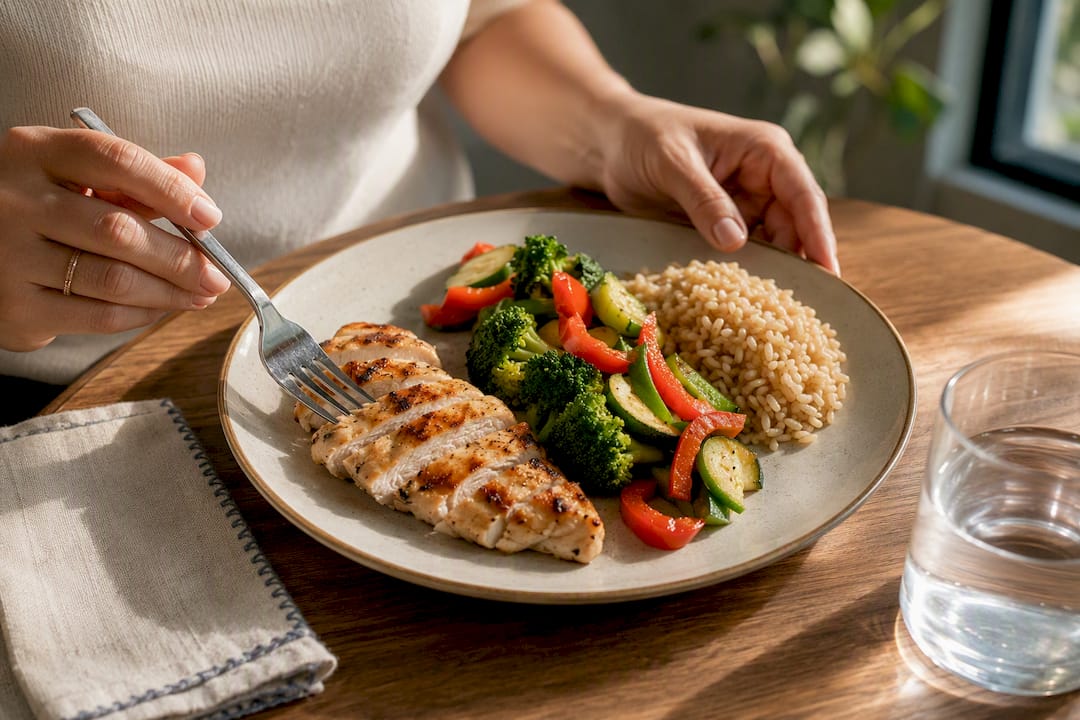
Fried and greasy foods are the fastest way to trigger nausea on a GLP-1. Slower gastric emptying plus a heavy, fatty meal is a rough combination, and JAMA's clinical guidance on GLP-1 medications points directly at high-fat and ultra-processed foods as common triggers for reflux and stomach upset.
Steer clear of:
- Fried and very greasy foods
- Large portions, even of foods you tolerate well
- Alcohol, which irritates an already slower gut
- Carbonated or sugary drinks
- Very spicy dishes, at least until you know your tolerance
For nausea, eat smaller, blander meals, try ginger, lead with protein, and stay upright for a while after eating instead of lying down. For constipation, a common complaint tied to slower gut transit, increase fiber gradually rather than all at once, drink fluids steadily, and move your body daily.
Contact your prescriber if you can't keep fluids down, have severe abdominal pain, or notice blood in your stool.
How much protein you actually need to preserve muscle
Rapid weight loss without enough protein means losing muscle along with fat, which is the opposite of what most people want. A joint advisory from major obesity and nutrition groups recommends 1.2 to 1.6 grams of protein per kilogram of body weight per day during active weight loss.
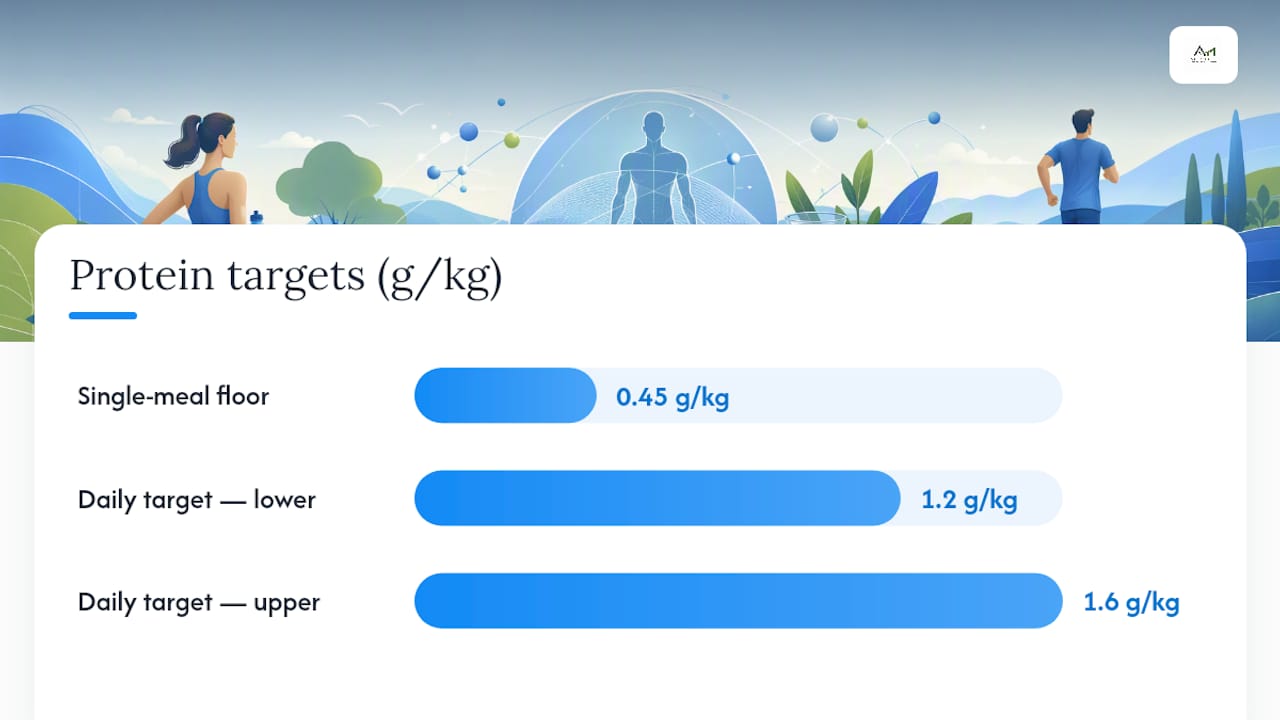
In practical terms, that translates to roughly 25 to 40 grams of protein per meal for most adults, with a floor of about 0.4 to 0.5 grams per kilogram at any single sitting, low enough that skipping protein at one meal still leaves room to catch up later in the day.
A few tactics make the target easier to hit:
- Eat protein first on the plate, every time
- Keep portable options on hand: hard-boiled eggs, jerky, string cheese
- Use a shake on days when solid food feels unappealing
- Pair resistance training two to three times a week with daily movement to help your body hold onto lean mass
Pro Tip: If a meal feels impossible to finish, drink your protein instead of forcing down solid food. A shake with 25+ grams beats skipping the meal entirely.
A sample day and 7-day meal skeleton for GLP-1 nutrition
Three smaller meals plus one or two protein snacks, spaced roughly every three to four hours, tends to work better than three large meals on a slowed-down gut. It also keeps blood sugar steadier and reduces the odds of nausea from overeating in one sitting.
A sample day:
- Breakfast: Greek yogurt with berries and a scoop of protein powder (about 30g protein)
- Snack: String cheese or a hard-boiled egg (7 to 8g protein)
- Lunch: Grilled chicken over a small bed of quinoa and roasted vegetables (35g protein)
- Snack: Cottage cheese with sliced fruit (12g protein)
- Dinner: Baked salmon with mashed sweet potato and steamed greens (30g protein)
For a 7-day skeleton, rotate two or three go-to breakfasts, three or four lunch and dinner combos built around a lean protein plus one starch and one vegetable, and two reliable snacks. Scale portions to your protein target rather than to how full you expect to feel. Appetite is not a reliable guide right now.
Meal prep and grocery tips for low-appetite days
Stock your fridge with foods that require zero effort on the days cooking feels like too much. Pre-cooked rotisserie chicken, individual Greek yogurt cups, hard-boiled eggs, and canned tuna or salmon all cover protein without a stove.
A short shopping list: eggs, Greek yogurt, cottage cheese, canned beans, frozen vegetables, quinoa, and a protein powder you actually like the taste of.
- Pre-portion snacks into small containers so you're not deciding when you're already low on energy
- Build a smoothie template (protein powder, frozen fruit, a splash of milk) you can repeat without thinking
- At restaurants, ask for protein-forward dishes and request sauces on the side to control fat
- Sip water throughout the day rather than gulping large amounts, and include broths or water-rich foods like melon if plain water feels tough to get down
Why clinician oversight matters for a GLP-1 nutrition plan
Diet adjustments help, but they don't replace medical monitoring. Airmedfit's physician-supervised model pairs GLP-1 prescriptions with lab panels that track kidney function, electrolytes, and metabolic markers, catching issues before they become dangerous. GLP-1 medications also carry broader cardiometabolic benefits that make coordinated care worthwhile beyond the scale.
Dose escalations, severe GI symptoms, or abnormal labs are exactly when clinician input changes outcomes... Personalized nutrition guidance works best layered on top of that oversight, not instead of it.
What actually matters most on a GLP-1 diet
Most GLP-1 diet advice online obsesses over food lists and ignores the timeline question entirely. Trial data shows the biggest weight-loss gains happen in the first 12 to 18 months of treatment, which means the diet habits you build in month two matter more than any single "superfood" you add in month eight.
The conventional wisdom that GLP-1s make dieting effortless is wrong, and it sets people up to under-eat protein and lose muscle they'll regret losing later. The medication suppresses appetite; it doesn't make food choices for you. That's still your job, and it's the one piece nobody fixes with a prescription.
If you take one thing from this: get protein right before you worry about anything else. Vegetables, fiber, and hydration all matter, but a protein shortfall is the mistake that shows up on a bone density scan or a strength test years later, not just on a scale next week. Everything else, timing, fat modesty, fiber pacing, is in service of making that protein target achievable when your appetite is working against you.
— Organic
Get a Personalized GLP-1 Nutrition Plan From a Physician
A food list only gets you so far. What actually changes outcomes is a prescriber watching your labs, adjusting your dose based on how your body responds, and giving you nutrition guidance built around your numbers instead of a generic chart. That's the gap between reading about a GLP-1 diet plan and following one someone actually built for you.
Airmedfit offers telemedicine consults with physicians who prescribe FDA-regulated GLP-1 medications, order lab panels to monitor kidney function and metabolic markers, and build nutrition plans around your specific results rather than a one-size-fits-all sheet. Before your first appointment, gather your current medication list, any recent lab work, and a clear sense of your goals. Any diet or supplement changes should go through your prescriber first, since some interact with absorption or GI tolerance. Book a consultation to start with labs and a physician review, or visit Airmedfit to see the full range of services available.
This article is general information, not a substitute for advice from a qualified doctor. Consult a qualified healthcare professional about your own circumstances before acting on anything here.
Sources
- I Am Taking a GLP-1 Weight-Loss Medication—What Should I Know? | JAMA Internal Medicine
- What to Eat on Tirzepatide: Meal Plan, Best Foods & Foods to Avoid (2026)
- Time-Dependent Effects of GLP-1 Receptor Agonists... | F1000Research
- Clinical review on GLP-1 medicines and broader benefits | PMC