
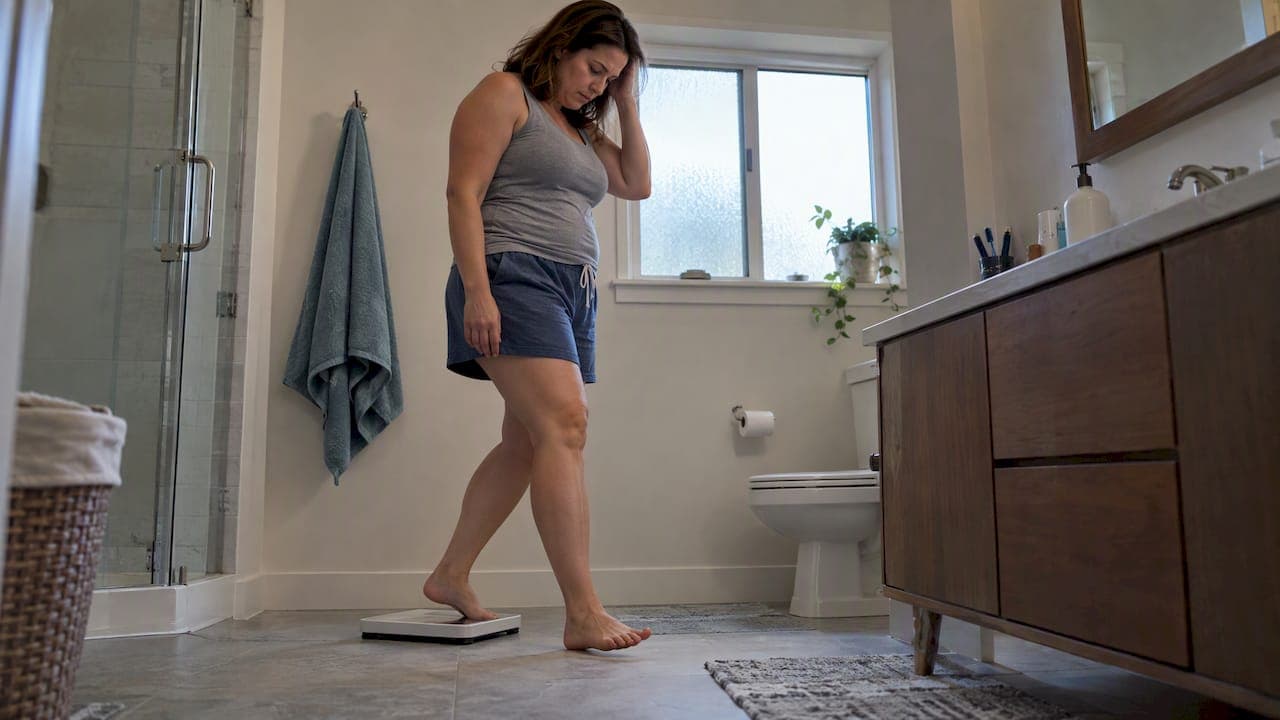
A semaglutide weight loss plateau most often means your rate of loss has slowed into a maintenance phase, not that the medication has stopped working. In clinical trials, this slowing commonly becomes apparent somewhere between roughly 60 weeks and 18 months of treatment. Before you change anything, confirm the trend with multiple measurements and bring your data to a clinician for review. If you have severe symptoms, seek urgent care rather than waiting for a routine visit.
TL;DR:
- Weight loss slowdown on semaglutide usually occurs around 60 to 68 weeks and often indicates a transition into maintenance, not medication failure.
- Factors contributing to a stall include dietary caloric creep, reduced protein intake, less resistance training, missed doses, or new health issues.
- Clinicians prefer to see weight trends over four to six weeks and may assess waist measurements, adherence, or body composition before confirming a true plateau.
- Continuing semaglutide after around week 20 typically results in further weight loss, while stopping the medication often leads to weight regain, according to trial data.
- Changes like improved diet, resistance exercise, addressing side effects, and monitoring lifestyle are recommended strategies to overcome a verified plateau under medical supervision.
Table of Contents
- What causes a stall on semaglutide
- How clinicians tell a true plateau from a short-term stall
- What the clinical trial evidence actually shows
- Practical steps that may help, under clinician supervision
- When a plateau calls for a clinician instead of patience
- What to bring to your clinician visit
- Reframing a plateau as a checkpoint, not a failure
- A clinician-led option for reviewing your plateau
- FAQ
- Sources
What causes a stall on semaglutide
Weight loss on semaglutide typically follows a curve: faster loss early on, then a gradual slowdown as your body adapts. Part of this is physiologic. As weight drops, resting energy expenditure tends to fall too, and appetite-regulating signals shift, so the same dose produces a smaller day-to-day calorie deficit than it did at the start.
Behavioral factors often compound this natural slowing. Small increases in portion sizes, lower protein intake, reduced resistance training, more alcohol, or disrupted sleep can each chip away at the deficit that was driving earlier loss.
Adherence and product issues matter too. A missed dose, an inconsistent injection schedule, or confusion about formulation and concentration can quietly blunt results without any obvious explanation.
Common contributors worth reviewing with a clinician include:
- Gradual caloric creep from larger portions or more frequent snacking.
- Reduced protein intake or less resistance training, both linked to lean mass preservation.
- Missed or delayed doses, or uncertainty about the correct formulation.
- New medications or health conditions, such as thyroid changes, that can independently affect weight.
How clinicians tell a true plateau from a short-term stall
A single flat week on the scale is not a plateau. Measurement noise from hydration, clothing, and time of day can make normal week-to-week variation look like a stall. Clinicians generally want a trend across several weeks before concluding that loss has genuinely slowed.
The STEP 4 trial found that participants reached a plateau around weeks 60 to 68 of treatment, a useful reference point for when slowing becomes expected rather than alarming.
A practical assessment usually follows a sequence like this:
- Review a weight log with consistent timing and conditions over at least four to six weeks.
- Check waist circumference and, where available, body composition for changes the scale alone might miss.
- Confirm adherence by bringing medication packaging, lot numbers, and refill history.
- Rule out new medications, illnesses, or life changes that could independently affect weight.
- Screen for symptoms that warrant urgent attention rather than routine follow-up.
Basic labs or a specialist referral may be appropriate if adherence and lifestyle factors do not explain the slowdown.
What the clinical trial evidence actually shows
The strongest evidence on semaglutide plateaus comes from the drug's own trial program. In the STEP 4 randomized clinical trial, participants who continued semaglutide from week 20 to week 68 lost an additional 7.9% of body weight on average, while those switched to placebo gained 6.9% over the same period. That trial included 803 adults, with 535 continuing semaglutide and 268 switched to placebo.

The SELECT trial followed 17,604 adults with overweight or obesity and cardiovascular disease, finding that weight loss continued through about week 65 and was sustained through 208 weeks, with a mean change of negative 10.2% versus negative 1.5% for placebo. That durability suggests a plateau in some patients reflects sustained maintenance rather than a ceiling.
Key evidence points to weigh with a clinician:
- Continued treatment in STEP 4 produced further loss; stopping produced regain.
- The STEP 1 extension found that participants who stopped semaglutide after 68 weeks regained an average of 11.6 percentage points of body weight by week 120, among 327 participants studied.
- A 2025 clinical practice guideline update recommends individualizing obesity pharmacotherapy and considering long-term use for maintenance rather than judging success by continuous rapid loss alone.
Practical steps that may help, under clinician supervision
Once a true slowdown is confirmed, several adjustments are worth discussing with a clinician rather than attempting on your own. Nutrition is usually the first place to look: tracking intake for a week or two often reveals caloric creep that crept in unnoticed, and reviewing protein intake matters because adequate protein supports lean mass during pharmacologic weight loss.
Exercise changes can also help. Resistance training in particular is one of the more evidence-backed ways to preserve lean mass and support resting energy expenditure, which can keep the scale trend moving or at least protect body composition when weight loss slows.
Gastrointestinal side effects, including constipation, can mask or slow progress and sometimes respond to symptomatic management rather than a medication change. Sleep, stress, and alcohol intake are worth revisiting as well, since each can shift energy balance in ways that are easy to overlook.
Useful areas to raise at your next visit:
- Recent changes in portion sizes, snacking, or alcohol intake.
- Resistance training frequency and whether it has dropped off.
- Persistent GI symptoms like bloating or constipation.
- Sleep quality and stress levels over the past month.
Pro Tip: Keep a simple daily log of weight, meals, and activity for two to three weeks before your appointment so your clinician can spot patterns instead of guessing from memory.
Avoid adjusting your own dose or switching medications without medical guidance. For more detail on what side effects to expect and when they warrant concern, our semaglutide side effects guide covers monitoring in depth. For nutrition-focused strategies specifically aimed at breaking a stall, this plateau action checklist walks through habit-based tactics that pair well with clinical review.
When a plateau calls for a clinician instead of patience
Most plateaus are routine and can wait for a scheduled visit, but some symptoms need immediate attention. The FDA label for semaglutide lists warnings that should prompt urgent care, including severe vomiting, inability to keep fluids down, severe abdominal pain, yellowing of the skin or eyes, and signs of an allergic reaction.
The label also carries a boxed warning about thyroid C-cell tumors observed in rodent studies, which is why a personal or family history of medullary thyroid carcinoma or MEN2 syndrome is a contraindication clinicians screen for.
Routine triggers for scheduling a visit include:
- A plateau that persists for more than a few weeks despite consistent habits.
- Side effects that are tolerable but increasingly disruptive.
- Plans for pregnancy, since treatment approach may need to change.
A routine evaluation typically covers your weight trend, adherence, diet and activity patterns, and any new symptoms or medications.
What to bring to your clinician visit
Walking in prepared makes the visit more productive and helps your clinician distinguish a true plateau from a measurement artifact or an adherence gap.
- A weight log with consistent dates and times over the past month or two.
- Your medication name, dose, formulation, and refill or injection history.
- Notes on diet and activity changes, including any new medications or health conditions.
- Questions about whether your current phase is maintenance or whether escalation makes sense for your goals.
- Any recent labs, or a request for labs such as renal function, liver function, thyroid, or glucose if relevant to your history.
If you want a structured, clinician-led review of this information, an AirMedFit consultation is one option for walking through your weight trend and tolerability with a provider.
Reframing a plateau as a checkpoint, not a failure
A plateau is often the moment worth paying the most attention to, not the moment to panic. It is a natural checkpoint to ask whether your current phase is about continued loss or about protecting the progress you have already made. Evidence from long-term trials supports treating this as an individualized conversation rather than a scale-driven verdict, weighing tolerability, goals, and health markers together. We see clinician-supervised review as the appropriate venue for that conversation.
— Organic
A clinician-led option for reviewing your plateau
When a plateau raises more questions than your own tracking can answer, a supervised review gives you a second set of eyes on your weight trend, tolerability, and relevant labs before anyone talks about next steps. We offer doctor consultations built for exactly this kind of checkpoint.
Our Async Doctor's Consult and Sync Doctor's Consult give you a choice between a flexible written review and a live conversation with a provider, and our lab panels are available if your clinician wants bloodwork as part of that review. Bring the checklist from the previous section so the visit covers your weight log, medication history, and questions in one sitting. A consultation does not guarantee eligibility, a prescription, or any particular weight outcome.
| Service | What it covers |
|---|---|
| Async Doctor's Consult | Written review of your weight trend and history on your own schedule |
| Sync Doctor's Consult | Live conversation with a provider about your plateau and options |
| Lab Panels (Men's and Women's Essential) | Bloodwork a clinician may request during a plateau evaluation |
Ready to have your plateau reviewed by a provider? Book a consultation to get started.
This article is general information, not a substitute for advice from a qualified doctor. Consult a qualified healthcare professional about your own circumstances before acting on anything here.
FAQ
How do you break a plateau on semaglutide?
There is no guaranteed way to restart loss on your own, and self-directed dose changes are not recommended. A clinician typically reviews your diet, activity, adherence, and side effects first, then decides whether any adjustment to your plan is appropriate.
How long does a GLP-1 plateau last?
Plateau length varies by person, but trial data from STEP 4 shows loss can continue through roughly week 68 with continued treatment, and SELECT found weight maintained through 208 weeks in its study population. Many plateaus reflect a shift into maintenance rather than a temporary stall that resolves on its own.
Does semaglutide stop working after a while?
Semaglutide does not typically stop working outright; trial evidence shows continued treatment sustains weight loss rather than reversing it, while stopping the medication is associated with regain according to the STEP 1 extension. A perceived plateau is better understood as slowed loss or maintenance, which is why clinician review matters before assuming the medication has failed.
How do you shock your body out of a plateau?
There is no evidence-based way to "shock" the body into renewed loss, and that framing can encourage unsafe self-treatment. The better-supported approach is a clinician review of adherence, nutrition, resistance training, and side effects, since a 2025 guideline update recommends individualizing treatment rather than chasing rapid loss.
Sources
- Effect of Continued Weekly Subcutaneous Semaglutide vs Placebo on Weight Loss Maintenance in Adults With Overweight or Obesity: The STEP 4 Randomized Clinical Trial
- SELECT trial analysis (semaglutide and cardiovascular outcomes in obesity) — PubMed
- WEGOVY (semaglutide) prescribing information (DailyMed / FDA label)
- 2025 clinical practice guideline update on obesity pharmacotherapy
Recommended
- Semaglutide for Weight Loss: What the Evidence Shows
- GLP-1 for Weight Loss: What the Evidence Actually Shows
- GLP-1 Insurance Coverage: How to Check Your Plan
This article provides general educational information and is not personalized medical advice. A licensed clinician should assess treatment suitability, risks, and options.