

Most people who stop semaglutide regain weight steadily rather than all at once. Pooled research puts the average pace at about 0.4 kg (roughly 0.9 lb) per month, with a projected return to pre-treatment weight around 1.7 years after cessation. Trial data tells a rougher story in the short term: many patients regain about two-thirds of their lost weight within the first year alone. The takeaway isn't to panic. It's to plan the exit with a clinician before you stop, not after the scale starts climbing.
TL;DR:
- Most people regain about two-thirds of their weight loss within the first year after stopping semaglutide, with an average rate of 0.4 kg per month.
- Cardiometabolic markers tend to revert to baseline faster than body weight, usually within 1.4 years, potentially diminishing health benefits before full weight regain.
- A significant portion of patients, nearly half in some studies, retain at least 5% weight loss one to two years post-discontinuation, especially with behavioral adjustments.
- Tapering off the medication gradually, maintaining high protein intake, resistance training, and tracking weight can help slow or mitigate weight regain.
- Planning drug cessation with a healthcare provider and ongoing monitoring of weight and metabolic health improve long-term outcomes.
Table of Contents
- Does Semaglutide Weight Regain Happen to Everyone?
- What Did the STEP Trials Show After Stopping Semaglutide?
- Why Does Weight Come Back After Stopping Semaglutide?
- How Can You Slow Down Weight Regain After Semaglutide?
- What Should You Ask Your Doctor Before Stopping Semaglutide?
- How Airmed Fit Supports Patients Through Discontinuation Planning
- Rethinking Semaglutide as a Long-Term Tool, Not a Cure
- Ready to Plan Your Next Step With a Physician?
- Sources
- FAQ
Does Semaglutide Weight Regain Happen to Everyone?
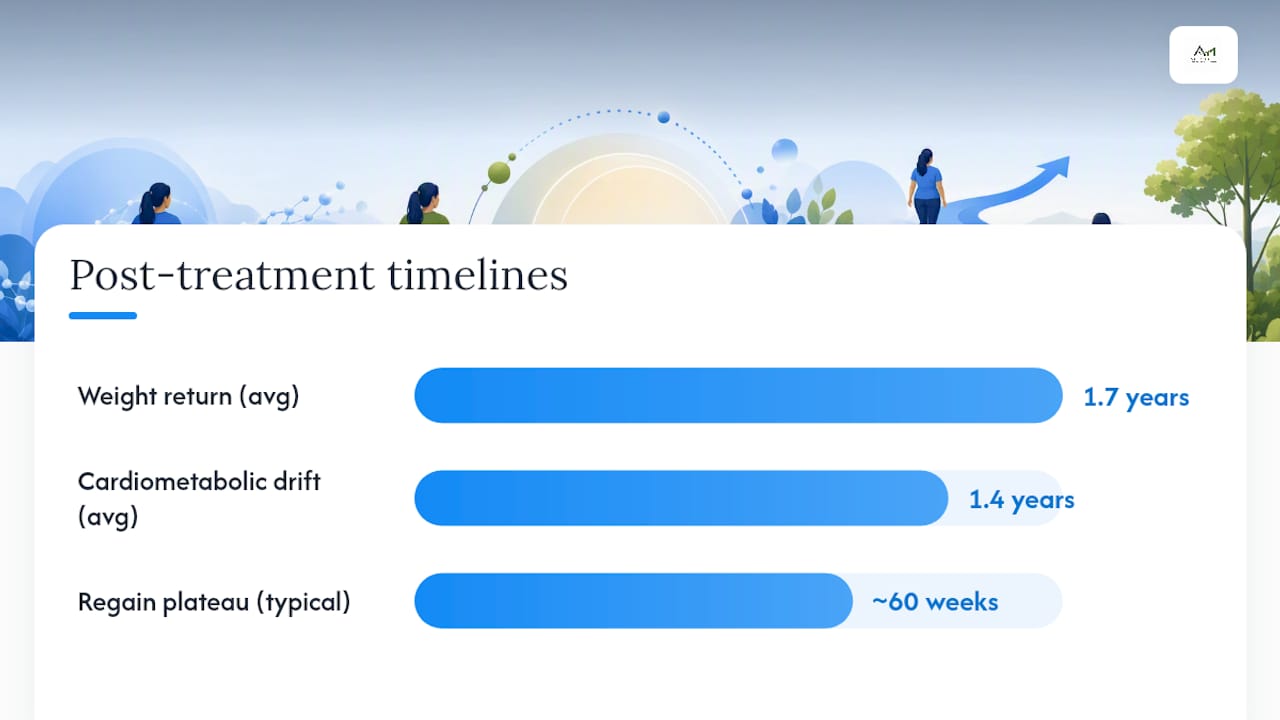
Not entirely, but partially, for most people. The clearest picture comes from a 2026 systematic review and meta-analysis in BMJ, which pooled data across multiple GLP-1 and weight-management drug trials and found that people regain weight at an average rate of 0.4 kg per month after stopping treatment. Extrapolated forward, that trajectory puts the average patient back at their starting weight in about 1.7 years, assuming no other intervention changes the curve.
That number is an average across a mixed population, not a personal prediction. Some people regain faster, some slower, and a meaningful subset never fully return to their starting point. The BMJ analysis also modeled cardiometabolic markers, things like blood pressure, blood glucose, and lipid levels, and found they drift back toward pre-treatment baselines even faster than body weight itself: roughly 1.4 years on average. That gap matters. It means the metabolic benefits of semaglutide can erode before the scale fully catches up, which is one reason clinicians increasingly frame discontinuation as a medical decision rather than a personal one.
Independent data reinforces the general shape of this curve, even where the exact numbers differ. A widely cited analysis from the University of Cambridge found that by 52 weeks after stopping, many patients in some cohorts had regained around 60% of their original weight loss, with regain trajectories tending to plateau after about 60 weeks rather than continuing indefinitely. That plateau effect is worth sitting with. It suggests the body eventually settles into a new equilibrium, higher than the treated weight, but not necessarily as high as the original starting point for everyone.
Here's what the evidence consistently shows across these studies:
- Weight regain after stopping typically begins within the first few weeks, not months.
- The pace is fastest in the initial months and slows as the body approaches a new set point.
- Cardiometabolic markers often shift back toward baseline faster than body weight does.
- A meaningful share of patients, close to half in some trial data, retain clinically significant weight loss even a year or more after stopping.
- Regain rates vary by individual factors: dose, duration of treatment, age, and whether lifestyle changes were sustained.
The 0.4 kg per month figure is a population average, and it hides real variation. Someone who was on semaglutide for two years and built new eating habits around it will likely regain more slowly than someone who stopped after four months of rapid loss with minimal dietary adjustment. Treatment duration, starting body composition, and how gradually the drug was tapered all appear to influence the curve, even though the meta-analysis data doesn't isolate each variable with precision.
One limitation worth naming plainly: most of the underlying trials followed patients for a year or two after cessation, not five or ten. The 1.7-year projection to baseline is a model built on the regain rate observed in that window, extended forward. It's a reasonable estimate, not a guarantee, and it assumes no other intervention. If someone starts a structured maintenance program the day they stop the drug, the curve likely looks different than the pooled average.
There's also variability across drug classes worth noting. While semaglutide has the largest evidence base right now, some pooled data suggests other incretin-based therapies may show somewhat different regain patterns, though the sample sizes for head-to-head comparisons after discontinuation remain limited. This is an area where the science is still catching up to the clinical need.
What Did the STEP Trials Show After Stopping Semaglutide?
The STEP program is the backbone of what we know about semaglutide's effects, both while patients stay on it and after they stop. STEP 1, the trial most people reference, enrolled adults with obesity or overweight (with at least one weight-related condition) and randomized them to weekly semaglutide 2.4 mg or placebo, alongside a lifestyle intervention involving reduced calorie intake and increased physical activity. Over 68 weeks, the semaglutide group lost an average of 14.9% of body weight, a result that reshaped expectations for what a GLP-1 medication could achieve for obesity treatment.
The extension study is where things get more relevant to anyone wondering about semaglutide weight regain specifically. Researchers followed a subset of STEP 1 participants who discontinued the drug and tracked what happened over the following year. The results were sobering for anyone expecting the loss to hold on its own:
- Participants who stopped 2.4 mg weekly semaglutide regained roughly two-thirds of their prior weight loss within one year of stopping.
- Despite that regain, 48.2% of participants still maintained at least a 5% weight loss from their original baseline at week 120.
- Cardiometabolic improvements, like reductions in waist circumference and blood pressure, also partially reversed, tracking the weight trend.
Nearly half of participants held onto a clinically meaningful benefit, the kind of weight loss associated with real reductions in diabetes risk and cardiovascular strain, a full two years after starting the trial and roughly a year after stopping the drug. That's not nothing. It suggests that even without continuing therapy, some patients internalize enough behavioral and physiological change to hold a partial gain.
Trial conditions, though, are not real-world conditions. STEP 1 participants received structured lifestyle counseling throughout the study, support that most patients don't have access to once they leave a clinical trial setting. They were also monitored closely, which itself tends to reinforce adherence to diet and activity goals. Outside a trial, without that scaffolding, regain could plausibly happen faster or more completely for many patients. On the other hand, trial participants stopped the drug abruptly for research purposes. In practice, a clinician might taper the dose gradually or transition a patient to intermittent maintenance dosing, an approach that hasn't been tested in the same controlled way but that many prescribers believe could soften the rebound.
The other limitation is duration. STEP 1's extension followed patients for about a year post-discontinuation. Nobody has published multi-year data tracking what happens at three, five, or ten years after stopping semaglutide specifically. The 1.7-year return-to-baseline projection from the broader meta-analysis fills part of that gap, but it's a statistical model, not a direct observation of the same patients over that full period.
Why Does Weight Come Back After Stopping Semaglutide?
Semaglutide works by mimicking a gut hormone called GLP-1, which slows gastric emptying, increases feelings of fullness, and dampens appetite signals in the brain. While someone is on the medication, these effects create a physiological environment where eating less feels less like willpower and more like the body's default setting. Stop the drug, and that environment reverts. Gastric emptying speeds back up, hunger hormones like ghrelin return to their pre-treatment patterns, and the brain's appetite centers stop receiving the same suppressive signal.
This is not a personal failure. It's pharmacology. The drug was doing a job, and when it leaves the system, that job stops getting done unless something else replaces it.
Metabolic adaptation compounds the problem. When someone loses a significant amount of weight, the body tends to become more efficient at using energy, meaning it burns fewer calories at rest than it did before the weight loss. This adaptation doesn't fully reverse just because the drug stops. In practice, that often means a person needs to eat somewhat less or move somewhat more than they did before treatment, just to hold the same weight, and tapering the medication rarely eliminates that need entirely.
Then there's the psychological side, which clinicians describe using a term that's become common in obesity medicine: food noise. This is the constant background chatter of thinking about food, cravings, and hunger that many people report largely disappearing on semaglutide. When the drug stops, that noise often returns within weeks, and it can catch people off guard precisely because they'd forgotten what it felt like to manage it without pharmacological help. Clinicians at institutions like VCU Health point out that this return of hunger cues is one of the most common reasons patients struggle in the months right after stopping.
Behavioral habits built during treatment don't automatically transfer either. If semaglutide made it easy to eat smaller portions without a conscious strategy, a person may not have built the habit-based skills (meal planning, recognizing true hunger versus boredom, structured snacking) that sustain weight loss without pharmacological support. This is why obesity specialists increasingly treat the drug as one part of a larger system, not a standalone fix. For a deeper look at how the medication achieves its effects while active, see this breakdown of semaglutide's mechanism and weight loss evidence.
How Can You Slow Down Weight Regain After Semaglutide?
Reducing regain isn't about a single trick. It's about layering several strategies that each chip away at a different driver of the rebound, starting with how the medication itself is stopped.
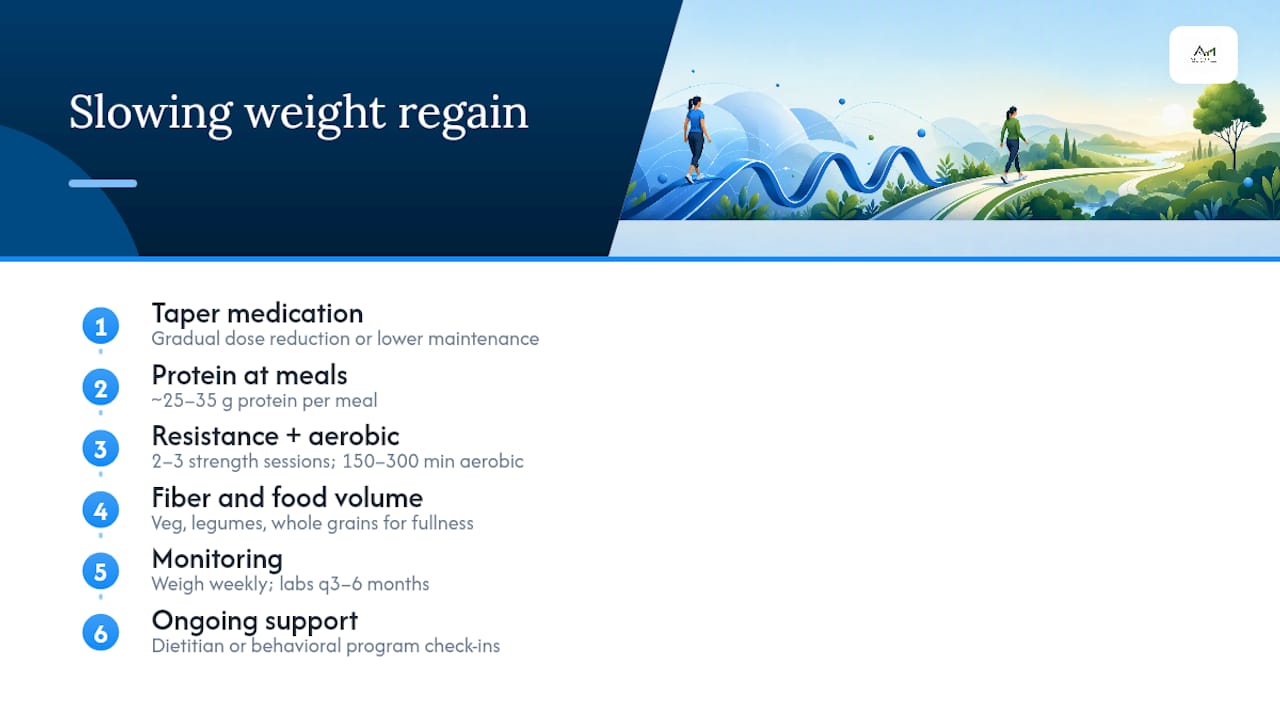
1. Talk to your clinician about tapering instead of stopping abruptly. Rather than going from a full weekly dose to nothing, some prescribers use a gradual dose reduction or transition patients to a lower maintenance dose over weeks or months. Harvard Health's guidance on weaning off GLP-1 medications points to this approach as a way to blunt the sharpest edge of rebound hunger, though long-term data on tapering protocols specifically is still limited.
2. Prioritize protein at every meal. Protein is more satiating per calorie than fat or carbohydrate, and it helps preserve lean muscle mass during and after weight loss. Aiming for roughly 25 to 35 grams of protein per meal is a common practical target that patient-facing resources like Healthline's guide to keeping weight off after semaglutide recommend as a starting point, adjusted for individual size and activity level.
3. Add progressive resistance training. Two to three sessions a week of strength training helps counteract the muscle loss that often accompanies rapid weight loss, and more muscle mass supports a higher resting metabolic rate. Combine this with roughly 150 to 300 minutes of weekly moderate aerobic activity, a range consistent with general physical activity guidelines for weight maintenance.
4. Use fiber and food volume to your advantage. Vegetables, legumes, and whole grains add bulk and fullness without the calorie density of processed foods, which can partially substitute for the appetite suppression the drug used to provide.
5. Weigh in weekly, not daily and not never. Weekly weigh-ins strike a balance: frequent enough to catch a trend early, infrequent enough to avoid obsessing over normal day-to-day fluctuation. A sustained increase of 2 to 3 lb over several weeks is a reasonable, evidence-informed trigger point for reaching out to a clinician or adjusting habits, rather than waiting for a 15 or 20 lb regain to act.
6. Set a lab-check cadence with your provider. Metabolic labs every three to six months, depending on individual risk factors, help track whether cardiometabolic markers are drifting back toward pre-treatment levels even before the scale moves much.
7. Loop in a dietitian or structured behavioral program if you can. Ongoing support, even brief periodic check-ins, correlates with better maintenance outcomes across most weight-management research, largely because it catches small deviations before they compound.
A partner resource worth bookmarking covers practical, low-effort ways to manage cravings day to day, which pairs well with the protein and fiber strategies above: controlling snack cravings naturally.
Pro Tip: Set a specific number, not a vague feeling, as your intervention trigger. Decide in advance that a 3 lb increase sustained over two consecutive weekly weigh-ins means you call your clinician or dietitian that week. Waiting for "I feel like I'm gaining" almost always means the regain is already further along than it appears.
What Should You Ask Your Doctor Before Stopping Semaglutide?
The conversation before stopping matters as much as anything you do after. A useful checklist to bring into that appointment:
- Why am I stopping: cost, side effects, reaching a goal weight, or a clinical reason like surgery prep?
- Should I taper the dose or stop at my current dose?
- What's our monitoring schedule for the next 6 to 12 months?
- What specific weight or symptom change should trigger a follow-up visit sooner than scheduled?
- Is a low-dose maintenance regimen worth considering instead of full discontinuation?
- What are the alternative therapies or combination approaches if regain becomes significant?
Weight itself is worth checking weekly at home, since it's the earliest and cheapest signal. Metabolic labs, covering things like fasting glucose, lipid panel, and blood pressure, are reasonable every three to six months depending on your baseline health conditions and how much cardiometabolic risk was present before treatment. Someone with prediabetes or hypertension history generally needs closer follow-up than someone who started treatment with no comorbidities.
Cost and insurance access shape this conversation more than most people expect. Some patients stop semaglutide not for medical reasons but because coverage lapses or out-of-pocket costs become unsustainable. If that's the driver, it's worth discussing interim supports, structured coaching, alternative lower-cost medications, or a maintenance dosing schedule, before the prescription simply runs out. A telemedicine consultation is a practical way to have this conversation without waiting weeks for an in-person appointment slot, particularly when a supply or coverage gap is approaching. If side effects are part of why you're considering stopping, it's also worth reviewing what's typical versus what warrants a dose change first, covered in more detail in this rundown of semaglutide side effects.
How Airmed Fit Supports Patients Through Discontinuation Planning
Semaglutide weight regain isn't a reason to avoid the medication. It's a reason to treat the exit plan with the same seriousness as the starting plan. Their model centers on physician-supervised care, emphasizing that decisions about tapering, maintenance dosing, or stopping altogether benefit from clinical input rather than guesswork.
Lab monitoring is a core piece of that. Metabolic and hormone panels give clinicians objective data to assess whether cardiometabolic markers are holding steady or drifting back toward baseline after a dose change. Combined with individualized protocols built around patient health history, this approach aims to reduce uncertainty after stopping a GLP-1 medication. Airmedfit sources its GLP-1 and peptide therapies from licensed US manufacturers under physician oversight, which matters most precisely at the moments when treatment plans change, whether that's adjusting a dose, pausing therapy, or starting a maintenance protocol.
None of this replaces an honest conversation with a prescriber about your specific situation. It does mean that conversation can happen with real lab data and a clinician who's tracking the full picture, not just the prescription.
Rethinking Semaglutide as a Long-Term Tool, Not a Cure
Obesity behaves more like hypertension or type 2 diabetes than like an infection you clear and move past. Stopping treatment for high blood pressure predictably brings blood pressure back up. Nobody frames that as a personal failure, yet weight regain after stopping semaglutide often gets moralized in a way that blood pressure never does.
That double standard does real harm. It pushes people toward shame instead of problem-solving, and shame is a terrible foundation for building sustainable habits. The more useful frame is chronic disease management: some people will need ongoing or intermittent pharmacological support indefinitely, the same way someone with hypertension might take medication for decades. Others will build enough behavioral and physiological change during treatment to maintain a partial loss on their own, and the STEP 1 extension data showing 48.2% keeping at least 5% weight loss at week 120 backs that up.
Realistic goals matter more than perfect ones. A clinician who partners with you on an honest discontinuation plan, rather than either discouraging you from ever stopping or leaving you to figure it out alone, is worth more than any single tactic on a list. Cost and access will keep shaping these decisions for a lot of patients, and that's a real constraint worth naming rather than glossing over.
— Organic
Ready to Plan Your Next Step With a Physician?
Stopping semaglutide without a plan is how most of the regain statistics above happen. The telemedicine model offers physician-supervised guidance tailored to individual labs and history, rather than generic tapering schedules found elsewhere.
A doctor's consultation is the starting point: a licensed physician reviews your history, discusses whether tapering, low-dose maintenance, or a full stop makes sense for you, and sets a monitoring schedule you can actually follow. If cardiometabolic tracking matters for your situation, home lab panels through Airmedfit's medical services let you check markers like glucose and lipids without a clinic visit. For patients who want ongoing oversight rather than a one-time consult, Airmedfit's HRT and TRT membership programs provide continued physician access as your plan evolves. Book a consultation today and build a discontinuation or maintenance strategy around your own data, not an average.
This article is general information, not a substitute for advice from a qualified doctor. Consult a qualified healthcare professional about your own circumstances before acting on anything here.
Sources
- Weight regain after cessation of medication for weight management: systematic review and meta-analysis (BMJ)
- Weight regain and cardiometabolic effects after withdrawal of semaglutide: The STEP 1 trial extension
- Weaning off a GLP-1? Tips for the transition - Harvard Health
FAQ
Will Weight Come Back After Stopping Semaglutide?
For most people, yes, at least partially. Pooled research shows an average regain of 0.4 kg per month, though nearly half of STEP 1 extension participants still maintained a clinically meaningful weight loss a year after stopping.
Why Do I Feel So Good on Semaglutide?
Semaglutide reduces appetite and quiets constant food-related thoughts, often called "food noise," which many patients experience as a mental and physical relief on top of the weight loss itself. That effect tends to fade once the medication is stopped, which is part of why regain often begins within weeks.
Do You Have to Stay on Semaglutide Forever for Weight Loss?
Not necessarily, but many obesity specialists treat it as a chronic-disease medication rather than a short course, similar to how blood pressure medication works. Some patients maintain partial results after stopping, while others benefit from long-term or intermittent maintenance dosing discussed with a clinician.
Can Semaglutide Permanently Change Your Metabolism?
There's no strong evidence it permanently resets metabolism; cardiometabolic markers and body weight both tend to drift back toward pre-treatment baselines after stopping, often within about 1.4 to 1.7 years on average. Metabolic adaptation from the weight loss itself, not the drug specifically, is part of why maintaining a lower weight afterward usually requires sustained diet and activity changes.
How Fast Does Weight Regain Happen After Stopping Semaglutide?
Regain typically starts within the first few weeks and moves fastest in the initial months, with some data suggesting it plateaus by around 52 to 60 weeks. The STEP 1 extension found about two-thirds of prior weight loss returned within a year of stopping the 2.4 mg dose.