
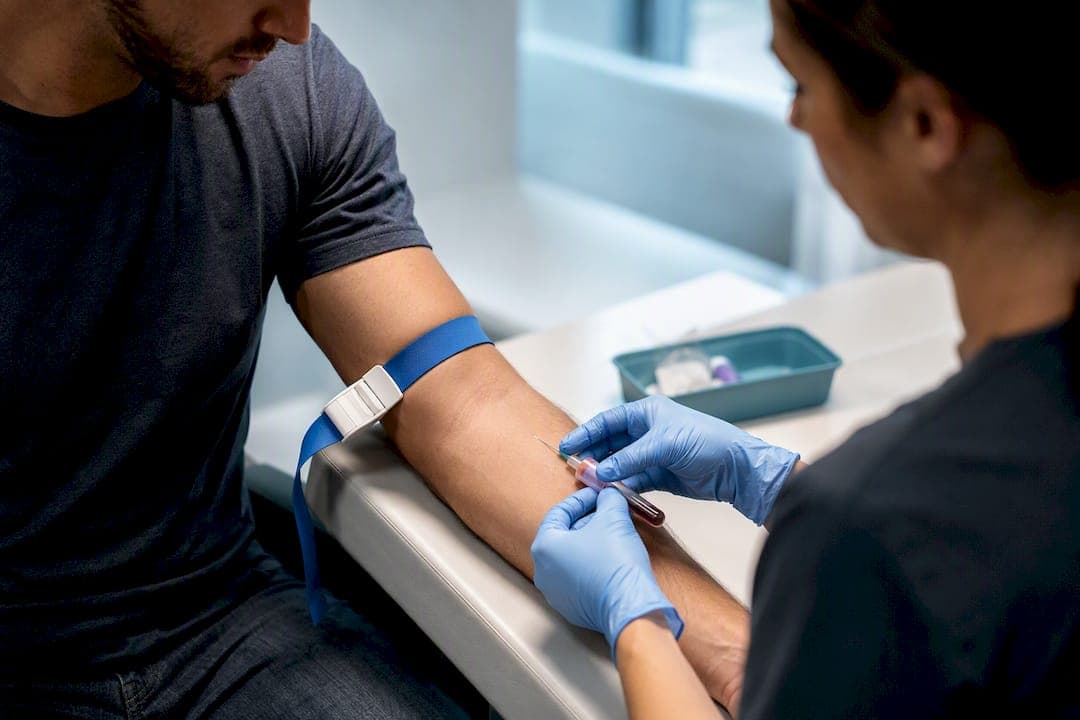
You can only get a legitimate TRT prescription after a clinician documents matching symptoms and confirms low testosterone on two separate morning blood tests, plus completes required safety screening. There's no shortcut around this, whether you go through a telehealth clinic or an in-person urologist. Any provider willing to skip the labs is a provider you should walk away from. Realistic timelines run 1 to 3 weeks for uncomplicated telehealth cases and 2 to 6 or more weeks in person, depending on scheduling and confirmatory draws.
TL;DR:
- A proper TRT prescription requires two separate morning blood tests confirming low testosterone and thorough safety screening, with no shortcuts allowed.
- Timing of blood draws is critical; tests should be done between 7 and 10 a.m. to prevent normal daily fluctuations from skewing results.
- Bloodwork must include total and free testosterone, LH, FSH, prolactin, hematocrit, PSA, metabolic, and lipid panels, with follow-up testing recommended every 3 to 6 months initially.
- Conditions such as untreated prostate cancer, severe sleep apnea, recent cardiac events, or high baseline hematocrit disqualify patients from TRT without specialized clearance.
- TRT can significantly impact fertility by suppressing sperm production, so options like hCG or sperm banking should be discussed beforehand if fertility is a concern.
Table of Contents
- What Qualifies You for a TRT Prescription?
- The Step-by-Step TRT Prescription Process
- What Labs Do You Need for an Accurate Diagnosis?
- Contraindications and Red Flags Before Starting TRT
- How Often Will You Be Monitored on TRT?
- Will TRT Affect Your Fertility?
- How to Spot a Legitimate TRT Provider
- The Real Bottleneck Isn't Difficulty, It's Discipline
- Airmed Fit's Physician-Supervised TRT Pathway
- Sources
- FAQ
What Qualifies You for a TRT Prescription?
Fatigue, low libido, erectile difficulty, loss of muscle mass, mood changes, and poor concentration are the symptom cluster clinicians look for. None of them, alone or together, is diagnostic. A guy can feel every one of those symptoms from bad sleep, stress, or a thyroid problem and have perfectly normal testosterone.
The biochemical rule is what actually opens the door to treatment. The AUA guideline calls for two separate morning total testosterone measurements below the clinically accepted threshold, drawn on different days, before anyone considers a prescription. If the number is borderline or your sex hormone binding globulin looks abnormal, your clinician should also check free testosterone.
LH and FSH tell a more specific story. Low testosterone with high LH/FSH points to a testicular (primary) problem. Low testosterone with low or normal LH/FSH points to a pituitary or hypothalamic (secondary) cause, and that distinction matters because secondary hypogonadism sometimes responds to medications that stimulate your own testosterone production instead of replacing it outright. A prolactin test gets added when LH is unexpectedly low, since a prolactin-secreting pituitary tumor is a rare but real cause that needs its own workup.
Age-related decline by itself typically isn't an indication for treatment. Mayo Clinic is direct about this: testosterone is a Schedule III controlled substance, and prescribing it for normal aging without a confirmed diagnosis isn't standard practice. Before anyone commits you to therapy, a competent clinician should rule out reversible causes:
- Obesity and metabolic syndrome, which suppress testosterone and often respond to weight loss alone
- Obstructive sleep apnea, undiagnosed in a large share of men with low morning testosterone
- Medications like opioids or high-dose corticosteroids
- Acute illness or extreme stress at the time of testing, which can temporarily depress levels
The Step-by-Step TRT Prescription Process
The path from "I think something's off" to your first dose follows a fairly fixed sequence, whether you use a telehealth clinic or a local urologist.
- Intake and history. You complete a symptom questionnaire and medical history covering cardiovascular events, cancer history, fertility plans, and current medications.
- First lab order. Your provider orders a morning total testosterone panel, ideally before 10 a.m.
- Confirmatory draw. If the first result is low, a second morning draw on a separate day confirms the diagnosis, alongside baseline safety labs.
- Clinician review. A licensed prescriber reviews both results plus your history and decides whether you meet the diagnostic threshold.
- Prescription and initiation. If you qualify, you get a prescription, typically starting at a conservative dose.
- Fulfillment. Medication ships from a pharmacy or clinic-affiliated dispensary, with instructions on injection technique or gel application.
- First follow-up. A repeat blood draw and check-in, usually at 3 to 6 months, confirms the dose is working and nothing concerning has developed.
Bring a symptom log (when did things change, how severe, how consistent), any prior labs you have even if they're old, a current medication list, and relevant history like prostate issues, cardiac events, or sleep apnea. That last point matters more than most men expect: a comprehensive baseline panel tends to catch things a symptom checklist never would.
A legitimate provider will insist on confirmatory labs before writing anything. What they will not do is prescribe based on a questionnaire alone, promise same-day treatment with no bloodwork, or skip a follow-up plan. If a clinic's entire model is "answer these ten questions, get testosterone shipped tomorrow," that's a red flag, not a shortcut.
On logistics: some clinics ship medication directly, others send an electronic prescription to your local pharmacy. Injectable regimens usually come with a training session, whether by video or included instructional materials, and gels come with straightforward application instructions. Most providers start conservative and titrate up based on your follow-up labs rather than guessing at your ideal dose from day one. If you're weighing injection routes, the choice between subcutaneous and intramuscular delivery affects both comfort and how your levels look on a follow-up draw.
Pro Tip: Keep a simple daily log of energy, mood, and libido for two weeks before your first appointment. A specific pattern (worse in the afternoon, worse three days after each attempted workout) gives your clinician far more to work with than "I've just been tired lately."
What Labs Do You Need for an Accurate Diagnosis?
Getting an accurate result depends as much on timing as on which tests you order. Testosterone follows a daily rhythm, peaking in the morning and dropping through the day, so an afternoon draw can make a perfectly normal man look hypogonadal on paper.
A complete diagnostic and safety panel includes:
- Total testosterone, drawn in the morning
- Free testosterone or SHBG, when total testosterone is borderline or SHBG looks abnormal
- LH and FSH, to separate primary from secondary causes
- Prolactin, if LH comes back low
- CBC with hematocrit, a mandatory safety baseline
- PSA, for men in the age range where prostate screening applies
- Comprehensive metabolic panel and lipid panel
- Estradiol, when symptoms or side effects suggest it's relevant
Timing matters more than most guides admit. Draw between 7 and 10 a.m., fasting if your provider also wants a metabolic or lipid panel, according to standard baseline testing guidance used across major clinical protocols. If you're already on injectable testosterone from a prior provider and switching clinics, timing your draw at the midpoint or trough between doses gives a more honest read than a random draw.
You can get this bloodwork through a standing lab network requisition at a national lab, through your provider's affiliated lab partner, or through a validated at-home collection kit that many telehealth clinics coordinate directly. If your only prior lab was drawn in the afternoon, don't rely on it. Redo it in the morning window before anyone makes a treatment decision based on it.
Contraindications and Red Flags Before Starting TRT
Certain conditions make TRT unsafe or require specialist clearance first, and a provider who doesn't screen for these isn't practicing to guideline. The VA's clinical recommendations lay out the major categories clearly:
- Active or untreated prostate or breast cancer
- Severe, uncontrolled obstructive sleep apnea
- A recent heart attack, stroke, or unstable cardiac event
- A history of blood clots or clotting disorders (VTE)
- Baseline hematocrit already elevated before treatment even starts
- Severe liver or kidney disease
Hematocrit is the number that trips up more men than any other. TRT thickens the blood by stimulating red cell production, and guidelines set clear intervention points: adjust the dose once hematocrit climbs above 51%, and hold the medication or consider therapeutic phlebotomy once it exceeds 54%, per clinical monitoring recommendations. This isn't a rare edge case. It's the single most common reason a TRT patient gets a dose adjustment in year one.
Prostate safety follows its own trigger points. A baseline PSA gets checked before treatment, and a urology referral is warranted if PSA rises more than 1.4 ng/mL within 12 months, or if it crosses 4.0 ng/mL outright.
How Often Will You Be Monitored on TRT?
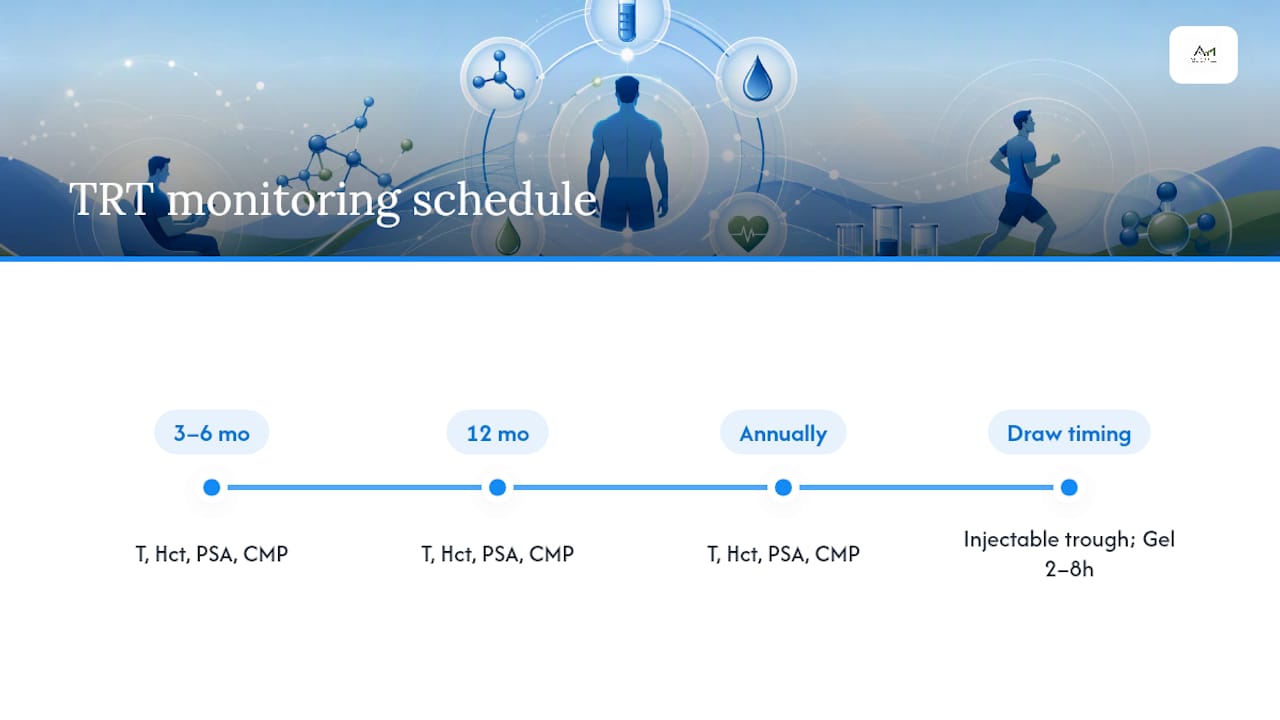
Guidelines call for follow-up labs at 3 to 6 months after you start, then at 12 months, then annually if everything stays stable. Each visit checks testosterone level, hematocrit, PSA, and a metabolic panel with lipids, according to the same monitoring framework that sets the hematocrit thresholds above.
The target is mid-normal, not maximum. Most clinicians aim for a trough testosterone level somewhere in the mid-normal reference range, adjusting dose up or down based on both the number and how you feel. Numbers that look great on paper but come with no symptom improvement are a signal to reassess, not celebrate.
Draw timing affects what those numbers mean. For injectable regimens, a midpoint or trough draw (right before your next dose) gives the most useful reading for titration. For gels, testing 2 to 8 hours after application catches the level while it's active. Guidelines also note that if symptoms haven't meaningfully improved after 6 to 12 months despite testosterone sitting in normal range, discontinuing treatment is the recommended next step rather than continuing indefinitely on faith.
Will TRT Affect Your Fertility?
Exogenous testosterone suppresses the signals (LH and FSH) your body uses to make its own testosterone and sperm, and sperm production typically drops within a few months of starting. This isn't a minor side effect. It's a near-universal consequence of standard TRT dosing, and it's reversible in most men after stopping, but not instantly and not always completely.
If fertility is even a maybe for you, say so before you start. Options include:
- Clomiphene or enclomiphene, which raise your own testosterone without shutting down sperm production
- hCG added alongside TRT to preserve testicular function and spermatogenesis
- Sperm cryopreservation before starting testosterone, which several clinical reviews recommend as a straightforward hedge
Your age, how urgent your fertility plans are, and how your provider handles this conversation should all factor into the decision. If your provider doesn't ask about fertility before writing the prescription, ask them yourself.
How to Spot a Legitimate TRT Provider
Look for a provider with a lab-first policy: labs come before any prescription, not after. They should hold an active license in your state, order confirmatory testing rather than relying on a single result, give you a written monitoring plan, screen for the contraindications above, and schedule real follow-up rather than a one-time transaction.
- Verify the prescriber is licensed in your state, not just "board certified" somewhere unspecified.
- Confirm which lab network they use and whether results get reviewed by an actual clinician before treatment starts.
- Ask what happens if your hematocrit or PSA moves in the wrong direction. A real answer, not a shrug, is the sign you want.
Telehealth clinics can absolutely deliver guideline-compliant care when they mirror in-person diagnostic standards. The problem isn't the delivery model. It's clinics that treat the model as a way to skip steps.
Pro Tip: If a clinic advertises a prescription "in 24 hours" with no mention of a second confirmatory blood draw, that's the biggest tell. Guideline-based care simply doesn't move that fast, no matter how good the marketing looks.
The Real Bottleneck Isn't Difficulty, It's Discipline
Getting a TRT prescription isn't hard in the sense of being restrictive. It's hard in the sense of requiring patience most men don't expect: two morning draws, a real symptom history, and a willingness to get monitored rather than just medicated. Skip that discipline and you get a clinic that hands out testosterone like vitamins, which is exactly the kind of care that leads to unmanaged hematocrit and missed prostate flags down the road. Before you book anything, get morning labs, write down your symptoms honestly, and choose a clinician who commits to monitoring, not just prescribing.
— Organic
Airmed Fit's Physician-Supervised TRT Pathway
The process involves labs before prescriptions, confirmatory testing before treatment, and a documented monitoring plan after your first dose. Evaluations start with a telemedicine consultation supervised by a physician, followed by lab ordering through established networks and ongoing monitoring per recommended guidelines.

If you're ready to move past symptom-checking and get real answers, Airmedfit's telemedicine consultation is the place to start. You'll walk through your history with a physician, get the right labs ordered, and find out where you actually stand before anyone talks about a prescription. Once you're a patient, protocol and product details walk you through what treatment looks like week to week. Start with Airmedfit and book your evaluation when you're ready for a process that treats monitoring as part of the deal, not an afterthought.
This article is general information, not a substitute for advice from a qualified doctor. Consult a qualified healthcare professional about your own circumstances before acting on anything here.
Sources
- The Evaluation and Management of Testosterone Deficiency AUA Guideline
- NCBI clinical recommendations (monitoring and safety thresholds)
- Mayo Clinic: Is testosterone replacement therapy right for you?
- VA: Evaluation for and Management of Males with Low Testosterone (Jan 2026)
FAQ
How Hard Is It to Get a Prescription for TRT?
It's not hard if you have genuinely low testosterone confirmed on two morning blood tests plus matching symptoms. It's appropriately difficult if you're hoping to skip the labs, since no legitimate provider will prescribe on symptoms or a questionnaire alone.
How Long Does the TRT Prescription Process Take?
Telehealth routes typically run 1 to 3 weeks for straightforward cases once you complete intake and both morning lab draws. In-person paths often take 2 to 6 or more weeks, depending on appointment availability and how quickly confirmatory testing gets scheduled.
Is 3 Months of TRT Enough to Know if It's Working?
Three months is usually enough to see initial changes in energy and mood, and it lines up with the first standard follow-up lab check. Full symptom response can take longer, and guidelines allow up to 6 to 12 months before deciding whether treatment is working or should be discontinued.
What Are the Warning Signs of a TRT Side Effect?
Watch for symptoms tied to elevated hematocrit, like unusual headaches, dizziness, or vision changes, since thickened blood is the most common safety issue on therapy. Shrinking testicles are also expected and reflect suppressed natural testosterone production rather than a dangerous side effect, though it's worth discussing with your provider if fertility matters to you.
Can You Get a TRT Prescription Without Seeing a Doctor in Person?
Yes. Telemedicine can deliver fully guideline-compliant TRT care as long as the clinic requires lab confirmation, uses a licensed prescriber in your state, and commits to ongoing monitoring rather than a one-time prescription.