
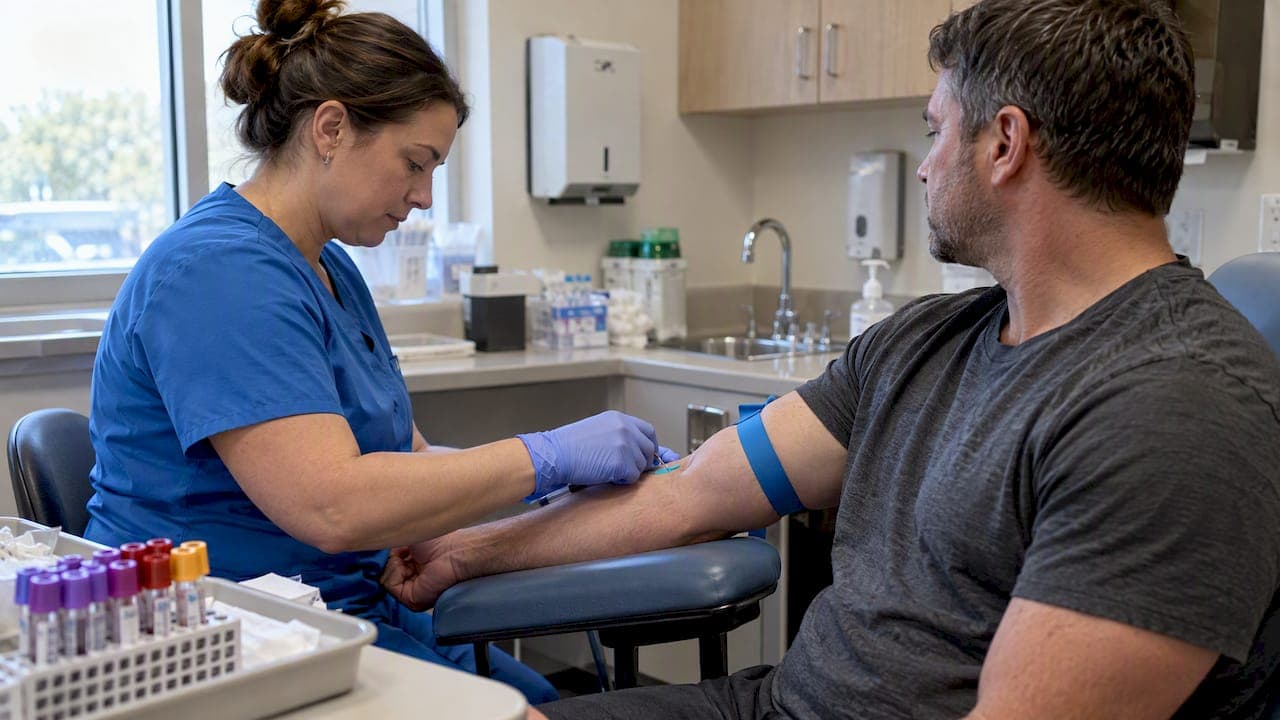
A comprehensive metabolic panel, or a basic metabolic panel paired with a lipid panel, HbA1c, and TSH, is the standard baseline before starting medical weight-loss care. These labs check liver, kidney, glucose, and thyroid function, all of which affect which treatments are safe and which ones fit your situation. Arrange fasting baseline labs with a clinician before starting any medication or structured weight-loss program.
TL;DR:
- Baseline labs before weight-loss treatment should include a comprehensive metabolic panel, lipid panel, HbA1c, TSH, vitamin D, and CBC, tailored to individual symptoms.
- Fasting for 8 to 12 hours and scheduling blood draws in the morning improve test accuracy, especially for glucose, insulin, and hormone levels.
- Abnormal results like high fasting glucose or TSH can alter medication choices or signal underlying conditions affecting weight loss.
- Serial testing over months is crucial to monitor progress and ensure organ health, rather than relying solely on initial results.
- Additional tests such as insulin or hormone panels are needed when symptoms suggest metabolic or endocrine issues not captured by standard panels.
Table of Contents
- What a metabolic panel measures: CMP vs BMP and common baseline tests
- Preparing for testing and sample-collection logistics
- How clinicians interpret your results to guide a weight-loss plan
- When your clinician may order additional endocrine or specialized testing
- Limitations and common misreadings of your results
- How to get the right tests ordered and paid for
- Why muscle preservation and serial testing matter as much as the first panel
- How Airmed Fit supports physician-guided metabolic testing
- Sources
- FAQ
What a metabolic panel measures: CMP vs BMP and common baseline tests
A comprehensive metabolic panel measures 14 substances in your blood: glucose, calcium, electrolytes (sodium, potassium, chloride, carbon dioxide), kidney markers (BUN and creatinine), and a set of liver markers (albumin, total protein, ALP, ALT, AST, and bilirubin). A basic metabolic panel covers eight of those substances, the glucose, electrolyte, and kidney markers, but leaves out the liver enzymes and protein measures. The difference matters more than it looks on paper.

If you are considering a GLP-1 medication, a low-carb or ketogenic plan, or any intervention that puts real demand on your liver and kidneys, you want to know those organs are working normally before you start. Glucose levels flag undiagnosed insulin resistance or diabetes, which changes which medications a clinician will consider first. Kidney markers matter because dehydration, rapid weight loss, and some medications can stress kidney function, especially in someone who already has reduced reserve. Liver enzymes matter because several weight-loss drugs are processed through the liver, and because fatty liver disease is common in people with excess weight and often shows no symptoms until labs catch it.
Beyond the CMP or BMP, most clinicians add a short list of baseline tests when evaluating a patient for weight-loss care:
- A fasting lipid panel to check cholesterol and triglycerides, since both affect cardiovascular risk and sometimes medication choice, without specifying precise thresholds.
- Fasting glucose and HbA1c together, since they capture different windows (a single morning reading versus a rolling average over time).
- A thyroid-stimulating hormone (TSH) test, since an underactive thyroid can slow metabolism and mimic or worsen weight-loss resistance without specifying numeric values.
- A 25-OH vitamin D level since deficiency is common and can affect energy and muscle function during a calorie deficit.
- A complete blood count (CBC) to screen for anemia, which can sap energy before you even start a weight-loss plan.
This lineup lines up closely with what the Obesity Medicine Association's clinical practice statement recommends as routine lab assessment for patients with overweight or obesity: glycemia markers, lipids, liver enzymes, electrolytes, creatinine and BUN, TSH, CBC, urine microalbumin, and vitamin D 25-OH when relevant. The same statement is clear that this is a starting point, not a fixed checklist. Individual testing gets added based on symptoms and history, not applied uniformly to everyone walking through the door.
A Cleveland Clinic overview of the CMP notes it is commonly ordered during routine checkups precisely because it gives a broad snapshot of organ function and glucose control in one draw, which is part of why it tends to be the default choice over a BMP when weight-loss treatment is on the table.
Preparing for testing and sample-collection logistics
Getting clean results the first time saves you a second trip to the lab and a delay in starting treatment.
- Fast for 8 to 12 hours before a draw that includes glucose, insulin, or a lipid panel, since recent food intake skews all three, as MedlinePlus notes in its general lab-preparation guidance.
- Tell your clinician about every medication and supplement you take, since metformin, corticosteroids, biotin, and GLP-1 medications can all shift certain results or interfere with specific assays.
- Schedule a morning draw when possible, since glucose, cortisol, and some hormone levels follow a daily rhythm and are most comparable to reference ranges early in the day.
- Stay hydrated and skip intense exercise right before the draw, since dehydration and recent exertion can temporarily alter kidney markers and electrolytes.
- Bring your current medication list, any prior lab results, and a short note on symptoms you've noticed, such as fatigue, irregular cycles, or unexplained weight changes.
Home test kits can work well for routine baseline panels, particularly when a clinician reviews the results and follows up directly. Traditional phlebotomy draws at a lab or clinic remain the better choice when a test requires precise timing or handling, such as a cortisol level drawn at a specific hour.
Pro Tip: Write down any new supplement, including biotin in multivitamins, on your intake form. Biotin is notorious for throwing off certain thyroid and hormone assays even at common over-the-counter doses.
How clinicians interpret your results to guide a weight-loss plan
Lab numbers only matter once someone turns them into a decision. Here is how specific results typically change the plan.
- High fasting glucose or HbA1c points toward prediabetes or undiagnosed diabetes, which shifts a clinician toward glucose-friendly medications and closer monitoring rather than a generic weight-loss protocol.
- Elevated fasting insulin or a high HOMA-IR score signals hyperinsulinemia even when glucose still looks normal, and it often pushes the plan toward insulin-sensitizing strategies such as carbohydrate timing changes or specific medication classes.
- An elevated TSH with a low free T4 suggests hypothyroidism, which can slow metabolism and blunt the effects of diet and exercise until the thyroid problem itself is treated.
- Elevated liver enzymes (ALT, AST) raise the question of nonalcoholic fatty liver disease and call for caution with any medication that is processed through the liver.
- Low vitamin D or signs of anemia on a CBC explain fatigue that has nothing to do with motivation and everything to do with a correctable deficiency that limits exercise tolerance.
Fasting insulin and HOMA-IR often reveal metabolic problems that a normal fasting glucose reading misses entirely, according to the Obesity Medicine Association's clinical practice statement, which notes that insulin-resistance measures give more direct metabolic insight than glucose alone and can change both the choice and intensity of treatment.
None of these results mean much as a single data point. A mildly elevated liver enzyme on one test could be a lab quirk, a recent workout, or early fatty liver disease, and the only way to tell the difference is to look at the trend. The 2026 cardiovascular-kidney-metabolic syndrome guideline from the AHA, ACC, ADA, and ASN stresses exactly this: labs should be tailored to a patient's history and symptoms, and clinicians typically plan repeat testing at set intervals after starting treatment rather than reacting to one number in isolation.
When your clinician may order additional endocrine or specialized testing
A standard metabolic panel does not catch everything, and some situations warrant a wider net. Certain red flags tend to prompt extra testing: weight loss that stalls despite genuine adherence to a plan, irregular or absent menstrual cycles, new erectile dysfunction, or rapid unexplained weight gain that does not track with diet or activity changes.
When one of those shows up, a clinician may add:
- Fasting insulin and C-peptide to assess insulin resistance and pancreatic insulin output more precisely than glucose alone.
- AM cortisol, with a 24-hour urinary cortisol or dexamethasone suppression test if indicated, to rule out Cushing's syndrome when weight gain and other signs point that way.
- Sex hormone panels, including total and free testosterone, SHBG, estradiol, and DHEAS, when symptoms suggest a hormonal imbalance tied to weight changes, menstrual irregularity, or sexual function.
- Prolactin, which can affect both reproductive hormones and weight when elevated.
In select cases, these labs lead to an imaging referral, such as a pituitary MRI when hormone results suggest a pituitary issue, or a liver ultrasound when enzyme elevations persist. The Obesity Medicine Association's guidance frames this kind of individual testing as a deliberate add-on to the baseline panel, guided by the specific symptoms in front of the clinician rather than ordered as a matter of routine.
Limitations and common misreadings of your results
Lab numbers are precise, but precision is not the same thing as certainty. A few conditions, including iron deficiency and certain hemoglobinopathies, can distort HbA1c readings in ways that make the number look better or worse than your actual average glucose. The StatPearls review of metabolic assessment in obesity recommends confirming any borderline or unexpected HbA1c with a fasting glucose test when one of these confounders is suspected, since relying on HbA1c alone in that situation can send treatment in the wrong direction. A walk-in clinic primer on A1C testing covers the same ground for readers who want a plain-language explanation of cutoffs and when retesting makes sense.
Non-fasting samples cause similar trouble. Eating before a draw can push triglycerides and glucose higher than they actually run day to day, and a recent illness or infection can do the same. If a result does not match how you feel or what your history suggests, that mismatch is itself useful information, and a repeat test under proper conditions often clears it up.
- Confirm an unexpected HbA1c with fasting glucose, especially if you have a known iron deficiency or blood disorder.
- Re-test when a result does not fit the clinical picture rather than accepting it at face value.
- Remember that lab-to-lab variability exists, so tracking the trend across visits matters more than any single number.
- Avoid treating one mildly abnormal result as a diagnosis on its own. It needs context from your symptoms, history, and other labs.
Pro Tip: If a result surprises you, ask whether it should be repeated before it changes your treatment plan. A second draw is a minor inconvenience compared to adjusting medication based on a fluke reading.
How to get the right tests ordered and paid for
You have a few practical paths to baseline testing, and the right one depends on what you are trying to accomplish.
- Start with your primary care provider if you already have one and just need routine baseline labs before a general weight-loss conversation.
- Use a reputable direct-to-consumer lab service when you want convenience and have a clear idea of which tests you need, keeping in mind that results still benefit from clinical interpretation.
- Choose physician-supervised testing specifically when you are starting a medication, considering hormone therapy, or dealing with results that do not have an obvious explanation.
- Check with your insurance plan before specialized tests. Baseline, medically indicated labs are often covered, while tests like cortisol panels or sex hormone workups sometimes need documented justification first.
- Bring your results, along with your medication list and symptom notes, to your first consult so your clinician can interpret them in context rather than in isolation.
If you are tracking a GLP-1 medication alongside your labs, a GLP-1 treatment tracking guide can help you keep tabs on how your numbers move over time, which is useful information to bring to a follow-up visit.
Why muscle preservation and serial testing matter as much as the first panel
Labs are one piece of a bigger picture. Clinicians often pair metabolic testing with body-composition tools like DXA scans, because a scale number hides whether weight loss is coming from fat or from muscle. Losing lean mass too fast tends to show up eventually in lab trends and in how someone feels during exercise, which is why repeat testing after starting treatment matters more than the initial panel alone. A single result tells you where you stand today. A series of results, spaced out over months, tells you whether the plan is actually working.
— Organic
How Airmed Fit supports physician-guided metabolic testing
Reading your own labs only gets you so far without someone trained to connect the dots between a thyroid number, an insulin reading, and the medication options that fit your situation. This step is built directly into the process through physician-supervised lab panels and consults, so the testing and the treatment decision happen in the same conversation instead of two disconnected ones.

What that looks like in practice:
- Lab panels that include a home kit, letting you start baseline testing without a separate clinic visit.
- A doctor's consultation, offered as either an async or a scheduled synchronous appointment, to review your results and talk through what they mean for your options.
- Physician oversight for coordinating therapy starts once your baseline labs are in, along with a plan for when to retest.
If you want to see where your numbers stand before committing to a direction, you can book a lab panel or set up a doctor's consultation to go over what your results mean for your next step.
This article is general information, not a substitute for advice from a qualified doctor. Consult a qualified healthcare professional about your own circumstances before acting on anything here.
Sources
- Comprehensive Metabolic Panel (CMP): MedlinePlus Medical Test
- Obesity history, physical exam, laboratory, body composition, and energy expenditure: An Obesity Medicine Association Clinical Practice Statement (CPS)
- Comprehensive Assessment and Diagnosis of Metabolic and Biomechanical Complications in Obesity - StatPearls
FAQ
What lab tests are recommended for weight loss?
A comprehensive or basic metabolic panel, fasting lipid panel, fasting glucose and HbA1c, TSH, and a CBC form the common baseline, with vitamin D added when deficiency is a concern. Additional tests such as fasting insulin, C-peptide, cortisol, or sex hormones get added when a clinician identifies specific symptoms that warrant them, as outlined in the Obesity Medicine Association's clinical practice statement.
What are the key metabolic markers tied to weight management?
There is no fixed list of "metabolic superfoods" tests, since metabolic health is assessed through lab markers rather than foods. The markers that matter most for weight management are fasting glucose, HbA1c, fasting insulin or HOMA-IR, TSH, and a lipid panel, each reflecting a different piece of how your body handles energy and fat storage.
Does losing weight improve blood flow?
Weight loss can improve cardiovascular markers over time, including blood pressure and lipid levels, both of which relate to blood flow. The specific effect depends on starting health status, how much weight is lost, and other factors, so a clinician reviewing your labs before and after a weight-loss plan is the most reliable way to track the change.
Do GLP-1 medications show up in bloodwork?
Standard metabolic panels do not test for GLP-1 medications directly, since a CMP or BMP measures organ function and glucose, not drug levels. Clinicians instead watch how your glucose, kidney, and liver markers respond over time while you're on a GLP-1 medication like those discussed in this overview of GLP-1 evidence, rather than looking for the drug itself in a standard panel.