
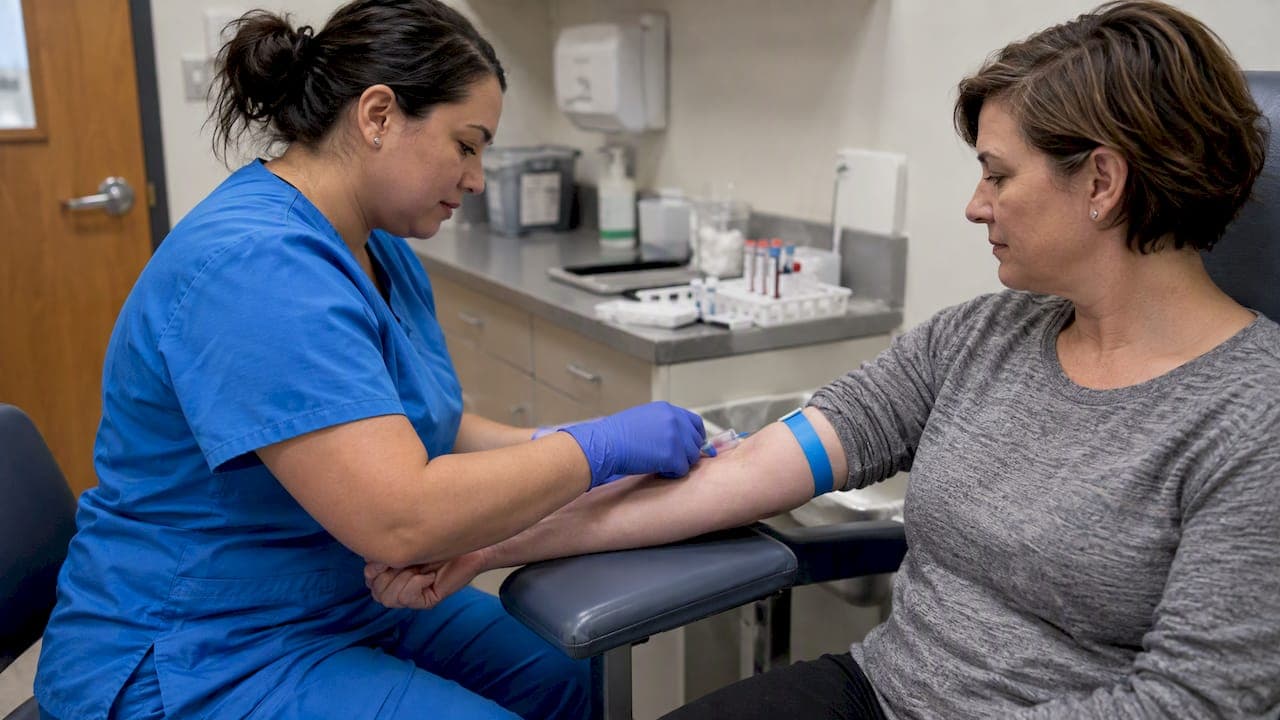
Whether you need to fast before hormone labs depends on which hormone is being measured and on what else is on your order. Testosterone is the main exception: the Endocrine Society guideline recommends measuring total testosterone in the morning after an overnight fast. Many other hormone tests, such as thyroid panels, don't need a fast. Fasting is often added only because a glucose, insulin or lipid test is on the same order. The rule that always applies: follow the instructions on your own lab order, and ask the ordering clinician if they are unclear.
TL;DR
- For testosterone, the Endocrine Society guideline recommends a morning draw after an overnight fast. MedlinePlus says testosterone is typically highest between 7 and 10 a.m.
- Many common tests, including thyroid function tests such as TSH, T3 and T4, usually don't require fasting. Glucose and lipid tests often do.
- When you are told to fast, it means plain water only for the stated number of hours.
- Tell your clinician about every supplement and medication, including biotin. Ask before skipping or delaying any prescription.
- One low testosterone result is not a diagnosis. Expect a repeat on a different morning.
Table of Contents
- Why hormone labs have prep rules at all
- Fasting before a testosterone blood test
- What counts as fasting, and what doesn't
- Which hormone tests usually need a fast
- Female hormone labs: cycle timing matters more than fasting
- Supplements and medications that can skew results
- Our perspective
- Getting your labs ordered and reviewed
- Frequently asked questions
- Sources
Why hormone labs have prep rules at all
Hormone levels move. Testosterone follows a daily rhythm, with its peak in the morning. Eating and sugar intake can push it down. The Endocrine Society guideline says this is why it advises a morning, fasting sample for total testosterone, to reduce the noise that comes from time of day and meals.
Other hormones are driven by different things. Female sex hormones depend on where you are in your menstrual cycle. Thyroid hormones are generally steady across a day and a meal. Cortisol responds to stress and time of day. Prep instructions exist to remove the variables that would make a result hard to interpret, not to make the test harder.

That is why a single blanket answer, "fast 12 hours for everything," is wrong in both directions. Some people skip breakfast needlessly. Others eat before a test that did need a fast and have to redraw.
Fasting before a testosterone blood test
If you are searching for fasting for a testosterone blood test, the short version is this: plan on a morning, fasting draw unless your clinician or lab tells you otherwise.
The Endocrine Society's clinical practice guideline recommends measuring fasting morning total testosterone when evaluating for hypogonadism. MedlinePlus describes the same timing for the draw: a morning sample between 7 and 10, when levels are typically highest.
Some patient-facing lab pages are more relaxed. They say testosterone usually doesn't need a fast and tell you to follow your order. Both statements can be true in practice. A lab may accept a non-fasting sample, but if your clinician is comparing your result with guideline thresholds, a fasting morning draw is the cleaner, more comparable measurement. If your order doesn't say, ask which they want.
A practical routine for the day before
- Check your order for the fasting window, usually stated in hours. Count back from your appointment time.
- Book the earliest slot that fits the 7 to 10 a.m. window.
- Eat your usual dinner. Don't skip meals or change your diet dramatically the day before.
- Sleep as normally as you can. Sleep loss and stress can influence hormone levels.
- Drink plain water. Being well hydrated also tends to make the blood draw easier.
- Bring a list of everything you take, including supplements.
Why one result isn't the answer
The Endocrine Society recommends diagnosing hypogonadism only in men with symptoms and signs of testosterone deficiency and consistently low serum testosterone. Per the research summarized in the guideline, about 30% of men with an initially low result have a normal reading on repeat, so two separate morning measurements on different days are the standard. We cover that approach in why two morning tests matter for hormone-related fatigue.
The guideline also notes that testosterone can be temporarily suppressed by acute illness, surgery or hospitalization, and that testing should wait until you have recovered. If you are just back from a bad flu, tell your clinician before you schedule the draw.
What counts as fasting, and what doesn't
When a clinician says fast, MedlinePlus says it means no food or drink other than plain water for several hours. The usual window is 8 to 12 hours, and your order will say which one applies to you.
In practice:
| Item | During a fast |
|---|---|
| Plain water | Yes |
| Black coffee or plain tea | No, unless your clinician says otherwise. Labcorp's guidance says to avoid caffeinated drinks too |
| Cream, sugar, protein shakes | No |
| Gum, mints, flavored water | Best avoided; ask if unsure |
| Prescription medication | Don't stop on your own; ask the ordering clinician |
Coffee is the question people ask most. It feels calorie-free, but lab guidance treats it as a break in the fast. If your coffee habit is heavy, consider how you will handle the caffeine gap that morning. On other days, caffeine content varies a lot with how tea is brewed, as this breakdown of tea caffeine by brewing method shows, which is worth knowing if you are cutting back before a draw day.
Overnight fasting also doesn't mean fasting for 24 hours or more. Extended fasts can change glucose and other markers in ways that make your results harder to read. Stay inside the window you were given.
Which hormone tests usually need a fast
This is a general guide, not a replacement for your order.
| Test | Fasting usually needed? | Notes |
|---|---|---|
| Total testosterone | Recommended by the Endocrine Society for morning draws | Two separate mornings for diagnosis |
| SHBG, free testosterone calculation | Often drawn with testosterone | The guideline favors calculated free T from total T, SHBG and albumin over direct analog immunoassays |
| TSH, T3, T4 | Usually no | Listed by Labcorp among tests that don't need it |
| Glucose, A1c, insulin | Glucose and insulin often yes; A1c often no | Depends on the order |
| Lipid panel | Often yes | Frequently added to hormone panels |
| Estradiol, FSH, LH, progesterone | Usually driven by cycle timing, not fasting | Check the order |
Harvard Health makes a similar point: fasting affects the results of very few blood tests. The catch is that hormone panels are often bundled with metabolic markers, so the whole draw becomes a fasting draw. If you are curious about how insulin results are interpreted, see our post on HOMA-IR versus fasting insulin.
Female hormone labs: cycle timing matters more than fasting
For women still menstruating, the calendar often matters more than breakfast. Quest's FAQ says that for women tracking hormone levels, testing is commonly done on cycle days 2, 3 or 4, counting the first day of your period as day 1. If your cycle is irregular, timing is left to the clinician. Progesterone is the usual exception, since it is typically timed to the second half of the cycle rather than the early days. Ask your clinician which day applies to which test.
Perimenopausal and postmenopausal women often have no cycle to anchor to, so the clinician decides on timing. Fasting then depends on whatever else is on the order.
If you take or are considering testosterone therapy as a woman, see our clinician review checklist for testosterone side effects in women.
Supplements and medications that can skew results
Biotin is the one to know. It is common in hair, skin and nail products. A Europe PMC review of best practices explains that normal dietary biotin doesn't typically reach levels that interfere with tests, but high-dose supplements can. Depending on the assay design, high-dose biotin can distort thyroid results and others, which risks a wrong read. Ask your clinician or lab how long to stop biotin before your draw. The time varies by supplement dose and by the lab's assay, so don't guess.
The same review stresses that your care team should know everything you take, including products you think of as minor. Bring a written list:
- Prescription medications, including doses and times
- Over-the-counter drugs
- Vitamins and supplements, especially biotin
- Any hormones, peptides or injectables, and the date of your last dose
That last item matters most if you are already on therapy. If you are on testosterone treatment, whether the draw is timed at a peak or a trough changes how the number reads. Your prescriber will tell you when to draw relative to your last dose. Our guide to monitoring and lab checklists in the TRT process walks through what typically gets ordered.
Metformin, GLP-1 medicines and fasting days
Readers often ask about taking metformin with semaglutide or tirzepatide. Those are decisions for the prescriber, who knows your diagnosis, doses and kidney function. For lab day, the practical question is narrower: should you take your morning medication before a fasting draw? The answer varies by drug and by person. Don't skip a prescribed medicine to fast, and don't take it on an empty stomach if you've been told to take it with food. Call the office and ask, and tell them if you are on any GLP-1 medicine, since appetite changes can make a long fast harder.
If you are weighing a weight-management plan, the labs you may be asked for are covered in which metabolic panel to order for weight loss.
Our perspective
Most bad hormone results we hear about are not lab failures. They are prep failures: a latte at 7 a.m., a draw at 2 p.m., a biotin gummy nobody mentioned, or a single number treated as a verdict.
We publish educational information, and we think the best preparation is to turn the lab order into a checklist before the day. Ask what is being measured, whether it needs a fast, what time window applies, what to do about each medication, and whether a repeat will be needed. Write the answers down. If a result comes back unexpected, the first question should be "what could have affected this?" before "what is wrong with me?"
We also think hormone testing should sit inside a wider evaluation. Sleep, stress, weight, illness and medications all move these numbers. Treatment decisions belong with a qualified clinician who sees the whole picture. Nothing here promises a diagnosis, a prescription or an outcome.
— AirMedFit
Getting your labs ordered and reviewed
If you want a clinician to order and review hormone labs for you, AirMedFit lists its lab panels on its medical services page. Men's Essential (home kit included) is listed at $129 one-off, and Women's Essential (home kit included) at $139 one-off. A TruLab TRT home kit is also listed without a published price. Check the product page for what each panel includes, and for any fasting instructions that come with the kit, before you order.
If you would rather talk first, the consultation page lists an Async Doctor's Consult at $49 one-off and a Sync Doctor's Consult at $120 one-off. Availability, scope and follow-up can change, so confirm them on the site. A consultation is not a promise of a prescription. Whether any treatment is appropriate is the clinician's call. For general reading on what to ask, see six questions for a hormone therapy consultation, or how physician review of a hormone panel works.

Frequently asked questions
Do I need to fast before a testosterone blood test?
The Endocrine Society guideline recommends a fasting morning total testosterone measurement. Some lab pages say fasting isn't usually needed for testosterone alone, so confirm with whoever ordered the test. If other tests such as glucose or lipids are on the order, you will likely need to fast anyway.
Does black coffee break a fast before blood work?
For most lab instructions, yes. Labcorp's guidance says only plain water is allowed during a fast, and that includes avoiding caffeinated drinks. If you are unsure, ask your ordering clinician before the morning of the draw.
When is the best time of day to get hormones tested?
For testosterone, MedlinePlus says the draw is typically done in the morning between 7 and 10, when levels are highest. For female hormones, the cycle day often matters more, commonly days 2 to 4 for many tests. Your order will specify what applies.
Should I take my usual medication before a fasting test?
Don't decide this alone. Many people can take prescribed medicine with water, but some drugs are meant to be taken with food or held until after the draw. Call the prescriber or the lab and ask about each medication by name.
Can a single low result confirm low testosterone?
No. The Endocrine Society recommends two separate morning measurements on different days, plus symptoms and signs consistent with deficiency. Recent illness and other factors can also lower a single reading.
Sources
- Testosterone Therapy in Men With Hypogonadism: An Endocrine Society Clinical Practice Guideline
- Testosterone Levels Test, MedlinePlus
- Fasting for a Blood Test, MedlinePlus
- Fasting for Blood Work, Labcorp
- Ask the doctor: What blood tests require fasting?, Harvard Health
- How to Test Hormone Levels: FAQ Guide, Quest
- Best practices in mitigating the risk of biotin interference with laboratory testing, Europe PMC
Recommended
- HOMA-IR vs Fasting Insulin: Questions for Your Clinician
- Hormone Panel Testing With Physician Review in 2–5 Days
- Hormone Therapy Consultation: Six Questions to Ask
- Bioidentical vs Synthetic Hormones: 5 Questions to Ask Your Prescriber
This article provides general educational information and is not personalized medical advice. A licensed clinician should assess treatment suitability, risks, and options.